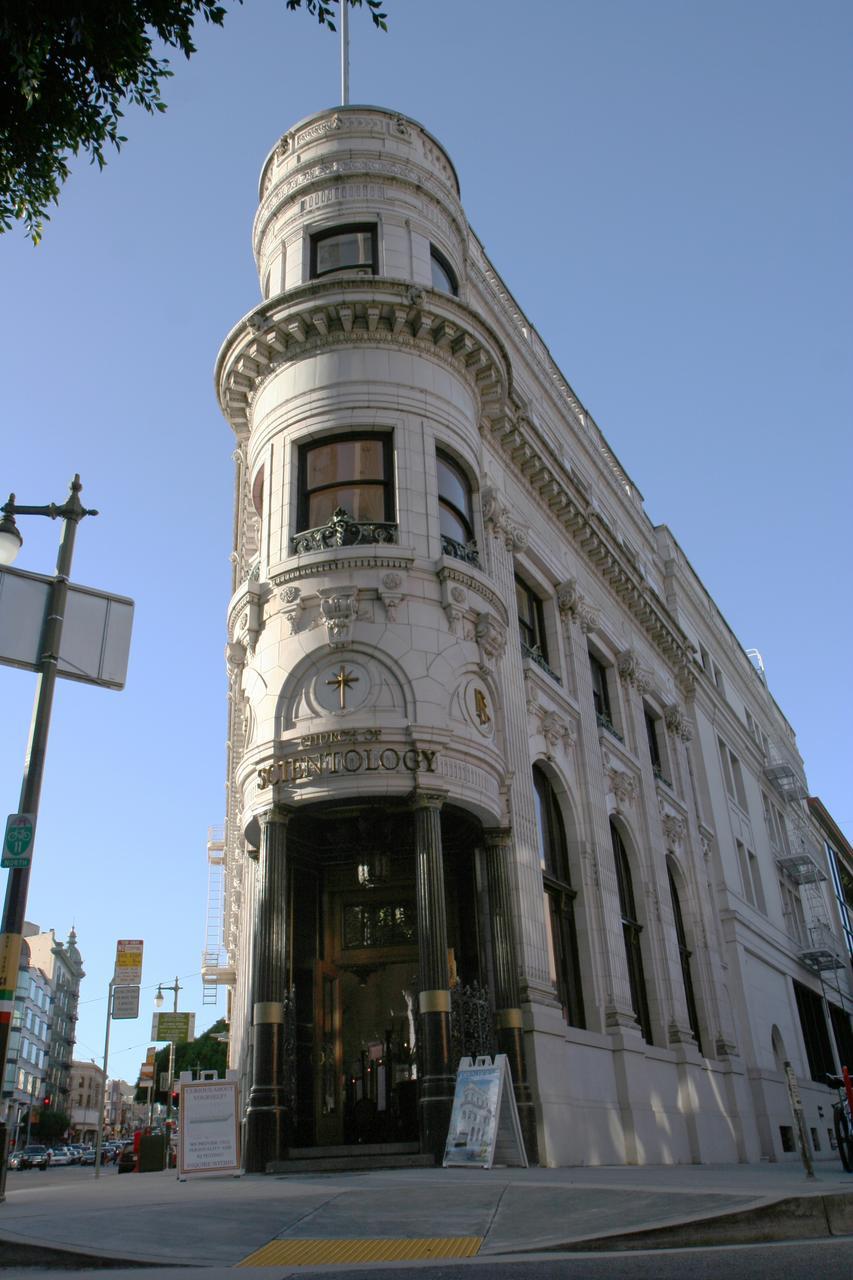
Fugazi Bank Building
Before there was a Transamerica Pyramid -- before there was even a Transamerica Corporation -- there was John F. Fugazi, an Italian immigrant who founded a bank for the working people of North Beach. The building he erected at 4 Columbus Avenue in 1909, formally called the Fugazi Banca Popolare Operaia Italiana Building, later became the first headquarters of the Transamerica Corporation. It still stands in the Jackson Square Historic District, a flatiron-shaped landmark at the intersection of Columbus Avenue, Kearny Street, and Pacific Avenue.
A Bank for Immigrants
John F. Fugazi established his Banca Popolare Operaia Italiana -- the Italian People's Workers' Bank -- to serve the Italian immigrant community of North Beach. The name itself declared the institution's populist mission: this was a bank for laborers, not financiers. Fugazi commissioned the building at 4 Columbus Avenue, which was completed in 1909 in the Beaux-Arts style, with a distinctive flatiron shape dictated by the acute angle where Columbus Avenue meets Kearny Street. The building's location at the gateway to North Beach made it both a practical financial institution and a symbolic landmark for the Italian-American community that had rebuilt the neighborhood after the 1906 earthquake.
The Transamerica Connection
Fugazi's bank eventually became part of A.P. Giannini's banking empire, which grew into the Bank of Italy and later Bank of America. The building at 4 Columbus Avenue served as the first headquarters of the Transamerica Corporation, the holding company Giannini created. When Transamerica outgrew its North Beach origins and moved to its iconic pyramid on Montgomery Street, the old Fugazi building remained behind -- a reminder that one of America's largest financial corporations began in a neighborhood bank built to serve immigrants. The building has been listed on the National Register of Historic Places and remains one of the most architecturally distinctive structures in the Jackson Square Historic District.
The Flatiron of North Beach
The building's triangular footprint makes it one of San Francisco's most recognizable small structures. Unlike New York's famous Flatiron Building, which rises to skyscraper height, the Fugazi building is modest in scale -- its power comes from its proportions and its position at a junction where three streets converge. The Beaux-Arts detailing, the rounded corner facing the intersection, and the warm stone facade create an anchor point for the surrounding neighborhood. Beach Blanket Babylon, the long-running San Francisco musical revue, performed for decades in the Club Fugazi theater adjacent to the building. The name Fugazi persists in North Beach, a reminder of the immigrant banker whose populist vision helped build a neighborhood and, inadvertently, launched a corporation.
From the Air
The Fugazi Bank Building is located at 37.7985N, 122.4055W at 4 Columbus Avenue in San Francisco's North Beach/Jackson Square neighborhood. Not individually visible from the air, but the intersection of Columbus, Kearny, and Pacific is identifiable as a triangular junction in the street grid. Nearby airports: KSFO (11nm S), KOAK (8nm E).