Fujita Art Museum: A Storehouse That Saved a Civilization's Treasures
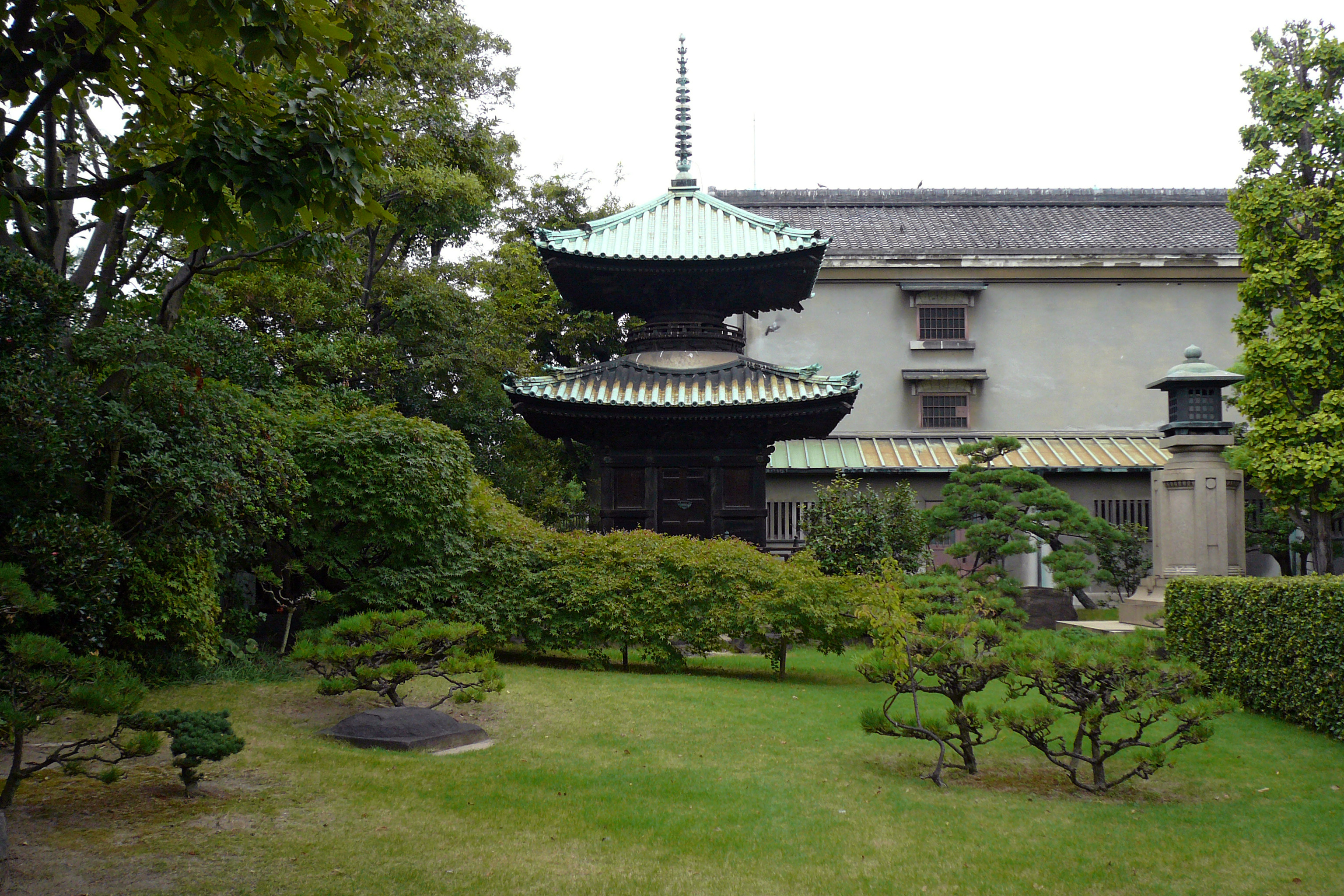
The firebombs that rained on Osaka in 1945 reduced the Fujita family residence to ash and rubble. The mansion, the gardens, the outbuildings -- all gone. But deep within the compound, a single thick-walled storehouse stood defiant against the inferno, its contents unscathed. Inside lay scrolls painted by Kamakura-era masters, tea ceremony bowls shaped by the hands of Chojiro himself, and silk-bound calligraphy spanning eight centuries of Japanese civilization. The collection had survived not just the bombing but the very threat it was assembled to combat: the systematic destruction of Japan's Buddhist artistic heritage during the upheaval of the Meiji Restoration. That the art exists at all is a testament to one man's stubbornness and fortune.
The Sake Brewer's Son Who Bought a Legacy
Fujita Denzaburo was born in 1841 in Hagi, in what is now Yamaguchi Prefecture, to a family of sake brewers. He moved to Osaka and transformed himself into one of the Meiji era's great industrialists, building railroads, digging tunnels, reclaiming land, and operating coal mines. But Denzaburo watched with growing alarm as the new Meiji government's anti-Buddhist policies -- the haibutsu kishaku movement -- led to the ransacking of temples and the destruction or overseas dispersal of irreplaceable artworks. He poured his industrial fortune into acquiring these endangered pieces, not as decoration for his mansion but as an act of cultural preservation. His son Heitaro and second son Tokujiro continued the effort, and by the early twentieth century the Fujita family had assembled approximately 5,000 objects spanning painting, calligraphy, sculpture, ceramics, lacquerware, textiles, and metalwork.
Nine National Treasures Behind Thick Walls
Among the collection's masterworks are nine objects designated as National Treasures of Japan and 53 classified as Important Cultural Properties. The Murasaki Shikibu Diary Emaki, a thirteenth-century illustrated scroll depicting scenes from the diary of the author of The Tale of Genji, is perhaps the most celebrated piece. Paintings of the sixteen Rakan by Takuma Eiga, dating to the thirteenth and fourteenth centuries, reveal the devotional artistry of the Kamakura period. The ceramics collection centers on tea ceremony objects: teabowls by Chojiro, the founder of the Raku pottery lineage, and by Nonomura Ninsei, whose elaborate overglaze enamel technique transformed Japanese ceramics. Square dishes by the brothers Ogata Korin and Ogata Kenzan round out a collection that reads like a syllabus of Japanese art history. When the Fujita family opened the storehouse to the public in 1954, they were sharing not just art but the rescued memory of an entire civilization.
Dispersal and Renewal
For decades the museum operated quietly, a specialist pilgrimage for scholars and tea ceremony devotees who knew to seek it out near the grounds of Osaka Castle. Then in March 2017, the art world took notice when 31 objects from the collection were de-accessioned and sent to Christie's in New York for Asian Week, raising both funds and questions about the future of private art collections in Japan. The sale underscored a tension that runs through every family museum: the cost of preservation against the economics of maintaining a legacy. The Fujita Museum has continued to evolve, reopening after renovation with a modernized facility that maintains the intimate scale of a private collection while providing conservation-grade climate control. The museum sits just minutes from Osakajo-kitazume Station on the JR Tozai Line, in a neighborhood where the walls of Osaka Castle's outer moat are visible through the trees.
Art in the Shadow of the Castle
The museum's location is no accident. The Fujita estate occupied prime land in Osaka's Miyakojima district, within the cultural gravitational pull of Osaka Castle. The Kansai region -- encompassing Osaka, Kyoto, and Nara -- was the historic heartland of Japanese art and religion, and Denzaburo positioned himself at its center. Today the museum stands as one of the largest private collections in the Kansai region, a counterpoint to the grand public institutions. Where the Osaka Municipal Museum of Art offers breadth, the Fujita offers depth and intimacy. Visitors move through rooms that feel more like a collector's study than a gallery, encountering objects chosen not by curators following institutional mandates but by a family following their obsession. The storehouse that survived the war has become a monument to the idea that art is worth fighting for -- or at least worth building very thick walls around.
From the Air
Located at 34.695N, 135.525E in the Miyakojima district of Osaka, near the northeastern corner of Osaka Castle's outer moat. From altitude, the museum grounds are identifiable by their proximity to the large green expanse of Osaka Castle Park and the distinctive shape of the castle keep. Osaka International Airport at Itami (RJOO) is approximately 10 nautical miles to the north-northwest. Kansai International Airport (RJBB) is approximately 25 nautical miles to the south-southwest. Recommended viewing altitude: 3,000-5,000 feet for context within the castle district.