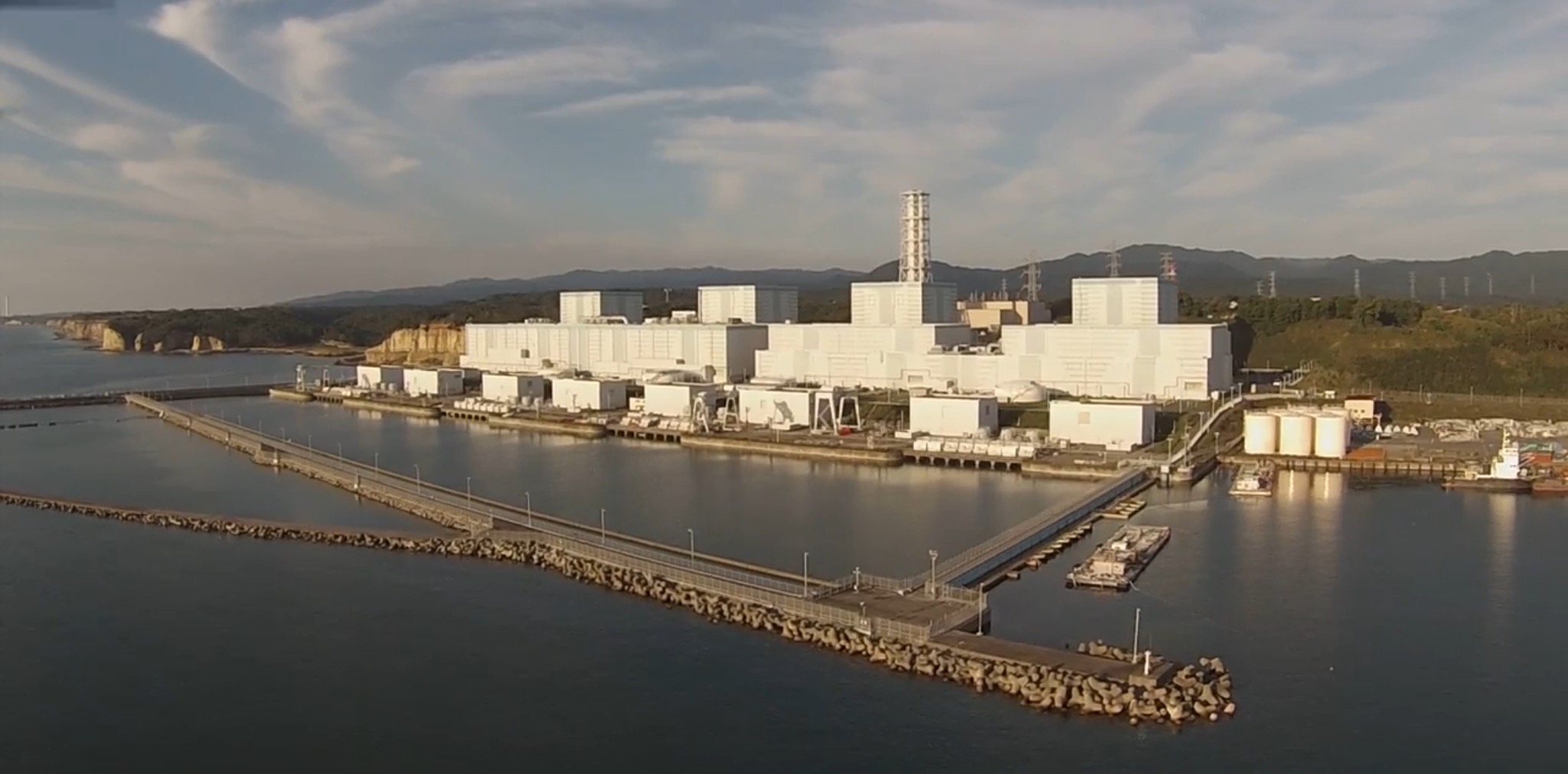
Fukushima Daini Nuclear Power Plant
Everyone remembers Fukushima Daiichi. Almost nobody remembers what happened 12 kilometers to the south. On the afternoon of March 11, 2011, the same magnitude 9.0 earthquake shook Fukushima Daini, and the same 14-meter tsunami -- more than twice the plant's 5.2-meter design basis -- slammed into its four boiling water reactors. Every unit scrammed automatically. Power lines fell. Seawater pumps drowned. The suppression pools began heating toward catastrophe. But Daini had one thing Daiichi did not: a single surviving external high-voltage power line. That fragile thread of electricity, and the 2,000 workers who refused to let go of it, made all the difference.
Nine Kilometers of Cable, One Ton at a Time
With the central control room still lit by that one remaining power line, operators could see the numbers that mattered: reactor temperatures and water levels. They knew exactly how much time they had. While the steam-powered reactor core isolation cooling systems bought hours of margin in all four units, plant engineers launched a physical feat that rarely appears in nuclear safety textbooks. They strung over nine kilometers of emergency electrical cabling by hand, dragging 200-meter sections that each weighed more than a ton from the Rad Waste Building to the reactor buildings. Every connection had to be precise. Every splice had to hold. They worked in the dark, in aftershock tremors, knowing that the sister plant to the north was already spiraling out of control.
Four Days to Cold Shutdown
By March 13, repair crews had restored the seawater pumps for Units 1, 2, and 4. The Residual Heat Removal systems came back online, first cooling the superheated suppression pools below 100 degrees Celsius, then drawing heat from the reactor cores themselves. Unit 2 reached cold shutdown first. Units 1 and 3 followed at 1:24 and 3:52 on March 14. Unit 4 joined them at 7:00 the next morning. By March 15, all four reactors sat in stable cold shutdown. Japanese authorities classified the cooling losses at Units 1, 2, and 4 as a Level 3 'serious incident' on the International Nuclear Event Scale -- significant, but three full rungs below the Level 7 catastrophe unfolding at Daiichi. A worker who had been trapped in the crane operating console of the exhaust stack during the earthquake was the plant's only fatality.
The Evacuation and the Return
Residents within a 10-kilometer radius were ordered to leave on March 12, and a no-fly zone was imposed around the plant. But unlike the area around Daiichi, the land surrounding Daini did not become seriously contaminated. By August 2012, some evacuees from the nearby town of Naraha -- population 7,200 -- were allowed to return during daylight hours. In 2015, Naraha became the first community in the Fukushima evacuation zone to have its order fully lifted, allowing residents to move back permanently and begin reconstruction. The contrast with the Daiichi exclusion zone, where entire towns remain abandoned, is stark. On December 26, 2011, the Prime Minister officially cancelled the nuclear emergency declaration for Daini, formally closing the book on the incident.
Decommissioning a Plant That Survived
Fukushima Daini never generated another watt of electricity after March 11, 2011. For eight years, the four BWR-5 reactors -- each rated at 1,100 megawatts -- sat idle while the local community demanded a final decision. On July 31, 2019, TEPCO's board of directors voted to decommission the plant. The process is expected to take more than 40 years, involving the careful transfer of spent nuclear fuel from the storage pools into dry cask storage on site. A magnitude 6.9 earthquake in November 2016 briefly knocked out the Unit 3 spent fuel pool cooling system, but it was restarted within 100 minutes. The plant that survived the worst tsunami in modern Japanese history now faces its longest chapter: a slow, methodical dismantling that will not finish until sometime after 2060.
From the Air
Located at 37.32°N, 141.03°E on the Pacific coast of Fukushima Prefecture, Japan. The plant sits on the coastline between the towns of Naraha and Tomioka in the Futaba District. From altitude, the four reactor buildings and turbine halls are visible as a compact industrial complex on the shoreline, approximately 12 km south of the more visibly damaged Fukushima Daiichi site. Nearest major airport: Fukushima Airport (RJSF), approximately 70 km to the west. Sendai Airport (RJSS) lies about 120 km to the north. Expect restricted airspace in the vicinity. The Hamadori coastal plain is flat and featureless, making the reactor complex easy to identify against the Pacific Ocean backdrop.