Fundy Geological Museum
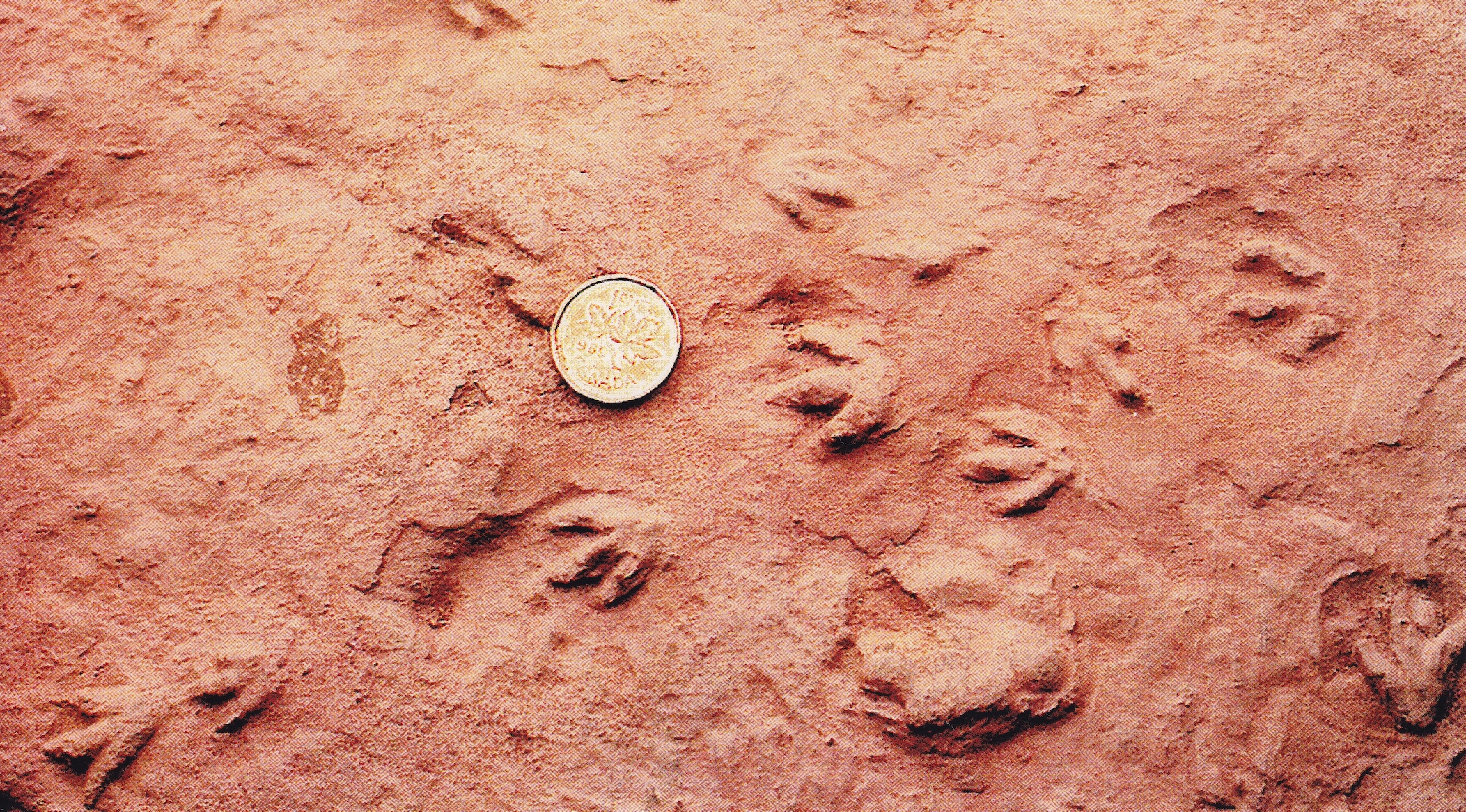
The footprint is the size of a penny. Three tiny toes pressed into sandstone 200 million years ago by a theropod dinosaur roughly the size of a robin -- the smallest dinosaur tracks ever found anywhere on Earth. They sit inside the Fundy Geological Museum in Parrsboro, Nova Scotia, alongside the skeleton of a prosauropod dinosaur that researchers are still painstakingly uncovering in the museum's working laboratory. Outside the building, the Bay of Fundy tides are doing their own paleontological work, carving fresh fossils from the coastal cliffs with every cycle.
A Museum Built on Deep Time
The Fundy Geological Museum opened in 1993 in Parrsboro, a small town on the north shore of the Minas Basin where the Bay of Fundy's extreme tides have been exposing ancient rock for millennia. Part of the Nova Scotia Museum system, it has welcomed more than 300,000 visitors since opening, averaging over 21,000 per year. The museum's exhibits span the region's geological story, from the breakup of the supercontinent Pangaea through the Triassic and Jurassic periods that left their mark on the surrounding coastline. An interactive Pangaea exhibit lets visitors manipulate the time machine of continental drift, watching Nova Scotia migrate from the equator to its present latitude. Fossils of Plateosaurus engelhardti, a prosauropod dinosaur, anchor the collection alongside displays of the region's remarkable mineral wealth -- the agates, zeolites, and amethyst that form in the Bay of Fundy's basalt formations.
Eldon George's Penny-Sized Discovery
On April 10, 1984, a local fossil hunter named Eldon George was walking the shore at Wasson Bluff, about five miles east of Parrsboro, when his experienced eye caught something extraordinary. Using a jackknife, he gradually exposed five fossil trackways imprinted on a slab of sandstone measuring just sixteen by fourteen inches. The three-toed prints, each the size of a penny, belonged to a theropod roughly the size of a robin -- the smallest dinosaur footprints ever documented. The discovery drew international attention to Wasson Bluff, an active research site where the boundary between the Triassic and Jurassic periods is exposed in the coastal cliffs. This geological boundary, roughly 200 million years old, marks one of Earth's major extinction events, when about half of all living species vanished. George displayed his finds at his Parrsboro Rock and Mineral Shop for decades before donating them to the museum in 2015.
The Working Laboratory
What sets the Fundy Geological Museum apart from most natural history institutions is transparency. The museum houses the only fossil research laboratory east of Montreal, and visitors can peer through glass windows to watch paleontologists at work -- brushing sediment from 200-million-year-old bone, cataloging specimens, and piecing together the anatomy of creatures that walked this coast when it was a rift valley near the equator. The prosauropod dinosaur currently being uncovered in the lab is a long-term project, its bones emerging millimeter by millimeter from the rock that has held them since the early Jurassic. The museum also hosts Nova Scotia's annual Gem and Mineral Show, an event that has run for more than 40 years, drawing collectors and geologists who come for the region's remarkable mineral diversity. Seasonally, guided walking tours take visitors to the beaches and bluffs where fossils and minerals are actively eroding from the cliffs -- Wasson Bluff chief among them.
Where the Tides Do the Digging
The museum exists because of the Bay of Fundy. The same tides that produce the world's highest tidal ranges -- exceeding 16 meters at nearby Burntcoat Head -- are constantly sculpting the coastline around Parrsboro, shearing layers from cliffs that hold 200 million years of geological history. Dinosaur bones, fossilized footprints, and mineralized wood that would remain buried for centuries in a calmer sea are delivered to the beach with metronomic regularity. The museum operates daily from June through mid-October, with reduced winter hours. But the real exhibit never closes. At low tide, the Minas Basin drains to expose a vast expanse of red-brown seafloor, and the cliffs stand naked and freshly cut. Visitors who time their arrival right can walk the same beaches where Eldon George found his penny-sized footprints, where the bones of creatures from the dawn of the dinosaur age work loose from sandstone and basalt, and where the boundary between two geological periods is written in the rock face as clearly as a chapter break.
From the Air
Located at 45.39N, 64.24W in Parrsboro on the north shore of the Minas Basin. The museum sits near the waterfront at 162 Two Islands Road. Wasson Bluff fossil site is visible approximately 5 miles to the east along the coastline. Nearest airports include Halifax Stanfield International (CYHZ) to the southeast and Debert Airport (CCQ3) closer by. The dramatic tidal flats of the Minas Basin and the basalt headlands stretching toward Five Islands are prominent features from 2,000-4,000 feet.