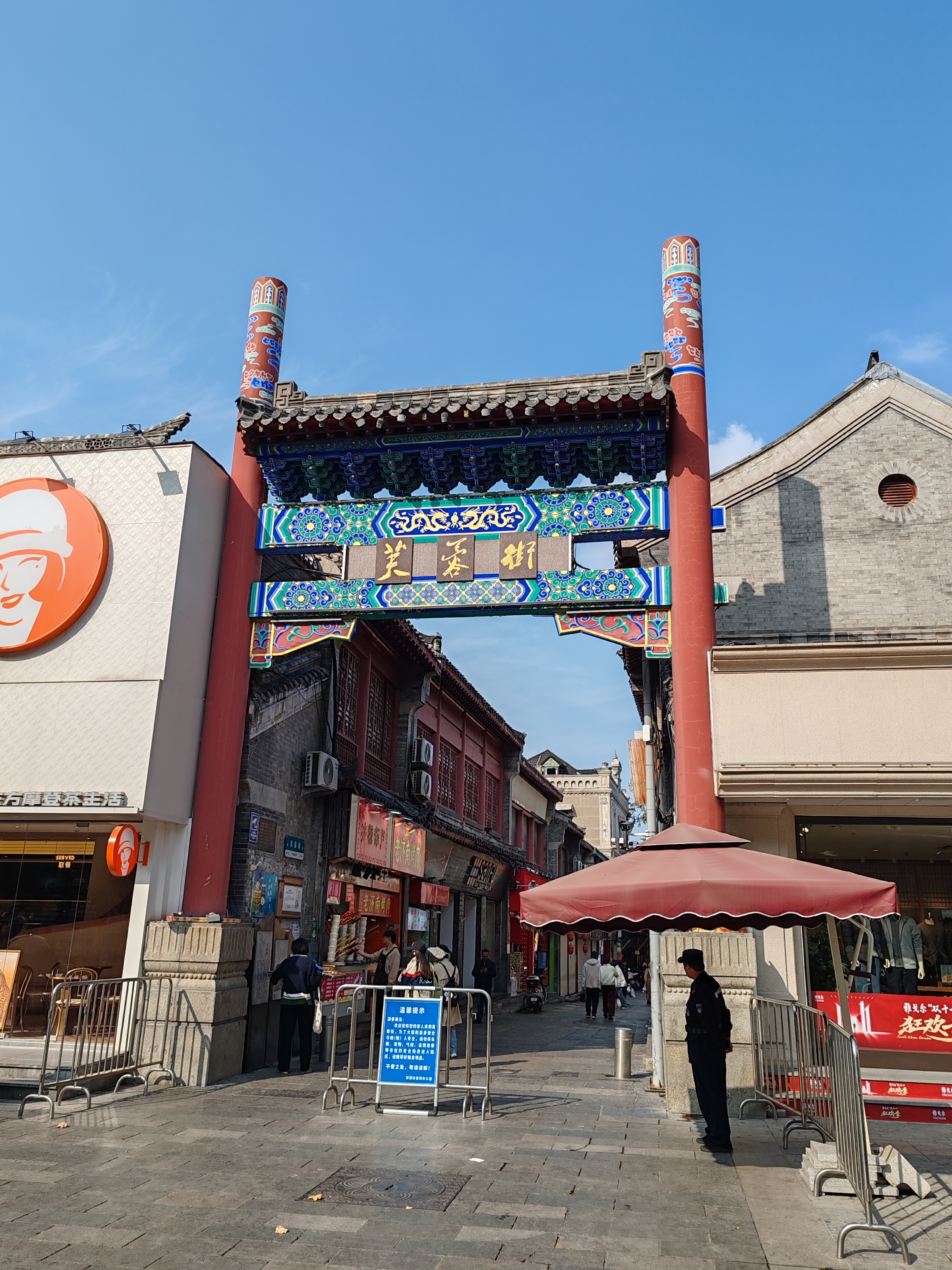
Furong Street
Water lily. That is what furong means, and the creek that runs down the center of this narrow lane once bloomed with them. For more than two thousand years, Furong Street has threaded through the historical core of Jinan, connecting the Fuxue Confucian Temple at its northern end to what is now the modern shopping district of Quancheng Street at its southern terminus. At 432 meters long and an average of just 4.6 meters wide, it is barely an alley by modern standards. But for centuries, this slender passage was the administrative, financial, commercial, and cultural center of one of China's great spring cities.
The Creek That Made a Market
The secret of Furong Street's prosperity was always the water. A clear creek, fed by the artesian springs that percolate through the karst aquifer beneath Jinan, flows along the length of the lane. In a region where clean water determined where people gathered, this creek turned Furong Street into a natural meeting point for merchants and their customers. Wealthy residences rose along its banks, and together with the neighboring Qushuiting Street to the north, Furong Street formed the most prosperous district in historical Jinan. The creek still runs, though the water lilies that named the street have yielded to the foot traffic of tourists and the storefronts of vendors selling everything from local snacks to calligraphy brushes.
From Government to Grocery
The street's character shifted in the 1660s when a yamen -- a government office -- was established during the fifth year of the Kangxi Emperor's reign. The arrival of bureaucracy transformed the surrounding area from a purely commercial zone into a residential one. Retail shops moved in alongside the officials' households, creating the mixed-use character that persisted into the twentieth century. At the dawn of the 1900s, Furong Street was still the beating heart of Jinan: dentists, bookstores, pharmacies, and groceries like the well-known Guang Lisun's lined its narrow width. The Confucian Temple anchoring the north end gave the street an intellectual gravity that balanced its commercial energy.
Restoration and the Weight of History
In 2006, the Jinan city government selected Furong Street as one of four sites for historical renovation, aiming to preserve the old city's character while making it accessible for tourism. The challenge was considerable: how do you modernize a lane that is barely five meters wide without destroying the density and intimacy that made it significant in the first place? The renovation sought to honor the street's historical layers -- its role as a commercial artery, a government district, a cultural center, and a residential neighborhood -- while acknowledging that two thousand years of continuous use had left it in need of care. Walking Furong Street today, the creek still murmurs beneath the noise of commerce, and the Confucian Temple still anchors the northern end. The lane is narrower than a single lane of modern road, a reminder of how much city life once depended on the width of a footpath and the clarity of a spring-fed stream.
From the Air
Located at 36.66N, 117.02E in the old city center of Jinan, running north-south between Daming Lake and Quancheng Street. Jinan Yaoqiang International Airport (ZSJN) is about 30 km northeast. The street is too narrow to identify from the air individually, but it sits within the distinctive old quarter between Daming Lake to the north and the modern shopping district to the south.