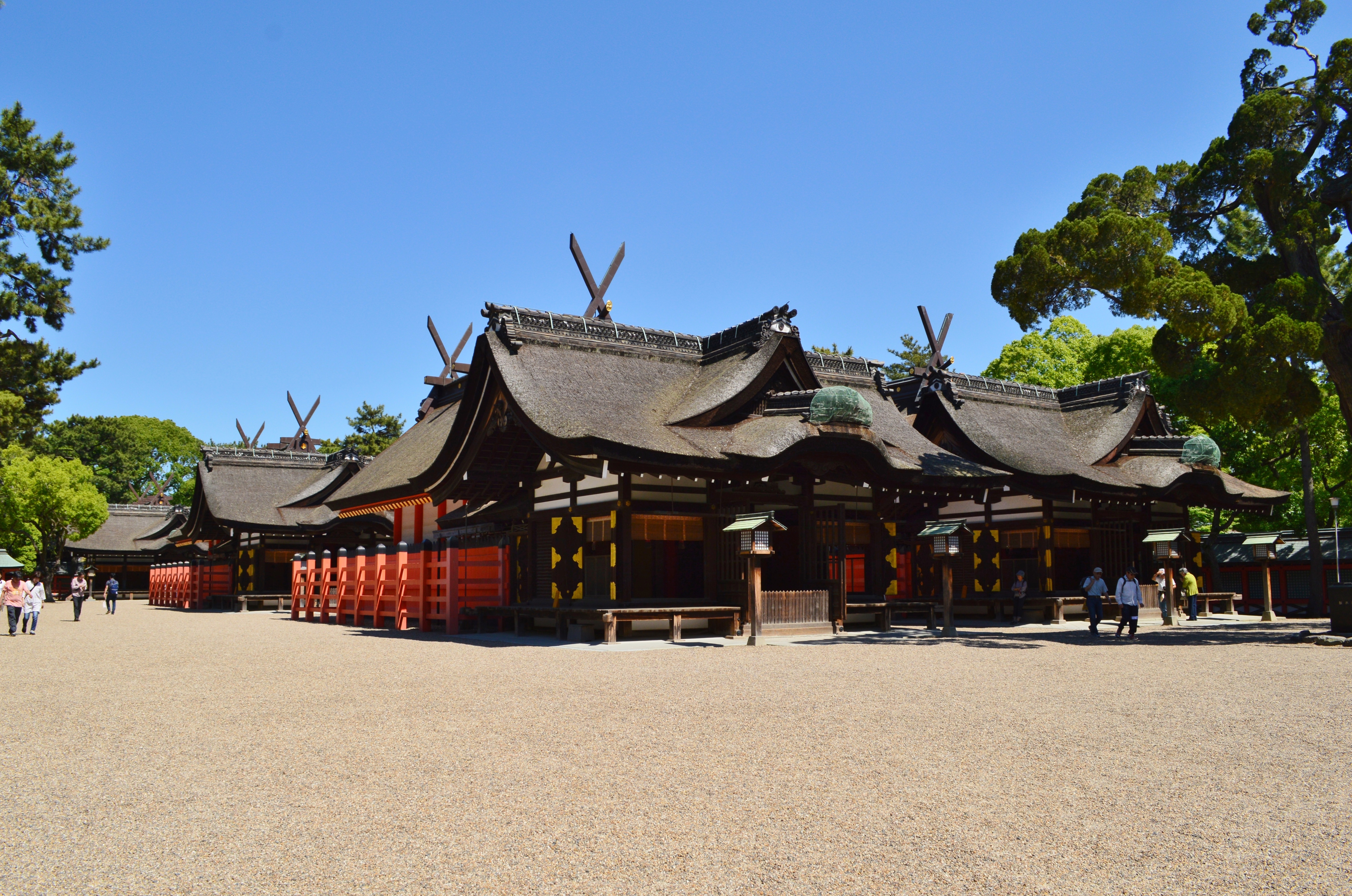
Futami Okitama Shrine
Hundreds of stone frogs stare back at you from every surface -- perched on railings, crouched beside lanterns, clustered around water basins. Some wear tiny bibs. Others balance coins on their heads. At Futami Okitama Shrine, on the rocky shoreline of Ise in Mie Prefecture, these amphibian sentinels are not decorations. They are thank-you notes, left by worshippers whose prayers were answered. The Japanese word for frog, kaeru, is a homophone for "to return," and the faithful believe these figures draw back lost things -- missing people, strayed fortunes, wandering luck. Each donated frog statue marks a small miracle, and over the years, the shrine grounds have become a congregation of stone gratitude unlike anything else in Japan.
The Gateway Before the Gateway
Long before visitors reach the towering cryptomeria forests of Ise Grand Shrine -- the holiest site in Shinto -- tradition requires a stop here. For centuries, pilgrims traveling to Ise performed harae, a purification ritual, by wading into the cold waters off Futami's coast. The ocean itself served as the cleansing agent, washing away spiritual impurities before the pilgrim could stand before the sun goddess Amaterasu. The practice of bathing in these waters stretches back to at least the Edo period, when the great pilgrimage to Ise was one of the defining journeys of Japanese life. Today, few visitors wade into the Pacific, but the shrine remains a customary first stop, a spiritual threshold crossed before approaching the inner sanctums seven hundred meters from the shore.
Where Gods and Rocks Converge
The shrine is dedicated to Sarutahiko Okami, the powerful earthly deity who, according to the Kojiki, guided the heavenly gods down to the mortal world. But the true objects of worship stand offshore: the Meoto Iwa, or Married Couple Rocks, two sea stacks bound together by a heavy shimenawa rope of rice straw. In Shinto cosmology, these rocks embody the creator deities Izanagi and Izanami, whose union brought forth the islands of Japan themselves. The larger rock, roughly nine meters tall, bears a small torii gate at its summit. The smaller rock, about four meters, leans toward its partner as if in conversation. Together they form a natural gateway through which, on clear summer mornings between May and July, the sun rises in spectacular alignment -- and on the rarest days, Mount Fuji appears silhouetted in the distance.
Messengers in Stone
The shrine's signature frog population has a theological pedigree. In Shinto mythology, frogs serve as messengers of Sarutahiko Okami. The connection deepened through wordplay: kaeru means both frog and to return, making the creatures natural symbols of safe homecoming and the recovery of lost things. Visitors who feel their prayers have been granted return to the shrine bearing frog figurines as offerings. Over generations, this practice has produced an extraordinary accumulation. Stone frogs of every size line pathways, crowd alcoves, and sit half-hidden in garden beds. Some are polished smooth by decades of visitors rubbing them for luck. The shrine also sells kaeru amulets -- small ceramic frogs meant to ensure safe travel, the return of good health, or the restoration of broken relationships. It is a place where the boundary between folk belief and formal religion dissolves entirely.
Marriage and the Sea
Because the shrine guards the Meoto Iwa -- those celebrated symbols of conjugal harmony -- couples have long traveled here to pray for their marriages. The tradition is not simply romantic sentiment. In Shinto, the union represented by the rocks is cosmic in scale: Izanagi and Izanami's marriage produced the physical world. Praying before their stone embodiments is an act of aligning one's own partnership with the fundamental creative force of the universe. The shrine's location amplifies this power. Situated where land meets ocean, where the everyday world gives way to the vast and unknown, Futami Okitama occupies a liminal space that Shinto theology prizes. The shimenawa binding the rocks marks the boundary between the sacred and the profane, a rope renewed three times each year in ceremonial rites held in May, September, and December.
From the Air
Located at 34.509N, 136.788E on the coast of Ise, Mie Prefecture, along the southeastern shore of the Kii Peninsula. The shrine sits right at the waterline, visible as a cluster of structures near the distinctive Meoto Iwa rocks offshore. Nearest major airport is Chubu Centrair International (RJGG), approximately 60nm north-northeast across Ise Bay. From altitude, look for the coastline where the Kii Peninsula curves eastward toward Toba. The shrine is roughly 700 meters from the coast. Best viewed at low altitude following the shoreline. Weather along Ise Bay can bring sea fog, especially in spring and early summer.