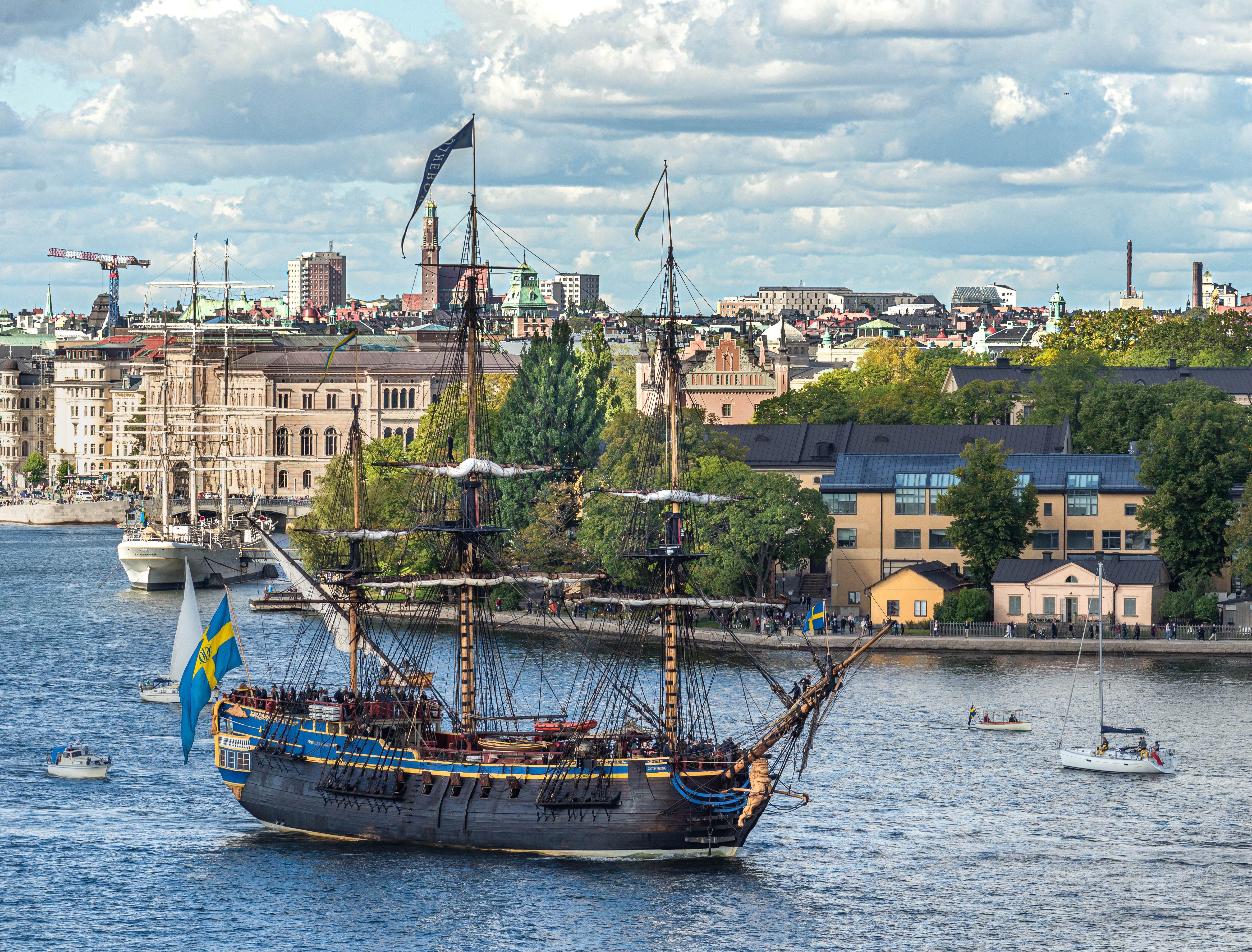
Gotheborg (ship)
Thirty months at sea, holds brimming with Chinese tea, porcelain, and silk. Less than a nautical mile from home. Then, inexplicably, the Gotheborg struck a well-charted rock and sank within sight of the Gothenburg harbor on September 12, 1745. Every sailor survived, and much of the precious cargo was salvaged over the following years, but the mystery of how an experienced pilot could wreck his ship on a sunny day with fair winds haunted maritime historians for centuries. Nearly 240 years later, divers pulling blue-and-white porcelain shards from the seabed would spark one of the most ambitious wooden shipbuilding projects in modern history.
The China Trade and a Fateful Voyage
The Swedish East India Company, established in 1731, was a latecomer to the lucrative Asian trade routes dominated by the Dutch and English. Operating from Gothenburg, the company exchanged Swedish timber, tar, iron, and copper for the treasures of Canton: tea, porcelain, silk, and spices. Over 82 years, company vessels completed 131 voyages before eventual bankruptcy. The original Gotheborg, built at Stockholm's Terra Nova shipyard and launched in 1738, made three successful journeys to China. On her maiden voyage in 1739, she carried 30 cannons and a crew of 144. The final voyage in 1745 would have made fortunes for investors, but the Knipla Boro rock waited silently beneath the surface of the Rivoefjorden.
Dead Water and a 250-Year Mystery
Captain Eric Moreen and his crew testified that September 12, 1745 offered ideal sailing conditions: clear weather, favorable winds from the southwest. The ship had a veteran pilot, Caspar Matthisson, with seven and a half years of experience. Yet the Gotheborg suddenly veered to starboard and struck the underwater rock called Hunnebadan. Modern researchers propose an unusual culprit: dead water. The winter of 1744-45 had brought heavy snowfall, raising Lake Vanern to extreme levels. This increased freshwater discharge from the Gota River, creating unstable layers of fresh and salt water in the fjord. When a ship enters dead water, internal waves can trap it, causing sudden loss of rudder control. The Gotheborg may have been the victim of hydrography rather than human error.
Porcelain Rising from the Seabed
On December 9, 1984, five divers from the Marine Archeological Society of Gothenburg descended to the Hunnebadan wreck site. They surfaced with 38 pieces of porcelain, three nearly intact. Between 1986 and 1992, one of Sweden's most comprehensive marine archaeological surveys excavated 5,750 artifacts from the seabed: blue-and-white porcelain, tea remnants, mother-of-pearl shells, galangal, pepper, silk fabric, zinc ingots, cannonballs, sword hilts, and personal effects of officers and crew. The finds represented nearly ten percent of the original cargo manifest, which had been preserved in company archives. Among the divers grew an audacious idea: what if they could rebuild the ship itself?
Building History by Hand
On June 11, 1995, two silver coins, one from 1745 and one from 1995, were placed into the keel joints of the Gotheborg replica as 3,000 spectators watched. Over the following decade, craftsmen at the Terra Nova shipyard built the vessel using 18th-century techniques as much as possible. Ten tons of hemp rope, 1,000 wooden blocks, and vast linen sails were produced the old way. The exterior faithfully replicates the original, though the deck headroom was raised ten centimeters for taller modern sailors. The interior, however, is thoroughly contemporary: diesel engines for port navigation, satellite communications, desalination equipment, and fire suppression systems required by international safety regulations. The project cost 250 million Swedish kronor, roughly 40 million dollars.
Retracing the Route to Canton
In October 2005, the Gotheborg III set sail for China. The 18-month voyage took her around Africa's southern tip, with stops in Cadiz, Recife, Cape Town, Fremantle, Jakarta, and Shanghai. She returned on June 9, 2007, welcomed by Chinese President Hu Jintao, the King and Queen of Sweden, thousands of private boats, and a hundred thousand spectators lining the shore. The replica returned through the Suez Canal, a shortcut unavailable to her predecessor. Today, the Gotheborg remains one of the world's largest operational wooden sailing ships, continuing to tour European ports and, as of 2019, planning new expeditions with support from the Greencarrier Group. In April 2023, she even performed a rescue at sea, saving a yacht that had lost its rudder.
From the Air
Located at 57.78N, 11.76E in Gothenburg harbor. Best viewed at 2,000-4,000 feet when the ship is docked. Look for the distinctive triple-masted sailing vessel near the old Eriksberg shipyard on the north bank of the Gota River. Nearest major airport is Gothenburg-Landvetter (ESGG). The ship may be away on tour; check current location before visiting.