Gabon
The Portuguese named it for a cloak. In 1472, when European explorers first reached the estuary of the Komo River on Central Africa's Atlantic coast, the shape of the water reminded them of a gabao, a hooded garment. Five centuries later, the country that inherited the name remains draped in green. Gabon is roughly the size of Colorado, nearly 85% covered in tropical rainforest, and home to fewer than 2.5 million people. It is one of the wealthiest nations in sub-Saharan Africa, bankrolled by oil and mineral reserves, and one of the least touristed places on the continent. For those who do arrive, the reward is an Africa without crowds: forest elephants on ocean beaches, gorillas tracked with local guides, and leatherback turtles hauling themselves ashore on virgin sand.
Deep Roots, Recent Borders
Humans have inhabited what is now Gabon for thousands of years. Pygmy hunter-gatherers were the first known residents, followed by waves of Bantu-speaking peoples arriving perhaps as early as 1500 BC. The country today comprises more than 40 ethnic groups, with Fang the most widely spoken indigenous language, used by 32 percent of the population as a mother tongue. French, the colonial inheritance, serves as the sole national language, spoken by 80 percent of Gabonese. The French colonized the coast in 1839 and claimed the interior by 1885. Independence came on August 17, 1960. What followed was remarkable stability by regional standards: Omar Bongo held the presidency from 1967 until his death in 2009, succeeded by his son Ali Bongo, who governed until a military coup in 2023 ended the family's 55-year grip on power.
Thirteen Parks, One Equator
Gabon straddles the equator, and its climate is tropical year-round: hot, humid, with a slightly cooler stretch from June to September when temperatures dip to the low twenties Celsius. The terrain runs from a narrow coastal plain through hilly interior forests to savanna in the east and south. Mont Iboundji, the highest point, reaches 1,575 meters. The Ogooue River, the country's longest at 1,200 kilometers, threads through the interior like a central artery. In 2002, President Bongo established 13 national parks in a single stroke, protecting an enormous share of the country's biodiversity. Loango National Park offers a 100-kilometer stretch of virgin beach where leopards, elephants, gorillas, and monkeys emerge from the adjacent rainforest onto the sand. Pongara National Park hosts one of the world's largest populations of nesting leatherback turtles on its sandy peninsula, the largest on the West African coast.
River, Rail, and Rainforest
Getting around Gabon is an adventure in itself. Fewer than 800 kilometers of tarred road exist in the entire country, many in poor condition. During the rainy season, travel outside major cities challenges even four-wheel-drive vehicles. The Trans-Gabon Railway connects Owendo, near Libreville, to Franceville in the southeast, a journey of 12 to 18 hours that runs on Tuesdays, Thursdays, Fridays, and Sundays. Boats travel the coast and push dozens of miles up the Ogooue to Lambarene, where Albert Schweitzer's hospital still operates. Within cities, shared taxis are plentiful and cheap. International flights connect Libreville to Paris, Istanbul, and cities across Africa, but Gabon's isolation is part of its character. This is a place you reach deliberately, not accidentally.
Libreville and the Living River
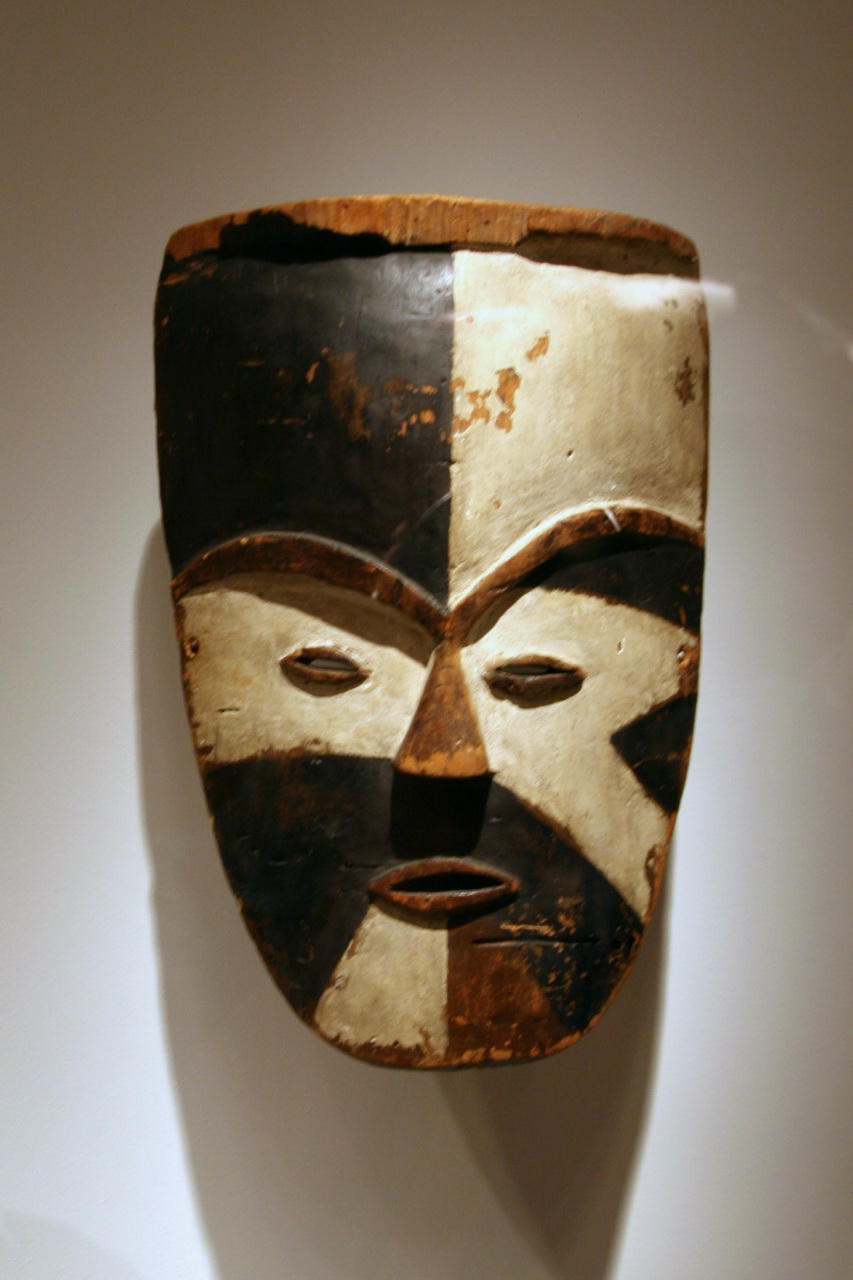
The capital, Libreville, sits on the Komo River estuary that gave the country its name. Its churches are among its most notable landmarks: the Cathedrale Sainte Marie, Notre Dame de Lourdes, and the Church of St. Michael Nkembo. The National Museum of Gabon and the National Museum of Arts and Traditions house collections of sculpture and ceremonial art that speak to the diversity of Gabon's ethnic traditions. Beyond the capital, the Ogooue River defines much of the country's interior life. Flowing through dense tropical forest, the river supports ecosystems that include the critically endangered slender-snouted crocodile. In Lope National Park, a UNESCO World Heritage Site along the Ogooue, visitors can float in pirogues, view ancient rock engravings, and track gorillas or mandrill monkeys with local guides through a landscape where savanna and dense forest interlock.
From the Air
Gabon lies on Central Africa's Atlantic coast, centered at approximately 0.68S, 11.50E, straddling the equator. The capital, Libreville, is served by Leon Mba International Airport (FOOL). The country stretches roughly 650 km north-south and 600 km east-west. Dense tropical rainforest covers most of the terrain, with the Ogooue River visible from altitude as it winds through the interior. Major visual landmarks include the coastal lagoons, the equatorial forest canopy, and the transition to savanna in the east. Expect tropical weather with frequent cloud cover and humidity year-round.