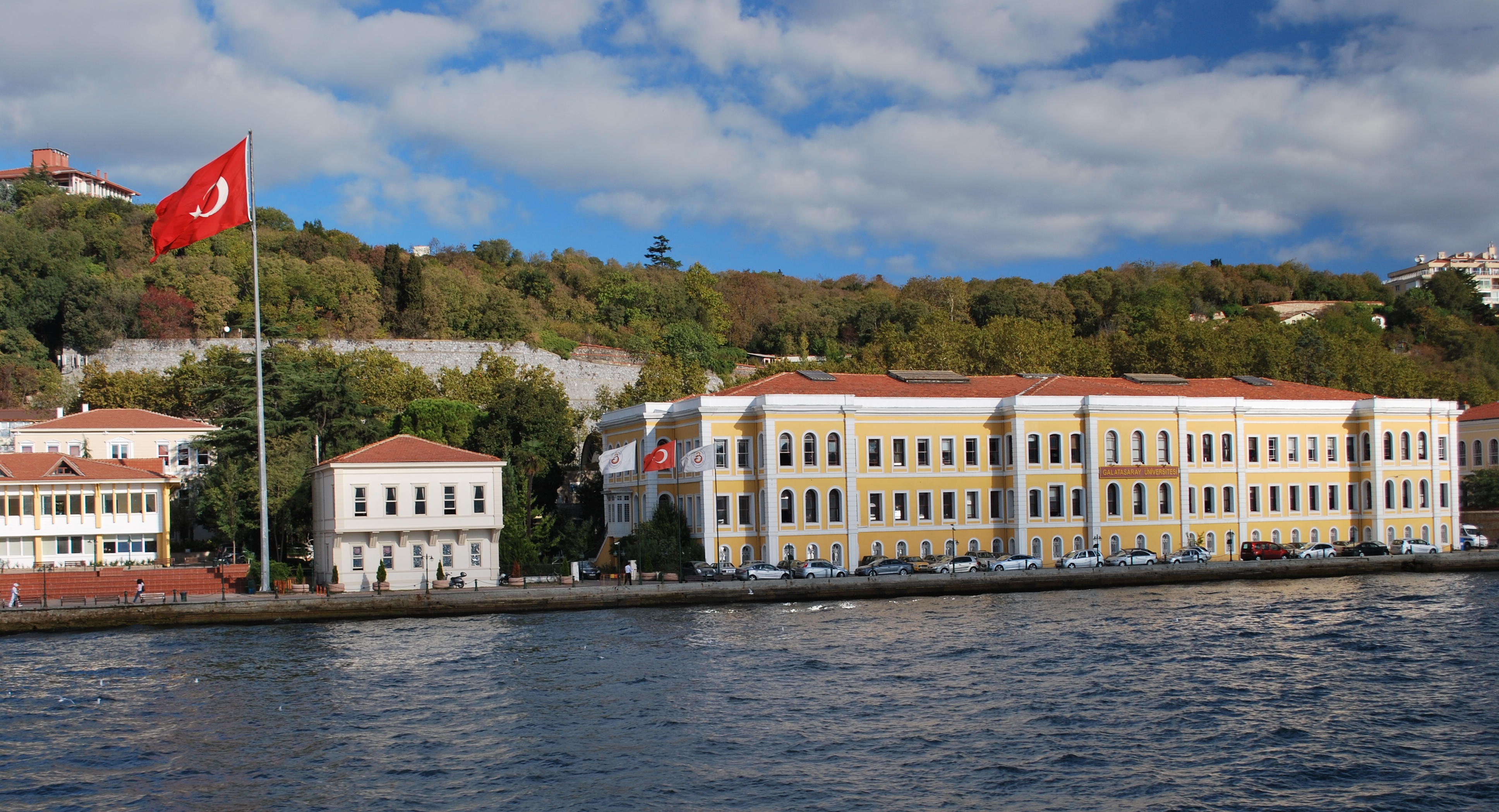
Galatasaray University
On a spring day in 1992, two presidents stood inside a small palace on the European shore of the Bosphorus and watched their foreign ministers sign a treaty. François Mitterrand of France and Turgut Özal of Turkey were inaugurating something unusual: a Turkish public university operating largely in French, conceived not as a French outpost but as a deliberate cultivation of the long, knotted relationship between the two countries. The setting was Feriye Palace - a coastal summer residence built in 1871 for the Ottoman royal family. Within its rose-pink walls, Galatasaray University would carry forward a tradition of French-language Turkish education that traced back, ultimately, to a school founded in 1481 by Sultan Bayezid II.
A Treaty as a Founding Document
Most universities trace their origins to a charter, a private donation, or a religious foundation. Galatasaray University traces its origins to a bilateral diplomatic agreement. The Turkish-French Bilateral Agreement of 1992 - facilitated by Turkey's then-ambassador to France, Coşkun Kırca - committed both governments to creating and supporting a public university in Istanbul where instruction would happen primarily in French, with Turkish and English alongside. The signing ceremony took place at Galatasaray High School, the lycée whose lineage the new university extended. President Mitterrand and President Özal were both present. The university opened its doors the same year. It was a young institution with very old roots.
A Palace as a Campus
The main building of Galatasaray University was never meant to be a school. Sultan Abdülaziz commissioned it in 1871 as the Feriye Palace - a Bosphorus-facing summer residence designed by the prolific Ottoman Armenian architect Sarkis Balyan, who also built the nearby Çırağan Palace and the Dolmabahçe Clock Tower. After the empire ended, the building served for many decades as a girls' dormitory for Galatasaray High School. When the university was established, the dormitory was reborn as a campus, and the marble halls that once housed nineteenth-century princesses became lecture rooms and faculty offices. The waterfront location is hard to overstate: the Bosphorus runs directly past the front of the building, ferries pass within shouting distance, and Asia is visible from the upper-floor windows.
Three Languages, Five Faculties
Courses run in three languages. French is primary; English is required as a second foreign language; students are also expected to study a third language, choosing between Spanish and German. Engineering students complete a single year of preparatory language training before beginning their degrees. The university is organized into five faculties - Economic and Administrative Sciences, Law, Communications, Natural Sciences and Literature, and Engineering and Technology - and two institutes covering Social Sciences and Applied Sciences. About 2,500 students study with roughly 200 academic staff. Many programs offer dual diplomas with French institutions: economics and philosophy with the Sorbonne (Paris 1 Panthéon-Sorbonne), and three communications degrees with Bordeaux Montaigne. Erasmus and Socrates exchanges send around 100 Galatasaray students to France each year and bring about 50 European students in.
A Visit, A Fire
In 2004, U.S. President George W. Bush visited Galatasaray University and delivered remarks in the main hall - a small reminder that the campus's diplomatic origins continued to attract diplomatic attention. Less ceremoniously, in January 2013, an electrical fire broke out around six in the evening on the roof of a building used by professors and secretaries. Campus security thought they had stabilized it. Inside the walls, the flames spread to the roof, and it took fire crews until ten that night to contain the blaze. The damage was limited; no one was hurt. The fire was a reminder that 19th-century buildings, however beautifully restored, retain their old wiring habits. The palace has stood for over 150 years. The students treat it gently.
The Continuing Lineage
Galatasaray University belongs to the Galatasaray Community, alongside the high school and the famous sports club. The lineage runs unbroken from 1481 - when Bayezid II founded the original Galata Sarayı Imperial School in a rose garden up the hill - through the 1868 reorganization as a French-language lycée, through the 1992 founding of the university by international treaty, to the rectors who have led the institution since: Yıldızhan Yayla, Erdoğan Teziç, Duygun Yarsuvat, Ethem Tolga, Ertuğrul Karsak, and now Abdurrahman Muhammed Uludağ. The institution holds an unusual place in Turkish education: deeply Turkish in tradition and student body, deeply French in language and method, deeply rooted in a single hilltop neighborhood whose name now signifies a school, a university, a football club, and a five-and-a-half-century habit of choosing to study together.
From the Air
Galatasaray University occupies the former Feriye Palace at 41.05°N, 29.02°E on the European shore of the Bosphorus, in the Ortaköy neighborhood of the Beşiktaş district - just south of the Bosphorus (15 July Martyrs) Bridge. From the air, the campus is recognizable as a long pink-and-white waterfront building immediately downstream of the bridge, with the Çırağan Palace next door. Istanbul Airport (LTFM) sits about 30 km west; Sabiha Gökçen (LTFJ) is about 20 km south on the Asian side. Best viewed at low altitude in clear weather; the Bosphorus shoreline buildings are densely packed but the bridge makes a perfect reference point.