Galathea National Park
A Danish naval corvette called Galathea anchored off Great Nicobar in 1845, sent by the Danish crown to survey the island's mineral wealth. The expedition mapped coastlines, cataloged specimens, and sailed home. Nearly 150 years later, the Indian government named a national park after that ship -- 110 square kilometers of tropical rainforest at the southern end of an island so remote that reaching it from mainland India requires either a weekly boat or a military helicopter. Galathea National Park protects some of the most pristine rainforest left in Southeast Asia, a place where coconut crabs climb trees, leatherback turtles haul themselves onto beaches to nest, and the nearest international airport is a two-hour flight away on a different island entirely.
An Island at the Bottom of a Chain
Great Nicobar is the largest and southernmost island in the Nicobar group, itself the southern extension of the Andaman and Nicobar archipelago that trails from Myanmar into the Bay of Bengal. Galathea National Park occupies the island's southern tip, separated from the larger Campbell Bay National Park to the north by a 12-kilometer forest buffer zone. Together they form the core of the Great Nicobar Biosphere Reserve, recognized by UNESCO in 2013. The park's geography is defined by its isolation. Port Blair, the territorial capital on another island 470 kilometers to the north, is the nearest city of any consequence. Flights from Chennai or Kolkata take roughly two hours to reach Port Blair; from there, reaching Great Nicobar requires further travel by sea or helicopter. This remoteness has been the park's greatest protection -- and, paradoxically, the reason its ecosystems remain so intact.
The Rainforest That Never Knew Winter
Galathea's climate is relentlessly tropical. There is no winter here -- only heat, humidity, and monsoons that dump between 3,000 and 3,800 millimeters of rain annually. The result is dense tropical and subtropical moist broadleaf forest, canopy unbroken, undergrowth thick enough to discourage casual exploration. The park's vegetation is considered among the best-preserved tropical rainforest in the world, a distinction owed largely to the fact that almost no one lives nearby to cut it down. Endemism runs high. Geographic isolation from both mainland Asia and the rest of the archipelago has allowed species to evolve along their own paths. Plants and animals found here exist nowhere else -- a biological treasury locked away on an island most people have never heard of.
Crabs, Megapodes, and the World's Largest Turtle
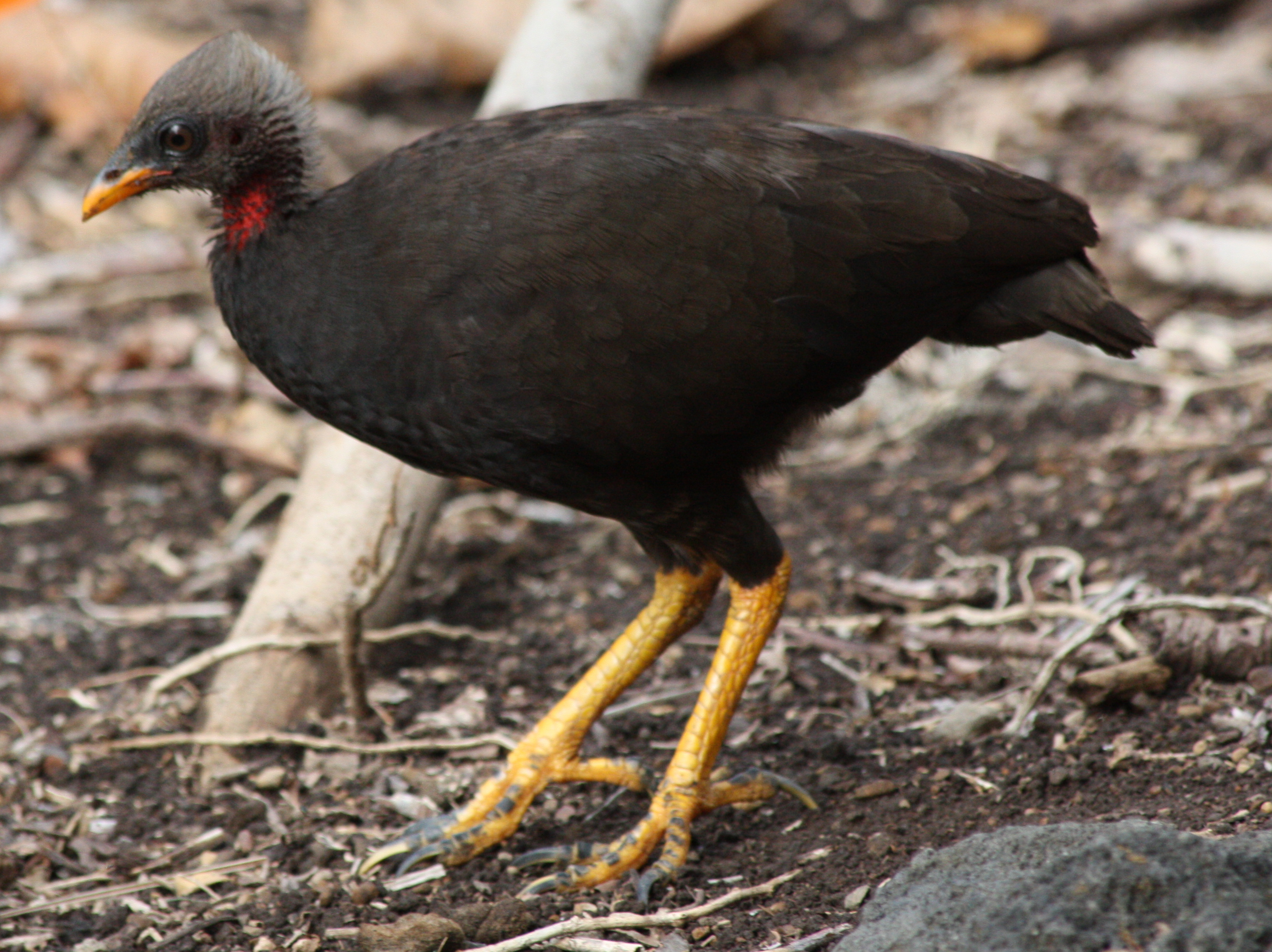
Three species define Galathea's wildlife spectacle. The giant robber crab -- also called the coconut crab -- is the largest land-living arthropod on Earth, capable of cracking coconuts with its claws. It thrives in the park's coastal forests. The Nicobar megapode, a ground-nesting bird that incubates its eggs in mounds of decaying vegetation rather than sitting on them, inhabits the forest floor. And the Nicobar pigeon, iridescent and heavy-bodied, moves through the canopy in flocks. But the most dramatic visitor is seasonal. From February through December, leatherback sea turtles -- the largest turtles in the world, reaching weights of over 500 kilograms -- crawl onto Galathea Bay's beaches to lay their eggs. These same beaches and the turtles that depend on them are now at the center of a fierce conservation debate.
A Park Under Siege
India's Great Nicobar Development Plan proposes transforming this thousand-square-kilometer island into a military and commercial hub. The $9 billion project includes an international container transshipment port in Galathea Bay, the upgrade of Campbell Bay's airstrip to a dual-use military-civilian airport, a gas and solar power plant, and a greenfield township designed to house hundreds of thousands of people. The strategic logic is straightforward: Great Nicobar commands the western approach to the Strait of Malacca, one of the world's busiest shipping lanes, and India wants a permanent presence there. The ecological cost is less straightforward. The proposed port sits in Galathea Bay, precisely where the leatherback turtles nest. Construction at the scale envisioned would fragment the biosphere reserve and industrialize an island whose primary value, to this point, has been its wildness. The park was gazetted in 1992 to protect what the Danish surveyors found remarkable a century and a half earlier. Whether that protection will survive the century ahead is an open question -- one that pits national security against biological heritage on a remote island where, for now, the crabs and turtles still outnumber the people.
From the Air
Located at approximately 6.92N, 93.83E on the southern end of Great Nicobar Island, the southernmost major island in India's Andaman and Nicobar chain. From altitude, the park appears as unbroken dense green canopy covering the island's southern tip, with Galathea Bay visible as a crescent-shaped beach on the southwestern coast. The island narrows toward its southern point (Indira Point), and the 12-km buffer zone separating Galathea from Campbell Bay National Park to the north is discernible as continuous forest. Nearest airport is Veer Savarkar International Airport at Port Blair (VOPB), approximately 470 km north. Campbell Bay airstrip on Great Nicobar is closer but limited to military and government flights. The deep blue waters of the Andaman Sea surround the island, with coral reefs visible in shallow areas along the coast.