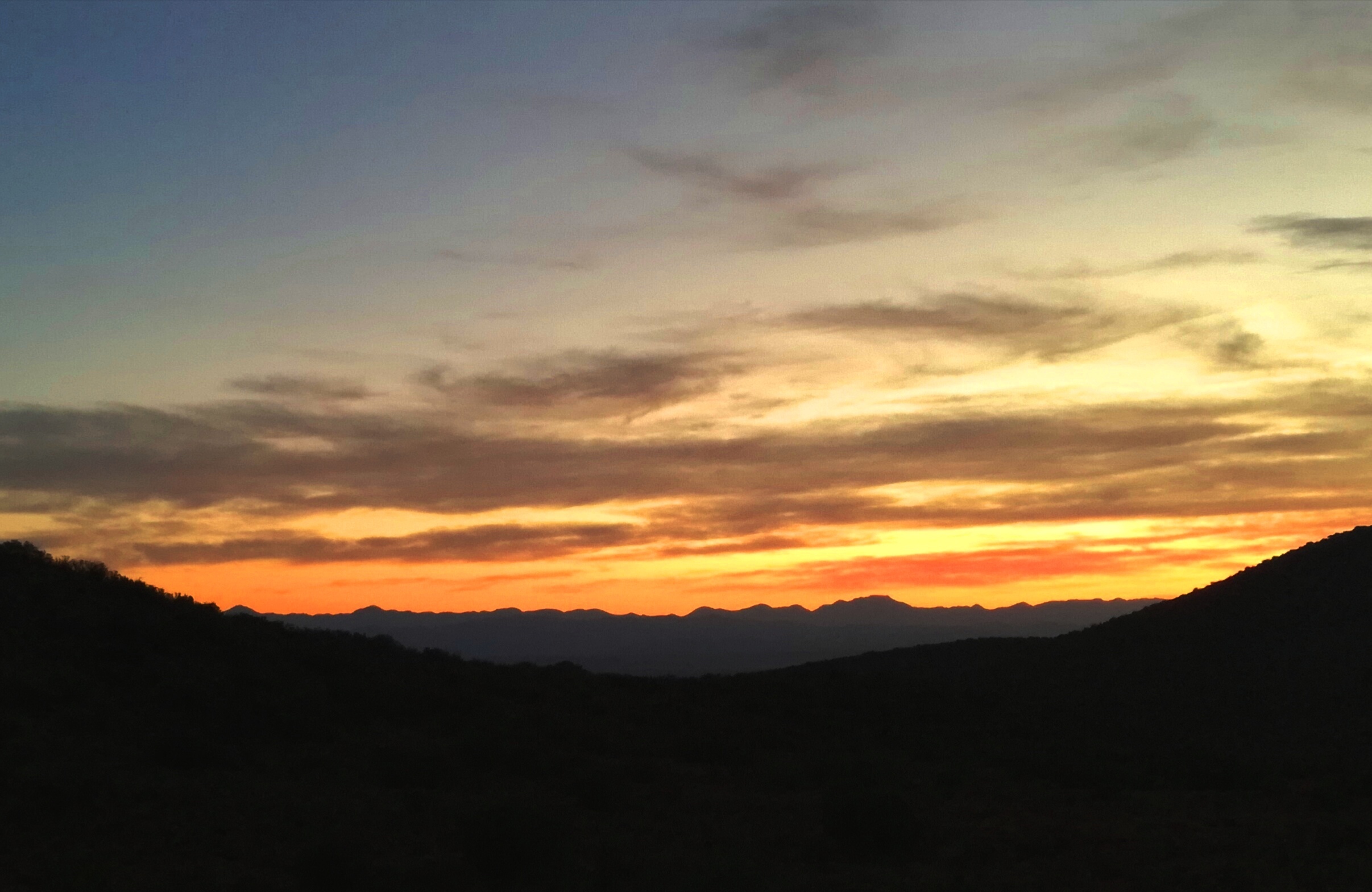
Gamkaberg Nature Reserve
In 1976, exactly five Cape mountain zebras remained in the Gamkaberg. Five animals, striped ghosts on a mountain named for lions in the Khoikhoi language, standing between a subspecies and local extinction. The reserve created two years earlier to protect them has since grown into an 80,000-hectare conservation area and World Heritage Site, a place where four of the Cape's biomes overlap in a landscape of peaks, plateaus, and gorges that still holds fossils and Stone Age rock art from far older inhabitants.
Lion Mountain
The name Gamkaberg blends two languages and two eras. 'Gamka' is the Khoikhoi word for lion, recalling a time when big cats prowled these ridges. 'Berg' is Afrikaans for mountain, the language of the Dutch-descended settlers who arrived centuries later. The Gamka River, which shares its name, begins far to the north in the arid Great Karoo and flows southward past the reserve toward the Indian Ocean. The mountain itself forms a separate range within the Little Karoo, flanked by the Rooiberg and Groenefontein Nature Reserves to the west, all managed as a single conservation unit. The nearest towns are Calitzdorp to the northwest, Oudtshoorn to the northeast, and Vanwyksdorp to the south, each a quiet settlement in its own right, making the Gamkaberg feel genuinely remote even by Karoo standards.
Where Four Worlds Meet
The Cape Floristic Region is one of the richest botanical areas on Earth, and the Gamkaberg sits at an intersection that few other reserves can match. Four distinct biomes converge here: fynbos, with its fine-leaved shrubs and proteas adapted to nutrient-poor soils; Succulent Karoo, a semi-arid region packed with more succulent species per square kilometre than anywhere else on the planet; Subtropical Thicket, dense and evergreen; and pockets of Evergreen Forest tucked into sheltered ravines. This botanical diversity drives an equally rich animal community. Beyond the now-thriving Cape mountain zebra herds, the reserve supports leopard, caracal, aardwolf, black-backed jackal, hartebeest, grysbok, and a wide range of other antelope species. An unusually large number of reptile and bird species adds further depth to the fauna.
Deep Time on the Ridgeline
The terrain of the Gamkaberg tells stories far older than any human settlement. Mountain peaks and steep gorges expose rock formations laid down over hundreds of millions of years. Fossils embedded in the stone record life forms that predated the Cape's current inhabitants by epochs. On sheltered rock faces, Stone Age paintings survive, left by the San people who hunted these valleys long before the Khoikhoi herders who gave the mountain its name. These rock art sites exist alongside the geological record, creating a layered timeline visible in a single hike from valley floor to ridgeline. The reserve's information centre provides context for visitors, but the real museum is the landscape itself, where every exposed cliff face is a page from a different chapter of the Earth's history.
Roughing It by Design
Accommodation at Gamkaberg is deliberately simple. Eco-lodges and a campsite serve visitors near the reserve entrance, but deeper in the mountains, several remote stone shelters offer a more austere experience. These are the remains of old herders' huts, repurposed for hikers who want to spend a night surrounded by nothing but fynbos and silence. The rusticity is intentional: minimal infrastructure means minimal disturbance to the wildlife that made this place worth protecting. Hiking trails and 4x4 routes thread through the reserve, and educational trails introduce visitors to the local ecology. The reserve is open daily, and the combination of biological richness and deliberate solitude makes the Gamkaberg less a tourist destination than a place of genuine encounter with the wild Little Karoo.
From the Air
Coordinates: 33.69S, 21.60E. The reserve occupies mountainous terrain in the Little Karoo between the Swartberg to the north and the Langeberg to the south. From altitude, look for the isolated mountain range surrounded by semi-arid valley floor. Nearest airports: Oudtshoorn Airfield is approximately 50 km northeast; George Airport (FAGG) is about 90 km south. Expect variable mountain weather; the terrain rises sharply and winds can be unpredictable along the ridgelines.