Gandhara
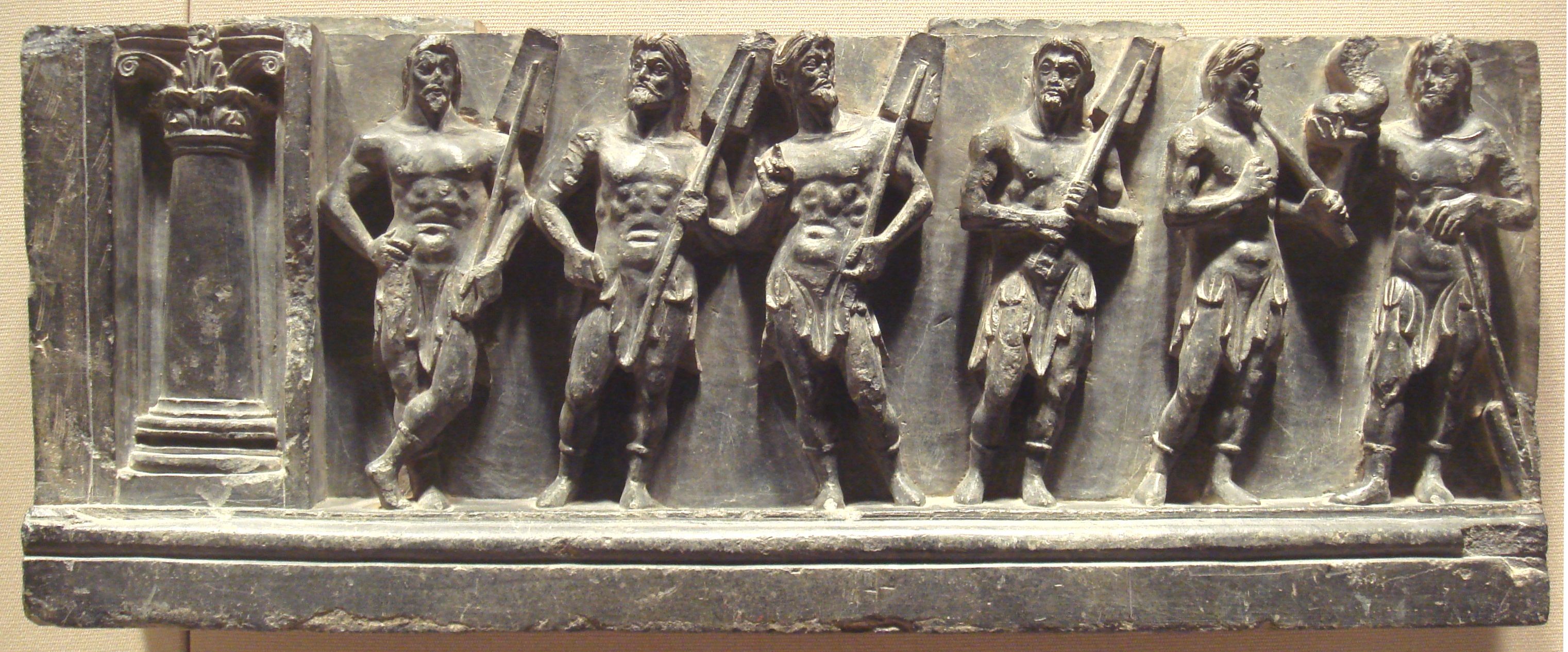
The Buddha statues of Gandhara have wavy hair like Apollo. That single detail captures something extraordinary about this ancient kingdom in what is now northwestern Pakistan and eastern Afghanistan: it was the place where Greek artistic traditions, carried east by Alexander the Great's conquests, merged with Indian Buddhist devotion to produce something neither civilization could have created alone. For roughly a thousand years, from the 6th century BCE through the 5th century CE, Gandhara occupied the Peshawar Valley and surrounding highlands, absorbing Persian, Greek, Scythian, Parthian, and Kushan influences. Then the Alchon Huns destroyed its monasteries, and the kingdom's art was forgotten for more than a millennium.
Where Civilizations Collided
Gandhara's geography made it a crossroads by necessity. Centered on the Peshawar Valley with major cities at Taxila (Takshashila), Peshawar (Purusapura), and Charsadda (Pushkalavati), the kingdom sat at the eastern terminus of trade routes running from the Mediterranean through Central Asia and at the western edge of the Indian subcontinent. Every empire that wanted to connect East and West had to pass through. The Achaemenid Persians absorbed it as a satrapy. Alexander marched through in 327 BCE. The Mauryans under Ashoka made it a center of Buddhist missionary activity in the 3rd century BCE, dispatching the monk Majjhantika from Varanasi to spread the dharma. Each wave of conquest deposited cultural sediment. By the time the Kushan Empire consolidated control in the 1st century CE, Gandhara had accumulated layers of influence that no other region on earth could match.
Buddhas with Greek Faces
The art that emerged from this fusion was revolutionary. Before Gandhara, the Buddha was not depicted in human form; artists used symbols like footprints, empty thrones, or the Bodhi tree. Gandharan sculptors, drawing on Hellenistic traditions of portraiture, began carving the Buddha as a man. They gave him flowing robes reminiscent of a Roman toga, features that recalled classical statuary, and that distinctively wavy hair borrowed from depictions of Apollo. Stucco and stone were the primary media, used to decorate monasteries and stupas across the region. The Gandharan style can be traced through distinct phases: Indo-Greek art from the 2nd century BCE, Indo-Scythian work in the 1st century BCE, and the peak period of Kushan art from the 1st through 4th centuries CE. Scenes of the Buddha's life became common motifs, from Queen Maya's dream of the white elephant to the Great Departure from the palace to the final parinirvana. Each told a sacred story using the visual grammar of the Mediterranean world.
The Transmission East
Gandhara did not merely create Buddhist art; it transmitted Buddhist thought. By the late 2nd century CE, the Kushan monk Lokaksema began translating Mahayana sutras from the Gandhari language into Chinese, producing some of the first Buddhist texts available in East Asia. These included the Ashtasahasrika Prajnaparamita Sutra and early texts on meditation and the Buddha Akshobhya. Scholars believe the Longer Sukhavativyuha Sutra, foundational to Pure Land Buddhism, may have been compiled in the Gandhara region during the 1st and 2nd centuries CE. The emperor Kanishka of the Kushan Empire reportedly presided over the establishment of Mahayana Prajnaparamita teachings in the northwest, with 500 bodhisattvas attending a council at Jalandhra monastery. Through these channels, Gandhara's religious and intellectual output shaped Buddhism as it spread across China, Korea, and Japan, a transmission whose effects persist to this day.
Destruction and Silence
The end came with the Alchon Huns in the 5th century. The ruler Mihirakula earned a reputation in Buddhist sources as a terrible persecutor, destroying over a thousand monasteries throughout Gandhara. Taxila, one of the ancient world's great centers of learning, never recovered. When the Chinese pilgrim Xuanzang visited around 630 CE, he found Buddhism drastically declined in favor of Shaivism, the monasteries deserted and crumbling. Virtually all Alchon coins found at Taxila turned up in the ruins of burned monasteries, some alongside the bodies of defenders who died trying to protect them. The Greco-Buddhist art tradition went extinct. By the time the Ghaznavid Empire absorbed the region in the early 11th century, Gandhara's Buddhist heritage had been thoroughly buried. Its art, its language, its scholarship existed only in the ground and in the pages of Chinese travel accounts that no one in the region could read.
Pieces of a Lost World
Rediscovery required detectives from another civilization entirely. In the 1830s, British colonial administrators began finding coins from the post-Ashoka period, and scholars translated the Chinese travelogues that described Gandhara's monasteries in precise geographic detail. Charles Masson, James Prinsep, and Alexander Cunningham deciphered the Kharosthi script in 1838, unlocking inscriptions that had been unreadable for centuries. Cunningham found Gandharan sculptures north of Peshawar in 1848 and identified the site of Taxila in the 1860s. The most systematic work came from archaeologist John Marshall, who excavated at Taxila between 1912 and 1934, uncovering distinct Greek, Parthian, and Kushan city layers along with numerous stupas and monasteries. After 1947, Pakistani scholars including Ahmed Hassan Dani continued the work in the Peshawar and Swat valleys. Each excavation added another piece to a puzzle that spans two millennia and connects Athens to Beijing through a valley in Pakistan.
From the Air
Located at 33.76°N, 72.83°E, centered on the Peshawar Valley of northwestern Pakistan. The ancient city of Taxila lies about 35 km northwest of Islamabad. Key landmarks include the ruins at Taxila (UNESCO World Heritage Site), the Peshawar Valley, and the Swat Valley to the north. Islamabad International Airport (OPIS) is approximately 40 km southeast. Peshawar Bacha Khan International Airport (OPPS) lies to the northwest. Best viewed at 10,000-15,000 ft AGL to see the full extent of the Peshawar Valley cradled between mountain ranges. The Indus River is visible to the east.