Garden of the Gods
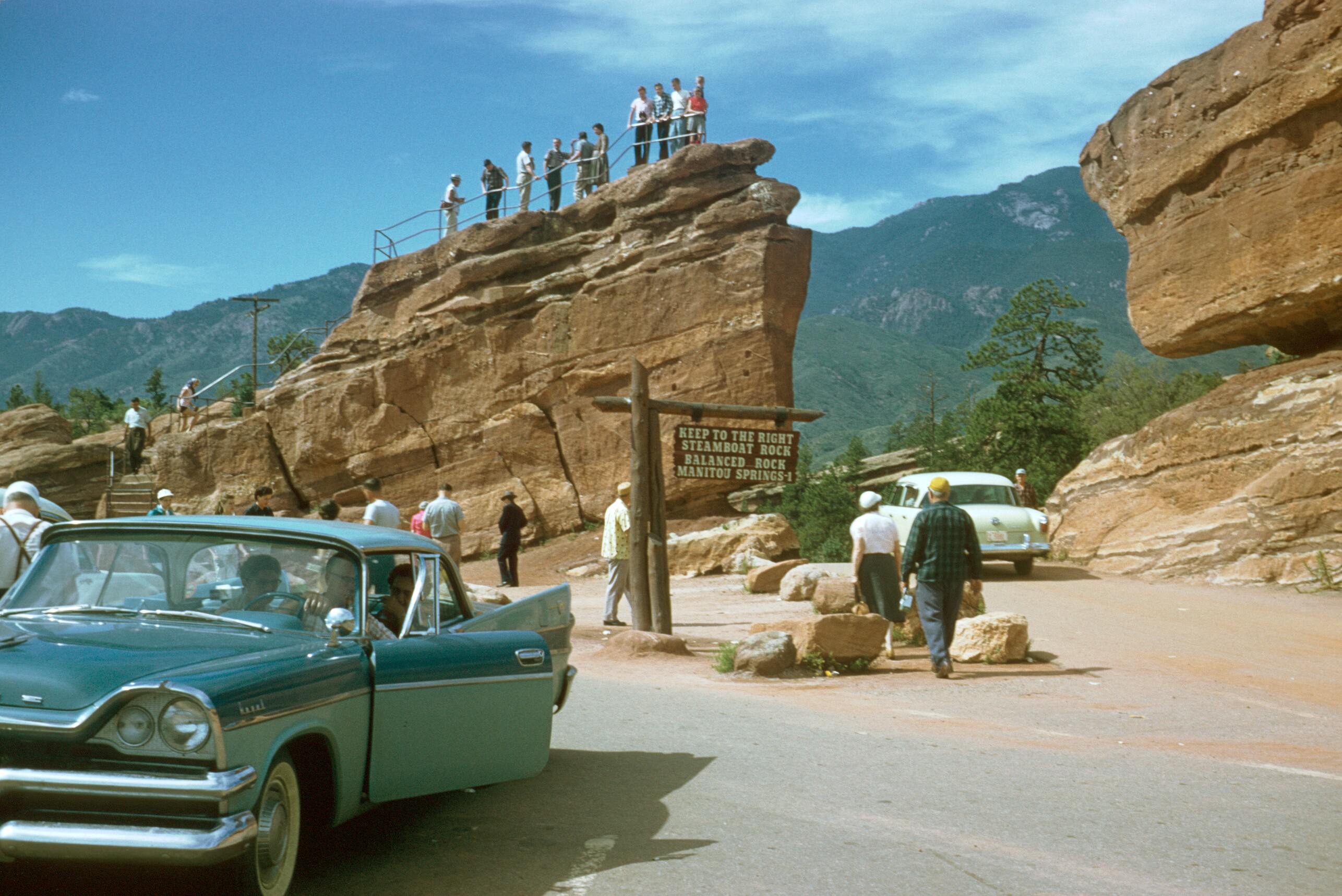
Garden of the Gods is what happens when ancient seas deposit sediment, mountains rise, and millions of years of erosion sculpt the result into improbable shapes. The park's red rocks began as horizontal layers of sediment 300 million years ago. When the Rocky Mountains rose 65 million years ago, the layers tilted nearly vertical, exposing their edges. Wind, water, and time carved fins, spires, and balanced rocks from the softer layers. The result is a natural sculpture garden at the foot of Pikes Peak: red rock formations with names like Kissing Camels and Cathedral Spires rising against the snowcapped mountain. Charles Elliott Perkins, who bought the property in 1879, so loved it that his children donated it to Colorado Springs in 1909, stipulating it must remain 'forever free to the public.' It has.
The Geology
The rocks of Garden of the Gods tell a 300-million-year story. The oldest formations - the pink and white rocks - are 1.7-billion-year-old Precambrian granite. Above them, deposited when this area was covered by ancient seas and coastal deserts, are layers of sandstone, shale, and limestone. The red rocks that define the park are Lyons Formation sandstone, deposited as coastal dunes 270 million years ago. Iron oxide gives them their red color. When the Rockies rose during the Laramide orogeny (65-80 million years ago), these horizontal layers were pushed vertical. Erosion has since carved the distinctive formations.
The Formations
The rock formations have inspired names for centuries. The Ute people called the area 'Old Red Land.' European settlers saw familiar shapes: Kissing Camels, Sleeping Giant, Cathedral Spires, Balanced Rock. The Gateway Rocks frame Pikes Peak in what may be Colorado's most photographed view. The formations range from massive fins to delicate balanced stones. The variety reflects different rock types eroding at different rates - resistant layers protect softer stone beneath, creating mushroom shapes and overhangs. Climbers know these rocks intimately; Garden of the Gods has been a climbing destination for over a century.
The Gift
Charles Elliott Perkins was a railroad executive who fell in love with this land and bought it in 1879. He resisted all development and never opened it to the public during his lifetime. When he died in 1907, his children honored his wishes in the most generous way possible: they donated the 480 acres to Colorado Springs with the condition that it 'shall be forever free to the public.' The city has kept that promise. Garden of the Gods is a free public park, one of the most visited natural attractions in the American West, and a monument to private generosity.
The Activities
Garden of the Gods offers walking, hiking, rock climbing, horseback riding, and Segway tours among the formations. The main loop road allows driving through the park. The Trading Post complex offers a visitor center, museum, and commercial area. Rock climbing is permitted on designated formations with proper equipment; registration is required. The Junior Ranger program engages children. The park is busiest on summer weekends; early morning or weekday visits offer more solitude. Winter brings fewer crowds and sometimes snow-dusted red rocks. The juxtaposition with snowcapped Pikes Peak is most dramatic when both are visible.
Visiting Garden of the Gods
Garden of the Gods is located in Colorado Springs, Colorado, on the western edge of the city at the foot of Pikes Peak. Admission is free (honoring the original gift). The Visitor and Nature Center provides geological interpretation and trail information. The park is open year-round; roads may close temporarily in winter storms. Popular trails include the Garden Path Trail (main formations), Siamese Twins Trail, and North Gateway Loop. The Pikes Peak Cog Railway and Manitou Incline are nearby. Colorado Springs Airport (COS) is 15 miles southeast; Denver International (DEN) is 75 miles north. Combine with Pikes Peak, Cave of the Winds, or Manitou Springs for a full day.
From the Air
Located at 38.87°N, 104.87°W at the eastern base of the Rocky Mountains in Colorado Springs, Colorado. From altitude, the red rock formations are visible as a cluster of tilted fins against the gray-green of Pikes Peak and the Front Range. The contrast between the red sandstone and the surrounding terrain is dramatic. Colorado Springs spreads east across the plains. Pikes Peak rises to the west, often snowcapped. The park's compact size - surrounded by urban development - is evident from above.