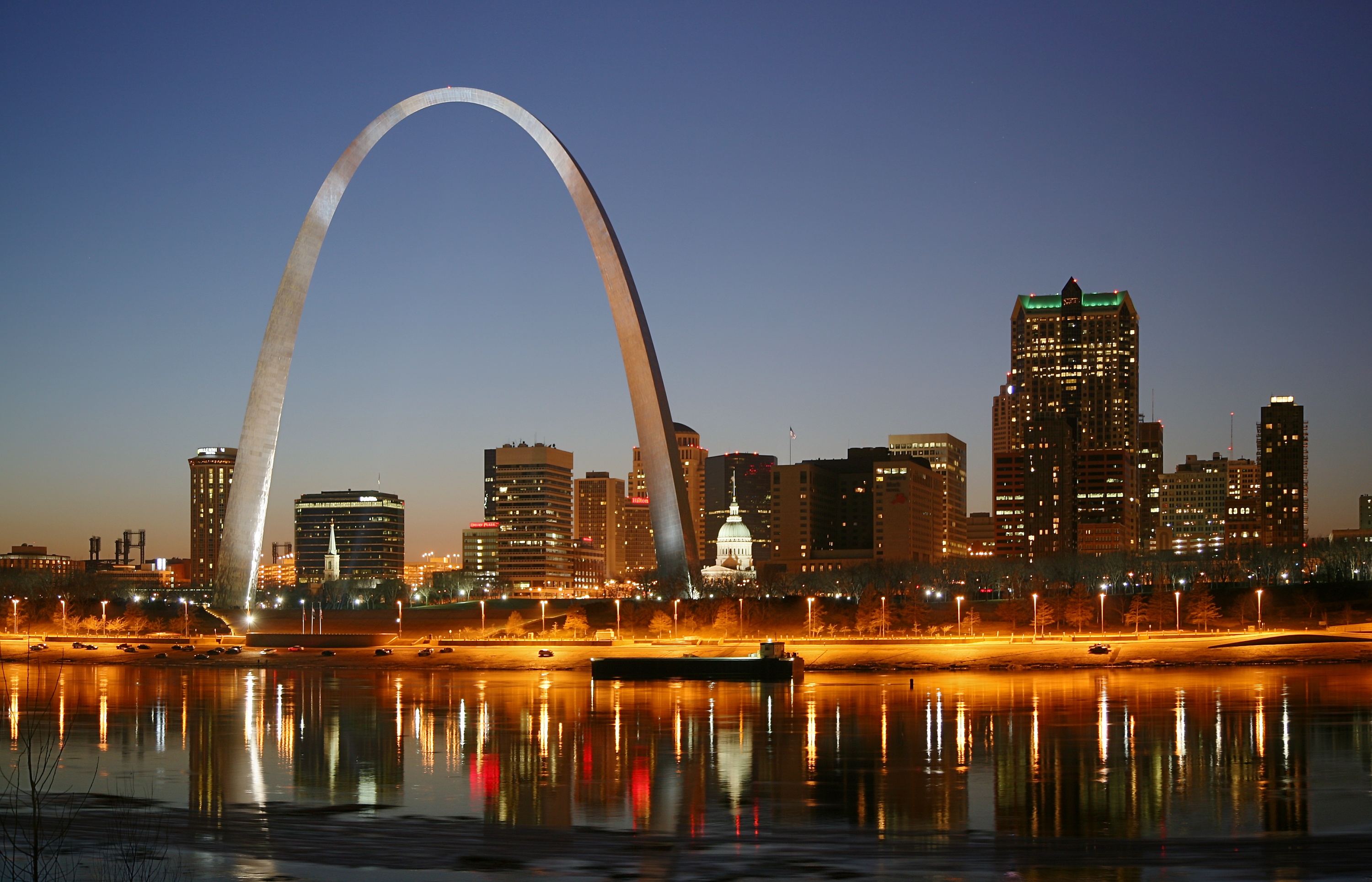
Gateway Arch: The Impossible Stainless Curve
The Gateway Arch should not have worked. Two separate legs rising from foundations 630 feet apart, each curving inward at a calculated rate, expected to meet at the top precisely enough for a final section to slot between them. If the legs were off by even a few inches after rising 630 feet through St. Louis heat and cold, wind and sun, the final piece would never fit. Engineers calculated that thermal expansion alone could cause the legs to miss by 5 feet. On October 28, 1965, with one leg already at full height and the other inches short, they jacked the shorter leg into position and dropped the keystone section home. It fit. The Gateway Arch, impossible monument to westward expansion, was complete.
The Design
Finnish architect Eero Saarinen won the 1948 design competition for a memorial to westward expansion with a radical concept: a stainless steel catenary arch - the shape formed by a chain hanging between two points, inverted. At 630 feet tall (and 630 feet wide at the base), it would be the tallest man-made monument in the United States. Saarinen died in 1961, four years before construction began; his partners completed the engineering. The arch's shape wasn't just aesthetic - the catenary curve transfers all loads through the structure as compression, making an impossibly slender form remarkably stable.
The Construction
Construction began in 1963 with separate crews building each leg. The triangular sections were fabricated in Pennsylvania, shipped to St. Louis, and assembled using specialized derricks that climbed the growing arch. Each section was double-walled stainless steel, with interior carbon steel shells and concrete filling for weight and stability. Tolerances were measured in 64ths of an inch. As the legs rose and curved toward each other, workers rode in the creeper derricks 600 feet above the Mississippi, setting sections in position with precision that seemed impossible at the time. And might still.
The Completion
The final section - the keystone - had to fit between the two legs after they'd risen independently through two years of construction. Engineers knew the steel would expand and contract with temperature; they planned for final assembly on a cool morning when the southern leg (in full sun) would expand enough to provide clearance. On October 28, 1965, the northern leg was jacked outward, the 8-ton keystone was lifted between the legs, and fire trucks sprayed water on the southern leg to control expansion. The section dropped into place. The arch was complete. No workers died during construction.
The Experience
Visitors reach the observation deck via a tram system - small capsules that travel through the arch's hollow interior, rotating to remain level during the curved ascent. The ride takes four minutes; the view from the top encompasses 30 miles on clear days. The Museum of Westward Expansion beneath the arch interprets the Lewis and Clark expedition and subsequent migration. The grounds are part of the Gateway Arch National Park, connected to the St. Louis riverfront. The arch gleams in sun and glows in artificial light; it's become St. Louis's symbol, visible from much of the metropolitan area.
Visiting the Gateway Arch
Gateway Arch National Park is located on the St. Louis riverfront, accessible from downtown. Tram rides to the observation deck require timed tickets (book in advance for popular dates). The museum beneath the arch is free and worth visiting. The grounds offer views of the arch and the Mississippi River. Riverboat cruises depart from the adjacent levee. The Old Courthouse, site of the Dred Scott case, is part of the park. St. Louis has extensive lodging and dining nearby. Visit early morning or sunset for the best light on the stainless steel; visit at night when the arch is illuminated. Security screening is airport-style.
From the Air
Located at 38.62°N, 90.19°W on the St. Louis riverfront. From altitude, the Gateway Arch is unmistakable - a gleaming parabola rising from the riverbank, its stainless steel surface reflecting sunlight. The Mississippi River flows just east; the St. Louis downtown rises to the west. The arch is visible from aircraft at commercial altitudes; approaching flights to Lambert-St. Louis often provide views. The monument's scale is apparent from altitude - at 630 feet, it's the tallest arch in the world, taller than any building in St. Louis. The surrounding parkland contrasts with dense urban development nearby.