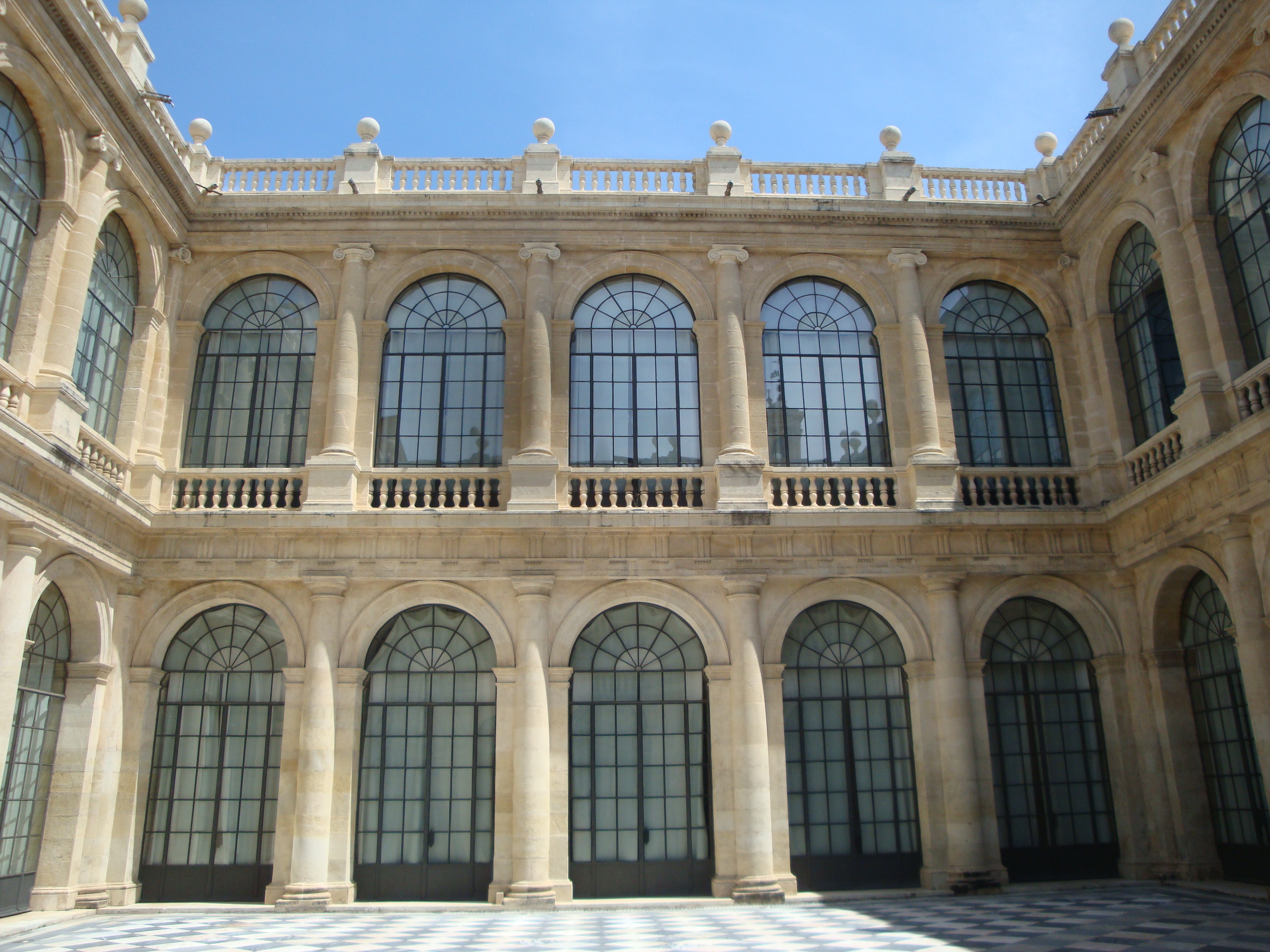
General Archive of the Indies
Somewhere within nine kilometers of shelving, sandwiched between bureaucratic correspondence and shipping manifests, sits Miguel de Cervantes' handwritten request for an official post in the Americas. He was turned down. Nearby rests the journal of Christopher Columbus, the papal bull Inter caetera in which Pope Alexander VI divided the world between Spain and Portugal, and 80 million other pages documenting the day-to-day machinery of the largest empire the world had ever seen. The General Archive of the Indies in Seville holds the paperwork of conquest.
The Building the Merchants Built
Before it housed an empire's records, the building served a more prosaic function: it was where Seville's merchants conducted their business. Philip II commissioned the structure in 1572, designed by Juan de Herrera, the architect of the Escorial. Until then, the city's traders had been retreating into the cool recesses of the cathedral next door to negotiate their deals -- a practice the clergy found increasingly intolerable. The building, known as the Lonja, was begun in 1584 by Juan de Mijares following Herrera's plans. Construction was slow. The ground floor was finished by 1598, but funding problems paused the upper levels in 1601. Work resumed in 1609, and the building was not completed until 1646 -- sixty-two years after the first stone was laid.
An Enlightenment Idea
The transformation from merchant exchange to imperial archive came in 1785 under Charles III, part of the Enlightenment project to organize knowledge and make it available to historians. The practical motivation was straightforward: the Archivo General de Simancas, the Crown's central repository, had run out of space. Secretary for the Indies Jose de Galvez delegated the historian Juan Bautista Munoz to execute the plan, and the first cartloads of documents arrived in October 1785. A grand marble staircase was added in 1787 after designs by Lucas Cintara, lending the repurposed commercial building the dignity its new contents demanded. The expectation, thoroughly Enlightenment in spirit, was that Spanish historians would use these materials to write the definitive history of Spain's overseas empire. Few did, but the documents waited.
The Empire in Eighty Million Pages
The archive's holdings span the full apparatus of colonial administration: records of the Council of the Indies, the Casa de la Contratacion (the royal monopoly on trade), the merchant guilds of Seville and Cadiz, and the administrative correspondence of governors, viceroys, and military commanders across the Americas and the Philippines. The documents range from the 16th through the 19th centuries -- from the first Conquistadores to the final dissolution of Spain's colonial possessions. Maps and plans of Spanish American cities sit alongside routine dispatches that reveal, in their accumulated detail, how the bureaucratic machinery of empire actually functioned month to month. The 43,000 volumes have been mined by historians for two centuries, and as of the early 21st century, 15 million pages have been digitized and made accessible online.
Three Jewels of Seville
In 1987, UNESCO designated the Archive of the Indies a World Heritage Site together with the adjacent Seville Cathedral and the Alcazar -- three buildings standing within steps of each other that collectively represent the spiritual, political, and administrative dimensions of Spain's global reach. The archive building itself, an Italianate example of Spanish Renaissance architecture, underwent thorough restoration between 2002 and 2004 without interrupting its function as a working research library. Scholars still come to Seville to read documents that bear the handwriting of explorers, administrators, and petitioners from across four centuries, handling pages that have survived the rise and fall of the empire they recorded.
From the Air
Located at 37.385N, 5.993W in central Seville, Spain, immediately adjacent to Seville Cathedral and the Alcazar. The building's rectangular Renaissance form is visible between the cathedral and the Alcazar gardens. Nearest airport: LEZL (Seville-San Pablo, ~10 km northeast). The three UNESCO World Heritage buildings form a compact cluster in the old city.