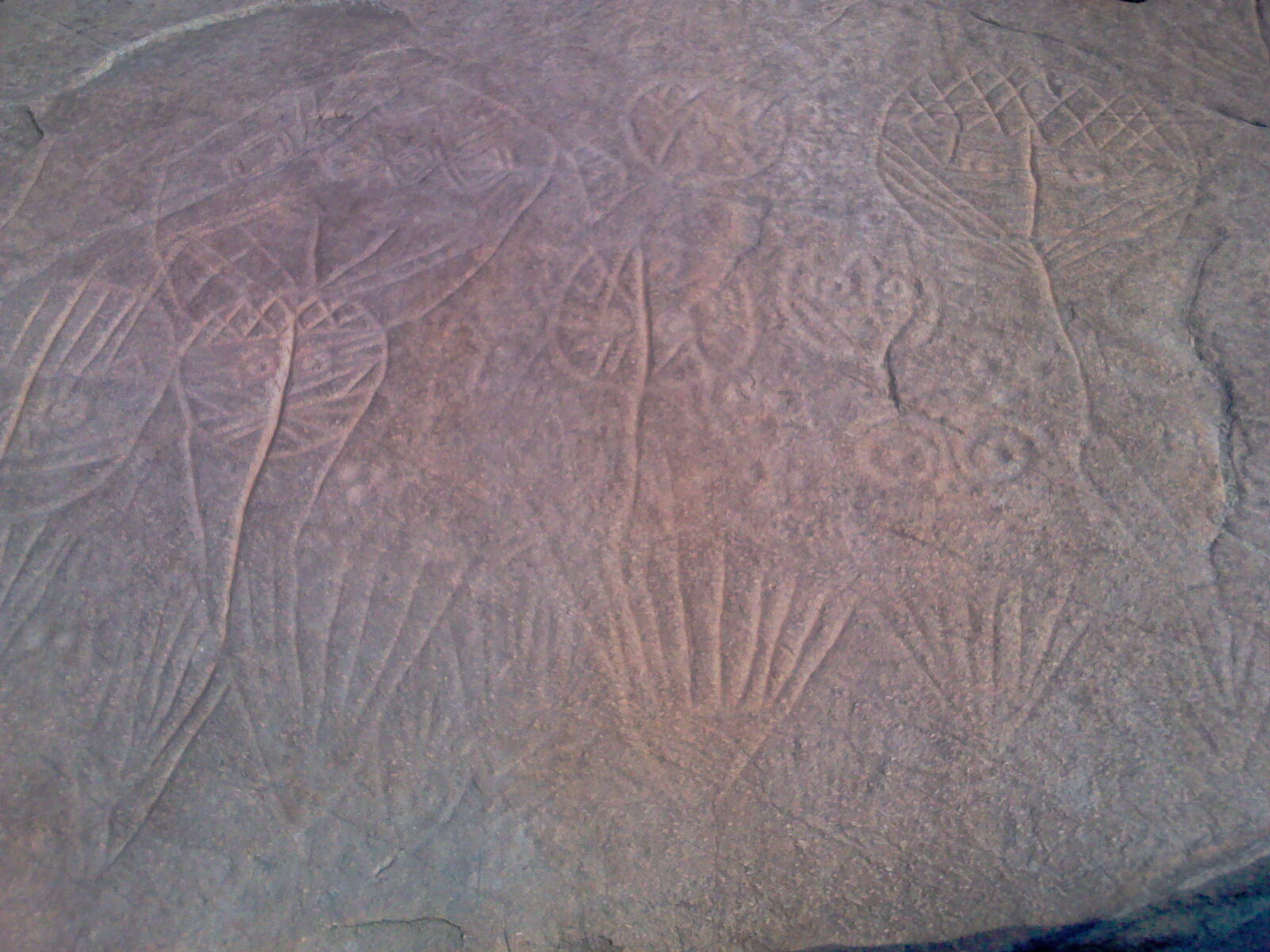
General Cliff Rock Paintings
The Chinese call them Dongfang Tianshu -- the "Oriental Book from Heaven" -- and the name captures both their allure and their frustration. Carved into the rocks of General Cliff, fourteen kilometers west of Lianyungang in Jiangsu Province, these Neolithic petroglyphs have defied complete interpretation since their discovery in 1979. Scholars agree they are ancient. They agree they are significant. Beyond that, consensus dissolves into competing theories about who made them, what they depict, and what they were for.
A Book Nobody Can Read
In the 1980s, researchers identified three separate petroglyph groups spanning several square meters on the cliff face. The images include what appear to be human faces, agricultural symbols, and celestial motifs, but their specific meanings remain the subject of vigorous academic debate. The Cambridge Archaeological Journal published a 2019 analysis connecting some images to rice ecology and crop cultivation, suggesting the carvings may document early agricultural practices along China's east coast. Other scholars have proposed astronomical interpretations, linking the symbols to star patterns or seasonal markers. The uncertainty is itself revealing: these images were made so long ago, and by a culture so far removed from recorded history, that we can see them clearly but cannot hear what they are saying.
Reaching Back Ten Thousand Years
Dating the General Cliff carvings has produced one of the more remarkable claims in Chinese archaeology. One school of thought places their creation around 8000 BC, which would make them the oldest rock paintings ever discovered in China. This is not universally accepted -- Neolithic dating is inherently imprecise, and alternative chronologies place the carvings somewhat later. But even conservative estimates confirm that these images were carved during the Neolithic period, making them contemporaneous with the earliest permanent settlements along the Yellow River. The people who chiseled these shapes into the cliff face lived in a world without writing, without metal tools, without cities. They left behind almost nothing except these marks on the rock.
Protected but Still Mysterious
In 1988, the State Council included the General Cliff Rock Paintings in the third batch of Major Historical and Cultural Sites Protected at the National Level, placing them among China's most important heritage sites. The designation brought conservation resources and public attention but did not resolve the fundamental interpretive questions. The cliff continues to weather, and the petroglyphs' exposure to the elements raises ongoing preservation concerns. Visitors who make the journey to the site outside Lianyungang encounter images that look simultaneously primitive and deliberate -- clearly made with purpose, by people who had something specific to communicate. The tragedy of time is that their message arrived without its language.
From the Air
Located at 34.54°N, 119.13°E, approximately 14 km west of Lianyungang city center in Jiangsu Province. The cliff site is in a suburban/rural area near Jinping. Nearest airport: Lianyungang Huaguoshan International Airport (ZSLG/LYG), approximately 20 km to the east. At low altitude (2,000-3,000 feet AGL), the rocky terrain of General Cliff is distinguishable from the surrounding agricultural landscape. The Yellow Sea coast is visible to the east.