Generalife
The name probably derives from jannat al-'arif -- "Garden of the Architect" or perhaps "Garden of the One Who Knows" -- though scholars are not entirely sure, and the true etymology may be lost. What is not lost is the garden itself, climbing the hillside east of the Alhambra in a series of terraces, courtyards, and water channels that represent one of the finest surviving examples of Islamic garden design. The Generalife was built as a country retreat for Granada's Nasrid rulers, a place where the caliph could escape the formalities of the palace below and immerse himself in the sound of running water, the scent of orange blossoms, and the long views across the Darro valley.
A Farm Fit for a Sultan
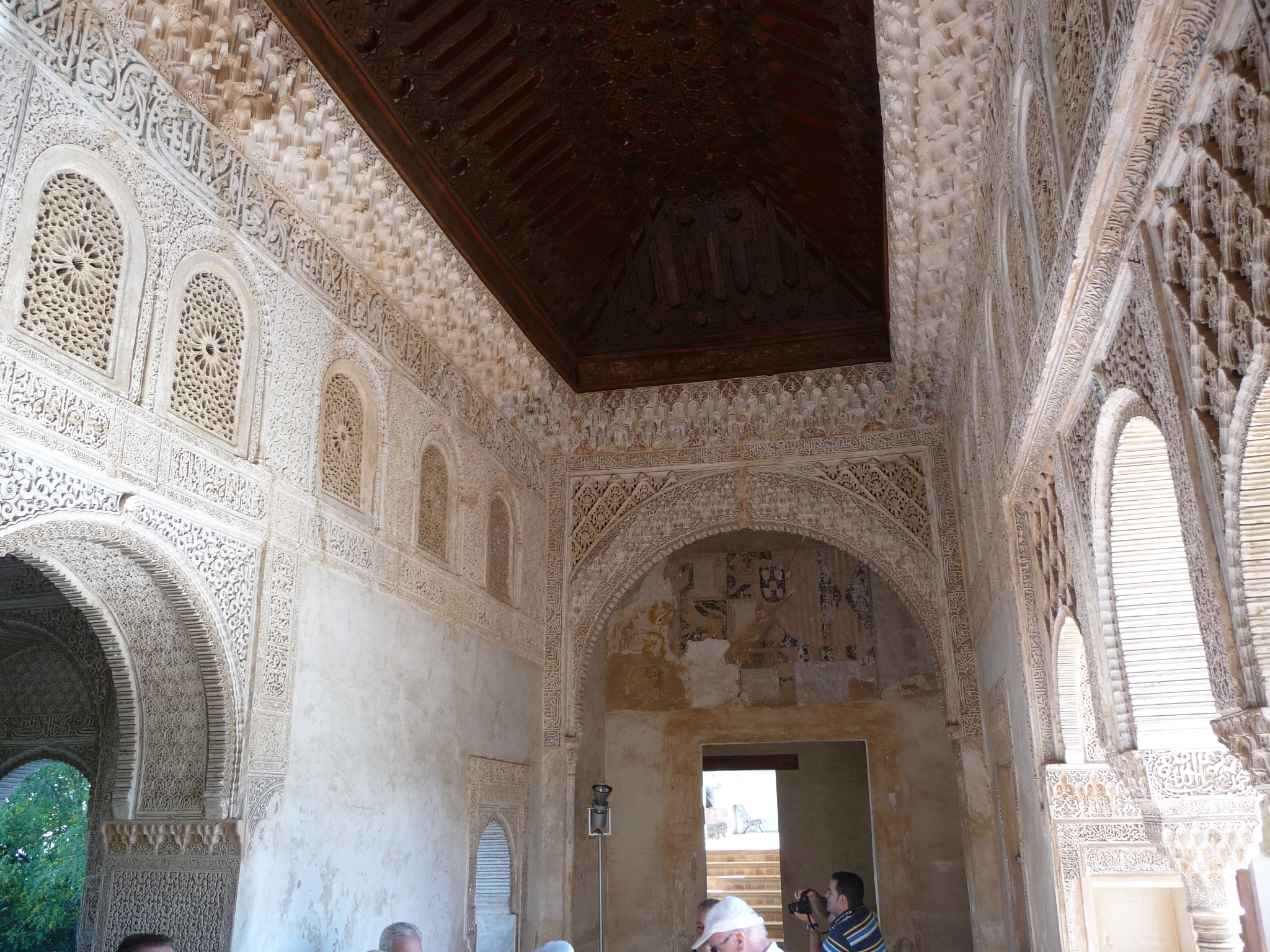
In Arabic, the Generalife was an almunia -- a word meaning farm, though the Nasrid version of a farm included reception halls, ornamental pools, and carved stucco ceilings. Country estates like this had been a tradition of Islamic rulers in al-Andalus since the Umayyad period in the 8th century, and the hills around Granada were dotted with them by the time the Nasrid dynasty came to power. The Generalife was likely begun under Muhammad II or Muhammad III in the late 13th or early 14th century, with Muhammad III contributing at least the mirador -- the lookout chamber -- in the palace's northern pavilion. Later rulers added their own modifications. An inscription records that Ismail I remodeled and redecorated the estate in 1319. The Generalife was not meant to impress foreign ambassadors or intimidate rivals; that was the Alhambra's job. This was a place for the ruler to walk among trees, listen to fountains, and remember that power, at its best, should feel like peace.
The Courtyard of the Canal
The Patio de la Acequia -- the Courtyard of the Canal -- is the Generalife's most celebrated space. A long, narrow courtyard oriented roughly north-south, it is bisected by a water channel lined on either side by jets that send arcs of water across the pool. The walkways are paved in traditional Granadian style, a mosaic of pebbles: white from the River Darro, black from the River Genil. At the northern end, a portico leads to the Salon Regio, the Royal Chamber, with its mirador offering views over the Alhambra and the city beyond. The modern fountains were added later; 19th-century images show the courtyard without them, the water channel reflecting the sky in stillness. But the fundamental design -- a narrow garden organized around a single axis of moving water, enclosed by architecture on all sides -- is original, and it achieves something that no photograph captures: the sound. Standing in the Patio de la Acequia, you are surrounded by the murmur and splash of water in a dozen different registers, a liquid architecture layered over the stone one.
Water That Climbs Stairs
Above the courtyards, the Escalera del Agua -- the Water Stairway -- demonstrates a piece of engineering that doubles as poetry. This four-flight staircase has water channels carved into the tops of its balustrades, so that water flows continuously along the handrails as you climb. The effect is startling: you ascend a staircase while water descends past your hands, cool and constant, a tactile counterpoint to the effort of climbing. The stairway leads to the upper gardens, where the terrain becomes wilder and the views open up to include the surrounding mountains. The entire water supply for both the Generalife and the Alhambra was fed by the Acequia del Sultan, a canal that channeled water from the Darro River upstream, a feat of hydraulic engineering that made these hilltop gardens possible in a semi-arid landscape.
The Secret Passage
The Nasrid rulers did not walk through town to reach their country estate. A private covered passage, partly sunken and hidden between walls, connected the Alhambra directly to the Generalife across the ravine between them. Beginning at the Torre de los Picos on the Alhambra side, the passage crossed orchards and market gardens before entering the Generalife through a group of fortified towers at its southwestern end, emerging into what is now the Patio de Polo. Halfway along was a small courtyard with a watering trough for animals. The passage still mostly exists today, a reminder that this garden was not merely a pleasant place to visit but a carefully integrated extension of the royal compound -- connected, defended, and private. The present-day gardens owe much of their appearance to Leopoldo Torres Balbas and Francisco Prieto Moreno, who rearranged them between 1931 and 1951, adding Italian influences. The Generalife, like the Alhambra, is a palimpsest -- each generation writing its own ideas of beauty over the ones that came before.
From the Air
Located at 37.177N, 3.585W, directly east of and uphill from the Alhambra complex in Granada. The gardens are visible from the air as terraced green spaces climbing the hillside above the Alhambra's walls. The Silla del Moro watchtower is visible on the hill above. Nearest airport is Granada-Jaen (LEGR). At lower altitudes, the rectangular courtyard pools and the geometric garden layouts become visible.