Geological Museum of China
A 237-gram cinnabar crystal, blood-red and impossibly perfect, sits in a display case in Beijing's Xisi neighborhood. It is called the "King of Cinnabar," and it is just one of the reasons the Geological Museum of China -- the country's oldest geological scientific museum -- rewards a visit. Founded in 1916 and opened to the public on October 1, 1959, this museum holds more than 100,000 geological specimens, many of them classified as National Treasures. The collection spans the entire arc of Earth's history, from the Cambrian explosion to the arrival of modern humans.
Treasures of Deep Time
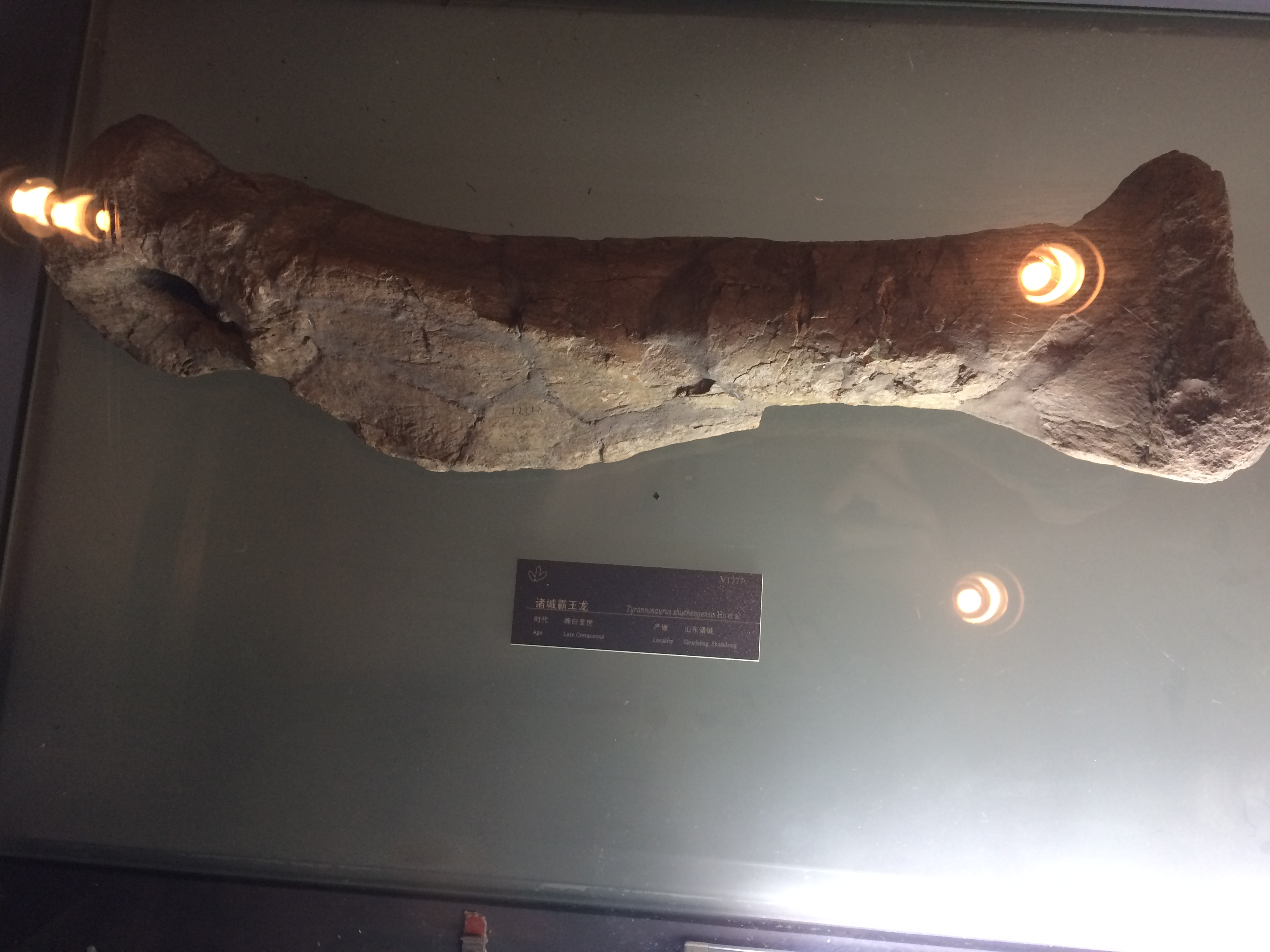
The museum's most celebrated holdings are its fossils. The Giant Shandong Dinosaur -- a Shantungosaurus, one of the largest hadrosaurs ever discovered -- dominates one display. From Liaoning Province come some of the most complete feathered dinosaur fossils in the world, specimens that have fundamentally reshaped scientific understanding of the link between dinosaurs and birds. These include exquisitely preserved creatures with feather impressions so detailed they look almost painted, and primitive birds whose fossils have proven essential to evolutionary research. The teeth of Yunnan's Yuanmou Man, dated to roughly 1.7 million years ago, pushed back the known timeline of human presence in China.
Walking Through the Paleontology Hall
The Stratum Paleontology Hall on the third floor unfolds like a walk through geological time. It begins with fossils from the Cambrian explosion -- trilobites and the earliest complex life forms -- then progresses through fossilized plants and marine reptiles, including a Cymbospondylus mounted on the wall. A circular gallery with a glass floor reveals dinosaur bones beneath visitors' feet. Further along, a dramatic scene from Cretaceous Mongolia shows Velociraptor specimens menacing a nesting Oviraptor, a reconstruction of predator-prey dynamics frozen in stone 75 million years ago. A Tyrannosaurus rex skull cast looms nearby, alongside beautifully preserved specimens from Liaoning's famous fossil beds.
Five Halls, One Planet
Beyond paleontology, the museum's 2,500 square meters of exhibition space are organized into five halls. The geological resources hall catalogs China's mineral wealth. The global history hall explains the forces that shape the planet -- volcanism, erosion, plate tectonics -- through models and specimens. The mineral rocks and diamond hall displays more than 60 mineral species first identified in China. The stoneware, bone needles, and decorative objects unearthed from the Upper Cave Man site at Zhoukoudian, just southwest of Beijing, connect the geological record to the human one. These artifacts, dating back roughly 30,000 years, were found alongside the remains of people who lived in caves above a river valley not far from where the museum now stands.
A Century of Collecting
The museum's origins trace to 1916, during the early Republic era, making it the earliest geological scientific museum in China. It opened to the public in 1959, on the tenth anniversary of the People's Republic. A century of collecting has filled its halls with specimens gathered from every province and geological era. The collection continues to grow as new discoveries arrive from field sites across the country. For a nation sitting atop some of the world's most productive fossil beds, from the feathered dinosaurs of Liaoning to the hominid sites of Yunnan, this museum serves as a kind of national vault -- a place where the deep history of the land is gathered, preserved, and put on display for anyone willing to look.
From the Air
Located at 39.92N, 116.37E in Beijing's Xisi area, near the heart of the old city. The museum building sits among the dense urban blocks west of the Forbidden City. Beijing Capital International Airport (ZBAA) is approximately 25 km northeast. Best viewed at lower altitudes; the building is not distinctively visible from high altitude but is situated near the prominent Xisi intersection.