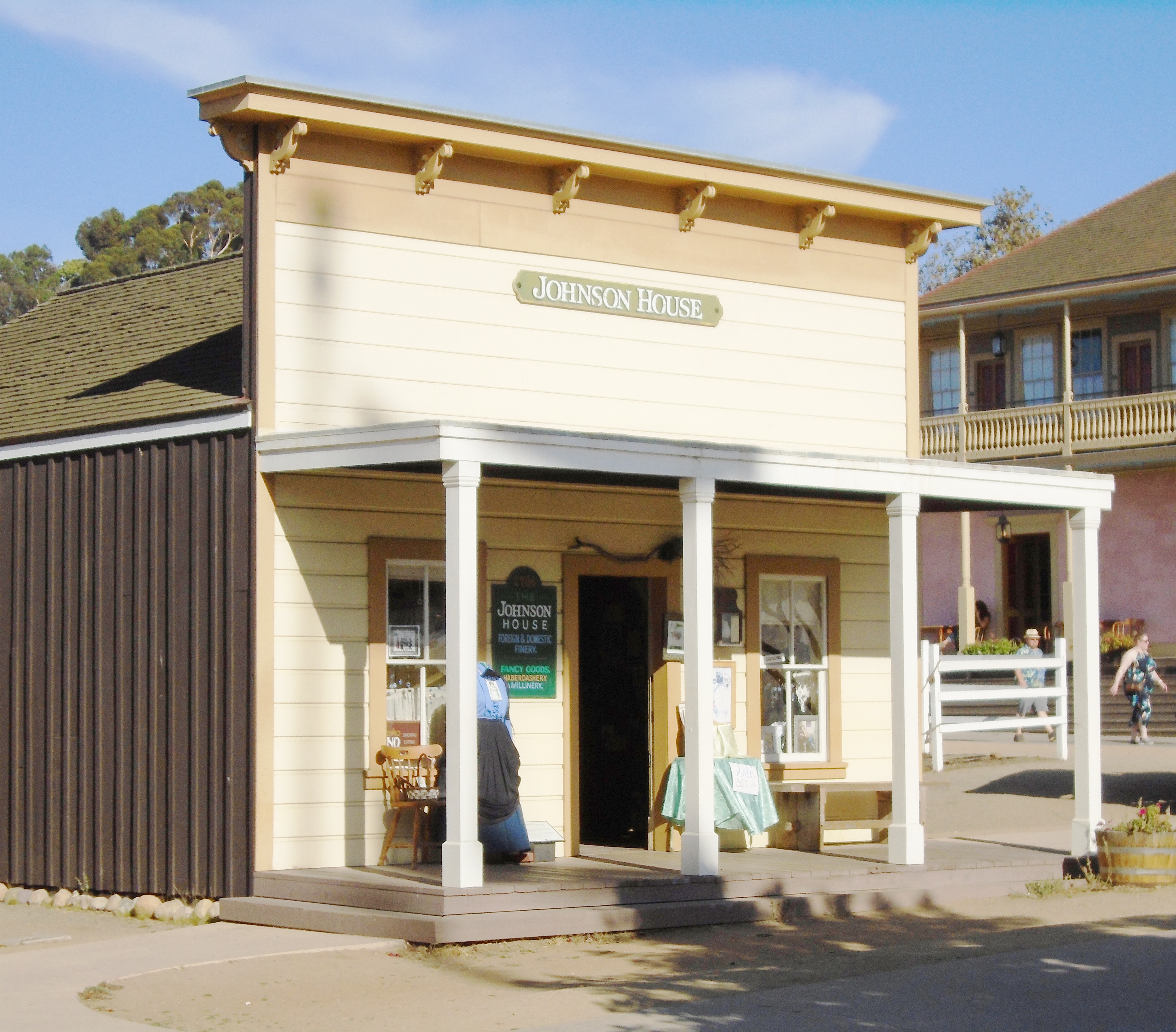
George Alonzo Johnson
George Alonzo Johnson arrived in California during the Gold Rush, built a steamboat empire on the Colorado River that transformed military supply costs, married into a San Diego ranching dynasty, served in the California Assembly, and then lost almost everything — a life that traced the arc of nineteenth-century California ambition.
From New York to the Gold Fields
George Alonzo Johnson was born in New York in 1824. Like tens of thousands of men of his generation, the discovery of gold in California in 1848 redirected his life. He came west during the rush, but Johnson was not primarily a prospector — he was an entrepreneur who recognized that the real fortune lay not in the ground but in the logistics of supplying those who were digging.
His eye fell on the Colorado River, the waterway that flows south from the Rocky Mountains through the desert Southwest before emptying into the Gulf of California. The Colorado was the natural supply line for the Army's desert outposts, including Fort Yuma, and for the mining communities of Arizona Territory. Getting supplies to those outposts overland was expensive, dangerous, and slow. By river, if you had the boats, it could be done.
Master of the Colorado
Johnson built a steamboat operation on the lower Colorado River that became the dominant commercial presence on the water. The impact on military logistics was dramatic: the cost of supplying Fort Yuma, which had been running $500 per ton before steamboat service was established, dropped to $75 per ton. That was not a marginal improvement — it was a transformation of what was economically feasible in the desert Southwest.
Running steamboats on the Colorado in the mid-nineteenth century required constant problem-solving. The river was shallow in places, unpredictable in flood season, and passed through country that was, for much of its length, among the most hostile environments in North America. Johnson's operation navigated these challenges successfully enough to maintain commercial dominance for years.
He held contracts with the federal government for military supply. He built relationships with the Army, with settlers, and with the mining communities that were developing in the territory. The Colorado River business made him wealthy and influential.
San Diego, Marriage, and Rancho Los Peñasquitos
In 1859, Johnson married into one of San Diego's most established families, connecting himself to Rancho Los Peñasquitos — one of the great land grants of the Mexican California era, a vast property in the hills north of San Diego that had been granted to a military officer under Mexican rule.
The marriage linked Johnson's commercial wealth to San Diego's landed gentry. He served in the California State Assembly in 1863 and again in 1866 and 1867, representing San Diego County during the turbulent post-Civil War period. His position in the county's economic and political life seemed secure.
But the financial pressures of the late nineteenth century were severe. Johnson lost Rancho Los Peñasquitos in 1880 — a common fate for California's Spanish and Mexican land grant families and those who had married into them, as legal challenges, debts, and economic downturns stripped away the great ranchos one by one.
What the House Remembers
Johnson died in 1903 at the age of 79. His house in Old Town San Diego — the Johnson House — still stands within Old Town San Diego State Historic Park, a preserved reminder of the commercial class that shaped the early American period of San Diego's history.
The Johnson House is one of several historic structures in Old Town that connect visitors to the entrepreneurs, politicians, and settlers who built San Diego in the decades after the Mexican-American War. Johnson's story — the Gold Rush arrival, the river empire, the California Assembly seat, the loss of the rancho — was not atypical. It was the story of an era in which fortunes were built quickly on the frontier and lost almost as fast.
The Colorado River that made him wealthy is still there, still flowing south through the desert to the sea, still crossed by those who seek something on the other side.
From the Air
The Johnson House associated with George Alonzo Johnson is located in Old Town San Diego State Historic Park, approximately 4 miles north of KSAN (San Diego International Airport). Old Town sits at the base of Presidio Hill, the original site of the Spanish settlement that would grow into modern San Diego. Flying north from the airport, the Old Town neighborhood is visible in the valley below before the terrain rises toward the mesas of Mission Hills and Point Loma.