The George Washington Bridge: The Most Beautiful Bridge in the World
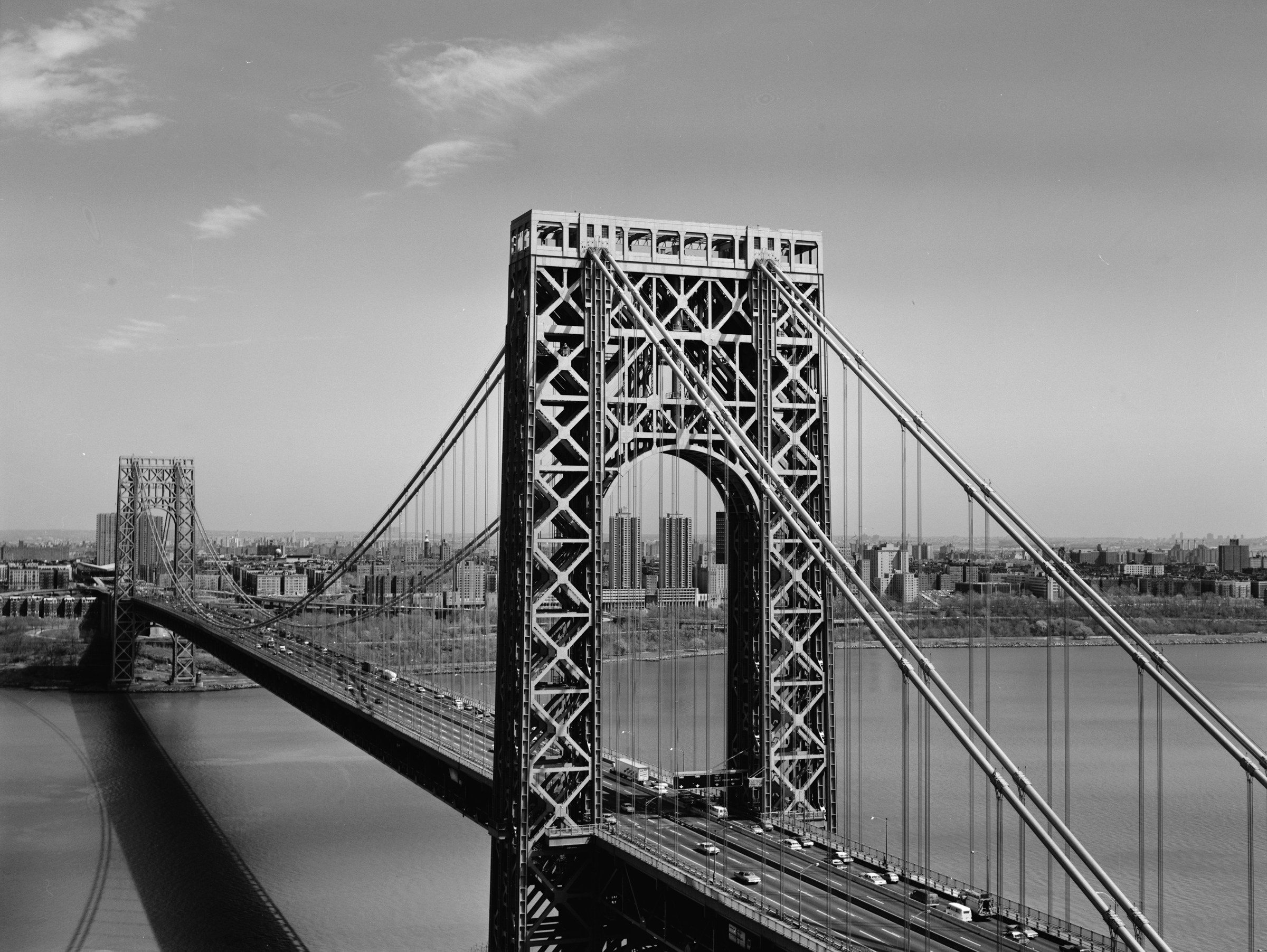
Le Corbusier was not a man given to easy praise. The Swiss-French architect who reinvented the modern city found most of New York repulsive. But when he saw the George Washington Bridge, he put down his contempt and picked up admiration. "The most beautiful bridge in the world," he wrote in When the Cathedrals Were White. "It is blessed. It is the only seat of grace in the disordered city." What earned that reverence was not ornament but honesty. The bridge's steel towers were meant to be sheathed in granite and concrete, but the Great Depression killed the cladding budget. The naked skeleton stayed, and the world discovered it preferred the truth of exposed steel to the lie of dressed stone.
The Swiss Engineer Who Beat Everyone
Othmar Ammann arrived in the United States from Switzerland in 1904, a young civil engineer with enormous ambition and meticulous habits. By the 1920s, he had outmaneuvered his mentor Gustav Lindenthal, whose grandiose Hudson River crossing proposals kept dying in committee, and proposed something leaner: a suspension bridge connecting Fort Lee, New Jersey, to Washington Heights, Manhattan. The Port of New York Authority approved his plan. Construction began in September 1927, and Ammann delivered the bridge six months ahead of schedule and under its $60 million budget. When the George Washington Bridge opened on October 25, 1931, its main span of 3,500 feet was nearly double that of the next longest suspension bridge. The towers rose 604 feet above the water, taller than the Washington Monument. Ammann had not merely built a bridge; he had leapt past every existing record.
The Towers That Lost Their Clothes
Ammann's original design called for the steel towers to be encased in stone and concrete, giving them a monumental, classical appearance. The architect Cass Gilbert, who had designed the Woolworth Building, prepared ornate facades. But the Depression squeezed every dollar, and the cladding was deferred indefinitely. What remained were the bare lattice steelwork of the towers, their open geometry catching light and shadow in patterns that no stone facade could achieve. Architects and critics fell in love with the accident. The exposed structure became a symbol of modern engineering aesthetics, demonstrating that function could generate its own beauty. The cladding was never added. Today, the idea of covering those towers feels as unthinkable as painting over the Eiffel Tower's ironwork.
Martha Joins George
The bridge originally carried six lanes on its upper deck. By the 1950s, traffic had overwhelmed the capacity. Ammann, now in his eighties, returned to add a lower deck. On August 29, 1962, the lower level opened, adding six more lanes and raising the total to fourteen. Workers nicknamed the lower deck "Martha," after Martha Washington, since the upper deck already bore George's name. The addition increased capacity by 75 percent and made the George Washington Bridge the world's only 14-lane suspension bridge, a distinction it still holds. Today, the bridge carries over 104 million vehicles per year, making it the busiest motor vehicle bridge in the world. Morning and evening, the upper and lower decks pour commuters between New Jersey and Manhattan in a daily migration that dwarfs the population of most American cities.
The Little Red Lighthouse and the Great Gray Bridge
Beneath the bridge's massive New York anchorage sits Jeffrey's Hook Lighthouse, a 40-foot steel tower painted bright red. Built in 1880 and originally stationed at Sandy Hook, New Jersey, the lighthouse was moved to this spot in 1921 to warn ships of the rocky shallows below. When the George Washington Bridge opened in 1931, its brilliant lights made the little lighthouse obsolete. The Coast Guard planned to decommission and remove it. Then came a 1942 children's book, The Little Red Lighthouse and the Great Gray Bridge by Hildegarde Swift, which told the story of a small lighthouse feeling useless next to a mighty bridge, only to discover it still mattered. Children across the country wrote letters demanding the lighthouse be saved. Their campaign worked. The lighthouse was given to New York City in 1951, and it stands today, repainted and relit, the tiniest landmark in the shadow of the largest.
Crossing Point
The George Washington Bridge does not merely connect two states. It connects two ideas of what a city can be. On the Manhattan side, Washington Heights rises in dense apartment blocks where Dominican merengue spills from open windows and the smell of roasting coffee drifts from corner bodegas. On the New Jersey side, the Palisades drop 300 feet to the Hudson in sheer basalt cliffs, their forested tops preserved by John D. Rockefeller Jr.'s land purchases in the 1930s. From the bridge's pedestrian walkway, you can see upriver past the Cloisters to the Tappan Zee, and downriver to the Statue of Liberty. Ammann designed the bridge to carry weight. Time has proved it also carries meaning: it is the daily passage for hundreds of thousands of people who live in one place and work in another, suspended for a few minutes above a river that once divided everything.
From the Air
The George Washington Bridge (40.8517N, 73.9527W) spans the Hudson River between Fort Lee, NJ and Washington Heights, Manhattan. Its twin 604-foot steel lattice towers are unmistakable from the air, rising well above the surrounding terrain. The Palisades cliffs on the NJ side and Fort Tryon Park on the Manhattan side frame the approach. Nearby airports: KTEB (Teterboro, 10km NW), KLGA (LaGuardia, 14km E), KEWR (Newark Liberty, 18km S). Best viewed at 1,500-2,500 feet AGL from the south along the Hudson River corridor. The Little Red Lighthouse is visible at the base of the Manhattan tower.