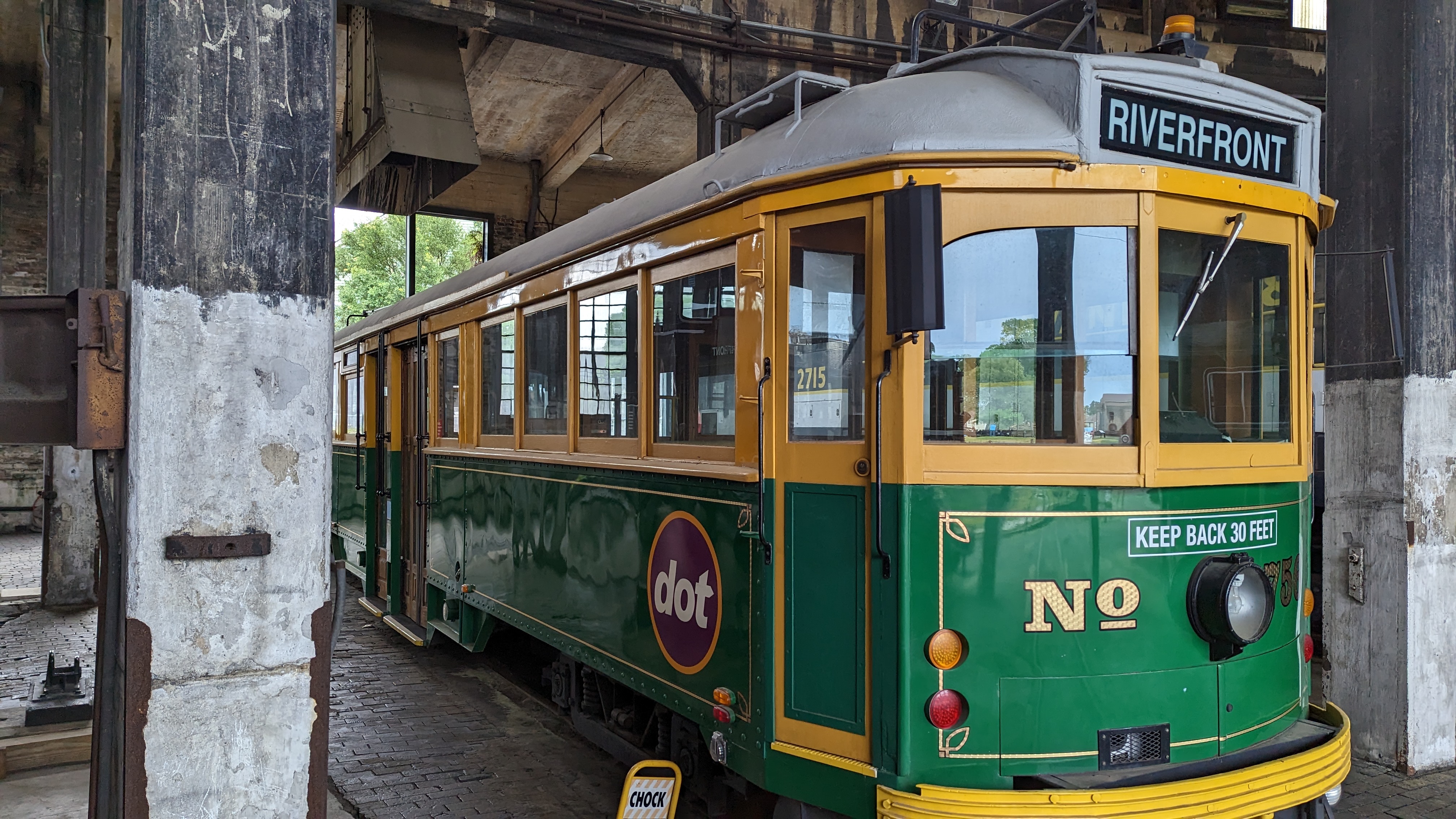
Georgia State Railroad Museum
The turntable still works. Built in the 1850s, rebuilt after a devastating fire in 1923, and now spinning again for visitors, the operating turntable at the Georgia State Railroad Museum in Savannah is the mechanical heartbeat of the most complete pre-Civil War railroad repair complex left standing in the United States. Walk through the roundhouse, the blacksmith shop, the machine shop, and you are walking through a place where Victorian-era craftsmen kept the Central of Georgia Railway running for over a century.
Iron Roots in Cotton Country
The Central of Georgia Railroad began as the Central Rail Road and Canal Company in 1833, when Savannah was a thriving cotton port hungry for faster connections to the Georgia interior. By 1836 the railroad had built a passenger station, freight terminal, and initial shops along Louisville Road. None of those first structures survive. But as the railway expanded through the 1840s, the company needed a proper industrial complex. Construction began in 1851, and by 1853 the first building, a carpenters' shop, was finished. The original roundhouse, machine shop, tender frame shop, blacksmith shop, and several supporting structures followed in 1855. Additional buildings rose through the 1920s. What the Central of Georgia built in Savannah was not merely a repair depot. It was a self-contained industrial village, with its own lumber sheds, planing mills, boiler house, print shop, and coach painting facility.
Through Fire and War
The complex was barely operational when the Civil War began. Confederate and then Union forces used Savannah's rail infrastructure throughout the conflict. The shops survived the war, and for decades afterward they continued servicing the locomotives and rolling stock that connected Savannah to the rest of the South. Then, in 1923, a major fire swept through the complex, destroying the roundhouse and turntable. The railroad rebuilt both in the late 1920s, designing the new structures to accommodate the larger, heavier locomotives that had evolved since the original construction. These rebuilt structures are what visitors see today, layered atop the original 1850s foundations. The complex continued active service until 1963, when the Southern Railway purchased the Central of Georgia and closed the Savannah shops for good.
Graffiti, Glory, and Restoration
For decades after the shops closed, the buildings sat vacant and deteriorating. SCAD students crawled under fences to use the abandoned walls for graffiti. Then, in 1989, the filming of the movie Glory brought a film crew to the area. During the production, Savannah City Manager Don Mendonsa and Historic Savannah President Gordon Matthews toured the decaying site and recognized its potential. Matthews recommended Scott Smith, who had led the restoration of nearby Fort Jackson, to spearhead the project. Smith brought his experience as a historian, engineer, and communicator to the effort, and with the backing of the City of Savannah, the long process of restoration began. The Coastal Heritage Society took on stewardship of the complex, transforming it into the Georgia State Railroad Museum.
Engines and Echoes
Today the museum holds a designation as a National Historic Landmark, recognition that came in 1976 and was expanded in 1978 to include additional structures. The site is considered among the finest remaining examples of Victorian railroad architecture and design in the country. Visitors can explore the partial roundhouse with its operating turntable, examine antique shaft-driven machinery, and inspect steam and diesel locomotives including CG locomotive number 223, a Baldwin C-3 class 2-8-0 built in 1907. The museum also houses the oldest portable steam engine in the United States. Model railroad layouts, office cars, cabooses, and daily tours round out the experience. The Carpentry Shop has been repurposed as the Savannah Children's Museum, giving the complex a new generation of visitors who walk the same floors where craftsmen once shaped the wood and iron that moved the South.
From the Air
The Georgia State Railroad Museum is located at 32.076N, 81.101W in downtown Savannah. The roundhouse and turntable area are visible from 1,500-2,500 feet AGL as a distinctive circular structure amid the Savannah street grid. The nearest airport is Savannah/Hilton Head International (KSAV), approximately 7 nautical miles northwest. The Savannah River and the city's famous grid of squares provide strong visual navigation references.