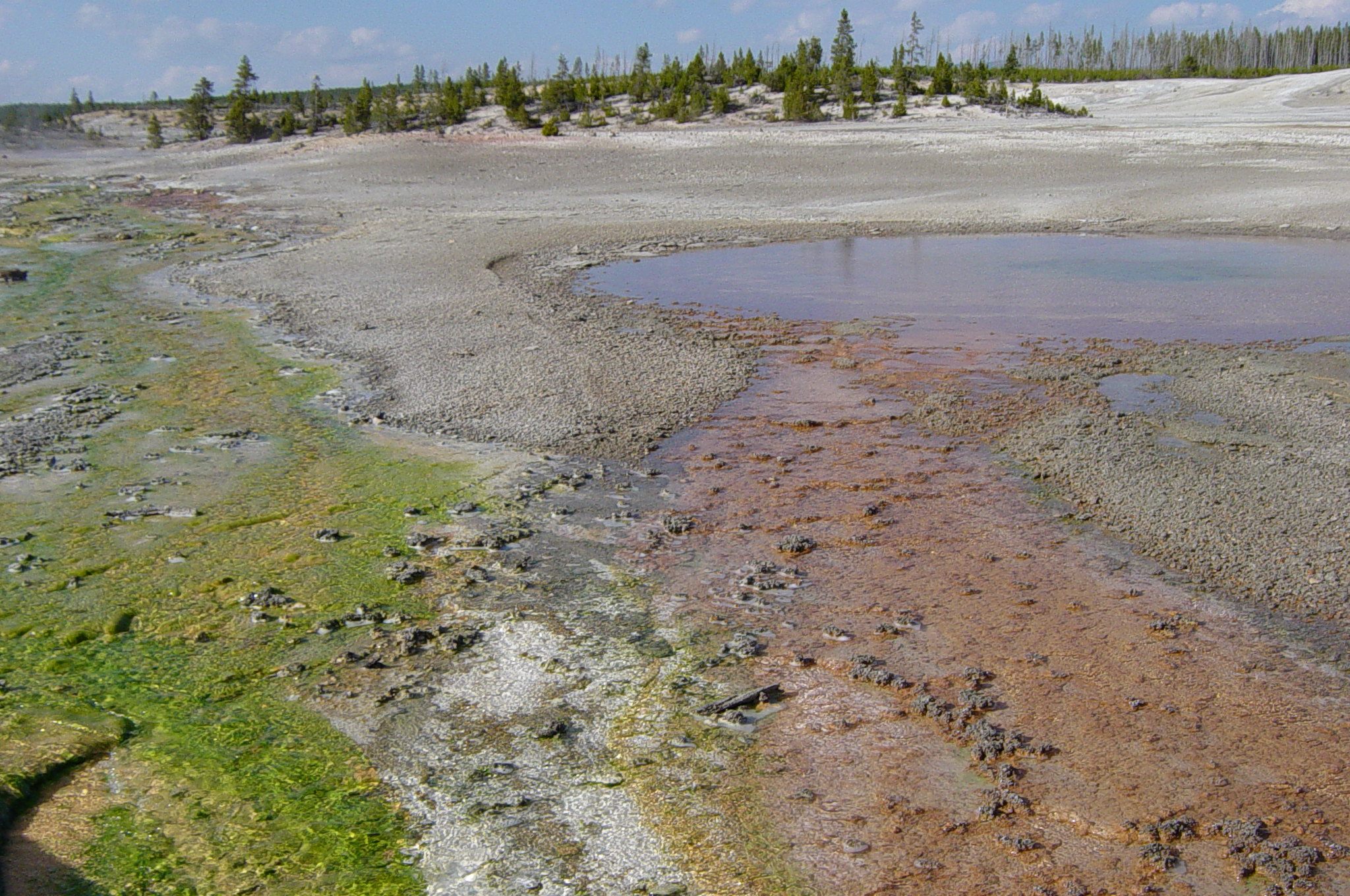
Geothermal Areas of Yellowstone
Jim Bridger called it "the place where Hell bubbled up." The legendary mountain man was not exaggerating. Beneath Yellowstone's deceptively tranquil meadows lies a magma chamber capable of continental devastation, and its restless energy finds expression in more than 10,000 thermal features scattered across the park. A 2011 survey counted 1,283 geysers that have erupted here, with 465 active in any given year. That means Yellowstone contains more than half of all active geysers on Earth, distributed across nine distinct geyser basins where rainwater descends miles into the crust, superheats against ancient magma, and rockets back to the surface in spectacular displays of geological violence.
Where Hell Bubbles Up
The first Europeans to witness these thermal wonders struggled to describe what they saw. John Colter, who left the Lewis and Clark Expedition to explore the region around 1807, called it "hot spring brimstone." Trapper Joseph Meek, visiting in 1830, compared the rising steam columns to Pittsburgh's industrial smokestacks on a cold winter morning. Native American tribes had known these features for millennia, using the hot water for bathing and cooking, and gathering the mineral deposits to make paint. The landscape defies easy categorization: fumaroles hiss with superheated steam at Roaring Mountain, mud pots bubble with acidic clay at Fountain Paint Pots, and geysers launch water heated to 204 degrees Fahrenheit into the Wyoming sky. The system sits within a caldera created 640,000 years ago, and the fractured rhyolite beneath acts as both plumbing and pressure vessel for this planetary heat engine.
The Basins of Fire
Each geyser basin has its own character. The Upper Geyser Basin holds the highest concentration of features, including Old Faithful and four other predictable major geysers: Castle, Grand, Daisy, and Riverside. The Midway Basin, though compact, contains the Grand Prismatic Spring, Yellowstone's largest hot spring, its rainbow rings of heat-loving bacteria creating one of nature's most photographed spectacles. Norris Geyser Basin runs hotter and more acidic than the others, sitting at the intersection of three major fault lines and the ring fracture from the ancient caldera. Its waters carry a pH of approximately 3.5, supporting entirely different communities of thermophilic bacteria that paint the basin in otherworldly colors. The Lower Geyser Basin sprawls across the largest area, while West Thumb creates a caldera within a caldera along Yellowstone Lake's shore.
Living Laboratory
This is geology in real time. The thermal features build and destroy constantly, depositing silica to form geyserite cones and scalloped hot spring edges, while travertine terraces grow at Mammoth Hot Springs as two tons of calcium carbonate flow into the system daily. In 1978, a series of shallow earthquakes turned a grassy hillside between Sizzling Basin and Mud Geyser into the barren "cooking hillside" when soil temperatures rose to nearly 200 degrees Fahrenheit. In 2024, a hydrothermal explosion at Black Diamond Pool in Biscuit Basin damaged boardwalks and forced closures that continue today. The backcountry basins, Heart Lake, Lone Star, and Shoshone, require miles of hiking to reach and lack the safety infrastructure of developed areas. At Hot Spring Basin, the water runs so acidic it has dissolved holes in visitors' clothing, while sulfur mounds three feet high accumulate around fumaroles.
The Deadly Beauty
Yellowstone's thermal features demand respect. Several deaths have occurred from falls into hot springs, including Colin Scott at Norris Geyser Basin. At West Thumb, the Fishing Cone earned its name from early visitors who would catch trout and swing them directly into the boiling geyser to cook, until one fisherman was badly burned in 1921. Water erupts from these geysers superheated above the boiling point, though it cools during its airborne journey. The boardwalks exist for survival, not convenience. Beneath the seemingly solid ground, hot acidic water has created voids covered only by thin crusts. The 1870 Washburn-Langford-Doane Expedition documented a trout falling into Fishing Cone that "darted about with wonderful rapidity, as if seeking an outlet. Then it came to the top, dead, and literally boiled." The cone erupted to 40 feet in 1919, a reminder that these features operate on their own schedule.
From the Air
Located at 44.73N, 110.70W in the heart of Yellowstone National Park. The thermal basins appear as patches of white mineral deposits and rising steam columns visible from altitude, particularly dramatic in cool morning air. Best viewed below 10,000 feet AGL. Nearest airports: West Yellowstone (KWYS) 25nm west, Yellowstone Regional (KCOD) 50nm east. The Upper Geyser Basin around Old Faithful and the colorful Grand Prismatic Spring in Midway Basin are the most visually striking from the air.