Gerdkuh
The Mongols conquered most of the known world in a single generation. They took Baghdad in thirteen days. They broke the walls of dozens of cities across Persia in weeks. But Gerdkuh held. This Nizari Ismaili fortress, perched on a rocky outcrop in what is now Semnan province, resisted the Mongol siege for seventeen years -- from May 1253 until December 1270 -- making it one of the longest sieges in medieval history and the last major stronghold of the order Western sources called the Assassins.
The Rock That Would Not Break
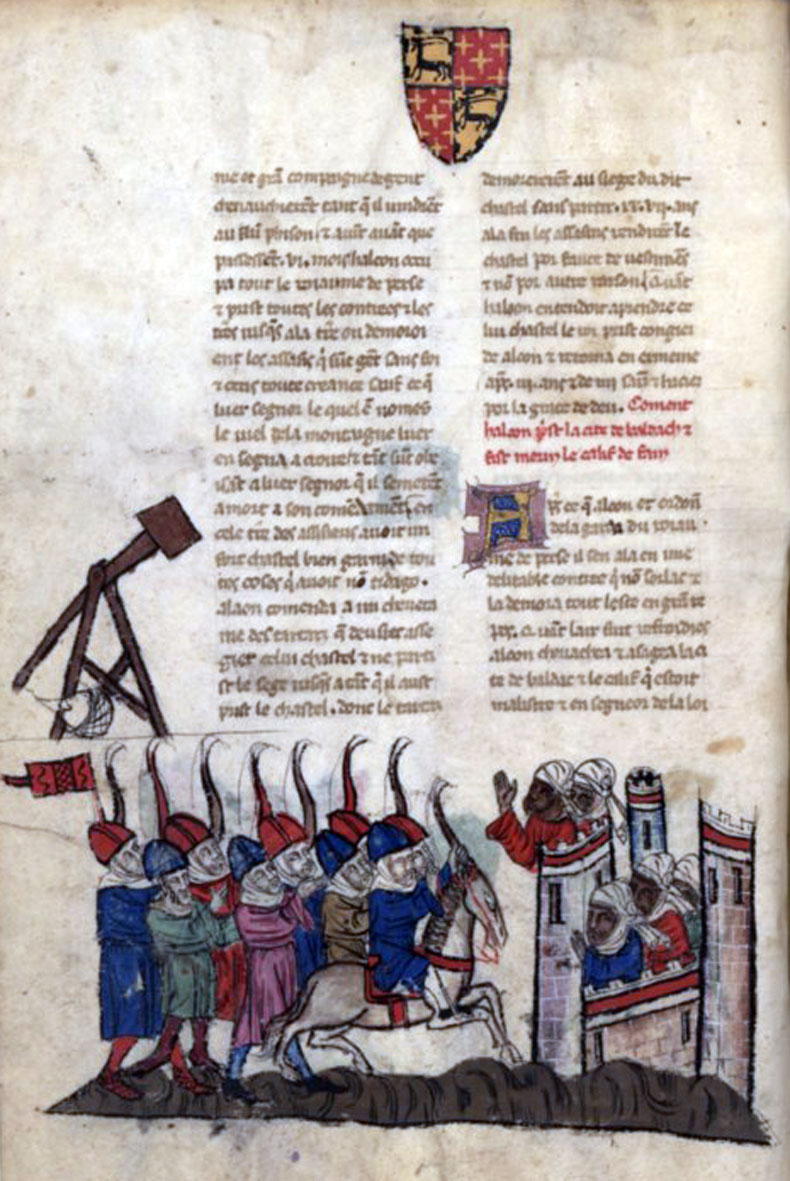
In March 1253, Hulagu Khan's commander Kitbuqa crossed the Oxus River with 12,000 soldiers and began systematically reducing Nizari Ismaili fortresses across eastern Iran. By May he had reached the Qumis region and laid siege to Gerdkuh with 5,000 men, constructing siege walls and fortifications around the base of the rock. Kitbuqa then left an army under the command of Amir Buri to maintain the blockade while he moved on to other targets. The Mongols built permanent structures around Gerdkuh -- houses, defensive walls, and supply buildings -- the ruins of which still stand today in the village of Hajjiabad-e Razveh. Two types of mangonels stones, both Nizari and Mongol, were visible on the northeastern slope as recently as 1985. This was not a brief assault but a patient, years-long strangulation.
The Order Surrenders -- But Not Gerdkuh
By 1256, the Mongol advance had broken the Nizari Ismaili state. The fortresses of Maymun-Diz and the legendary Alamut Castle surrendered and were destroyed. The Nizari leader Khurshah was taken into Mongol custody. He ordered Gerdkuh and the fortresses of Quhistan to surrender, and the Nizari chief at Gerdkuh, Qadi Tajuddin Mardanshah, formally complied. But the garrison did not. The soldiers inside the walls continued to resist despite their leader's capitulation. Khurshah, growing desperate in captivity, asked Hulagu for permission to travel to the court of the Great Khan Mongke in Mongolia, claiming he could personally persuade the remaining holdouts to surrender. Mongke refused. Furious that Gerdkuh and Lambsar still had not been handed over, the Great Khan ordered a general massacre of all Nizari Ismailis -- including Khurshah himself.
Siege Without End
What made Gerdkuh so difficult to take was its geology. The fortress sat atop a steep-sided rock formation that made direct assault nearly impossible. The Mongols, masters of siege warfare who had taken walled cities across China, Central Asia, and the Middle East, were reduced to waiting. Their siege lines encircled the rock completely, cutting off supply routes and starving the garrison. Yet the defenders held for years after the rest of the Nizari state had ceased to exist. The fortress finally fell around 1270, though the exact circumstances of its surrender are poorly documented. After the Mongol takeover, Gerdkuh appears only once more in the historical record, in 1384. It was probably abandoned entirely during the early Safavid period, its strategic value gone in an era of gunpowder and centralized empires.
The Least Studied Castle
Among the major Nizari Ismaili fortresses, Gerdkuh is the least studied. The Qajar-era king Naser al-Din Shah sent a scholar named Shaykh Mohammad Mehdi Abdol-Rabb-Abadi to investigate the site in the late nineteenth century, producing a brief report with accurate measurements. British researcher Peter Wiley visited multiple times and described the ruins in his book 'Eagle's Nest.' When the site was examined in 1967, it was covered with pottery shards and artifacts; by the following year, most had been taken by locals. No comprehensive archaeological survey has been conducted as of 2012. The ruins sit quietly in the landscape of Semnan province, the Mongol siege walls crumbling alongside the Nizari battlements they once tried to breach, both slowly returning to the rock from which they were built.
From the Air
Located at 36.16N, 54.16E in Semnan province, northeastern Iran. The fortress ruins sit atop a distinctive rocky outcrop that may be visible from altitude. The surrounding terrain is arid and hilly, part of the Alborz mountain foothills. The nearest airports include Semnan Airport (OIIS) and Shahroud Airport (OINJ). The ruins of Mongol siege fortifications in nearby Hajjiabad-e Razveh village may also be visible as stone foundations.