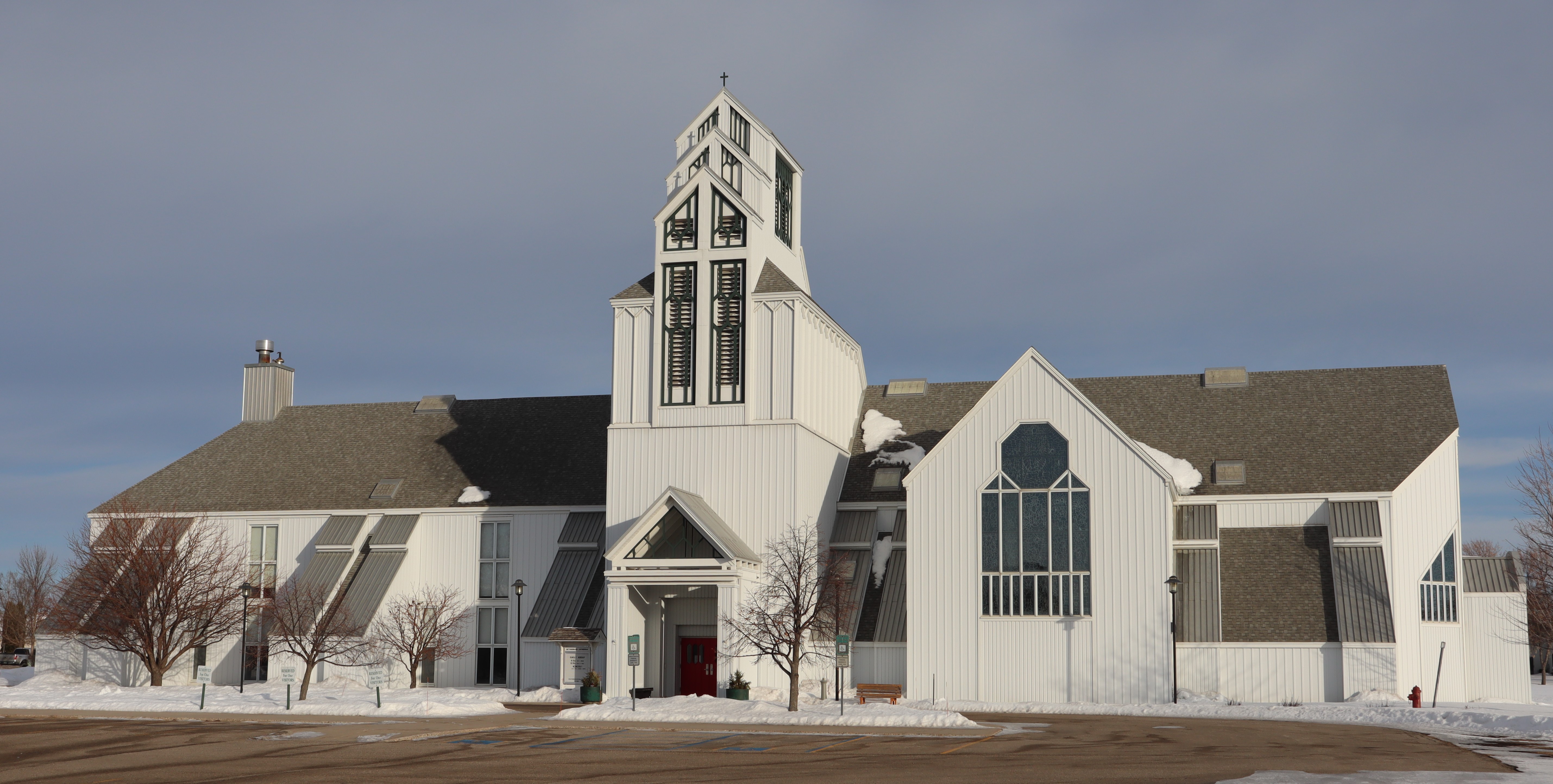
Gethsemane Episcopal Cathedral
The wind blew the church off its foundation. They rebuilt it. The wind blew it off again. They rebuilt it again. That dogged persistence defines Gethsemane Episcopal Cathedral in Fargo, North Dakota, a congregation that began worshipping in a Northern Pacific Railway dining tent in 1872 and has been fighting the elements ever since. Today it stands as the seat of the Episcopal Diocese of North Dakota, a distinction it has held since 1900. But the real story is how it got here -- through railroad camps, prairie storms, economic depressions, and more than a century of reinvention on the flat, windswept plains along the Red River.
A Church Born on the Tracks
On August 29, 1872, the Reverend Joseph A. Gilfillan arrived in Fargo from Brainerd, Minnesota, to celebrate the first Episcopal service in the young railroad town. The congregation gathered in a Northern Pacific Railway dining tent -- the church was literally a canvas shelter beside the tracks, and most of the worshippers were railroad workers and their families. When winter drove them indoors, they moved services to Pinkham's Hall at the corner of Front (Main) and 3rd Streets. They called themselves the Church of the Crossing, a fitting name for a mission born at the intersection of faith and westward expansion. By the summer of 1874, construction began on a permanent church building at 204 9th Street South, on land donated by General George W. Cass, president of the Northern Pacific Railway. Completed the following year and named Christ Church, it represented a congregation putting down roots in soil that was barely settled.
Twice Knocked Down, Twice Rebuilt
The northern Great Plains did not treat the little church gently. Within a couple of years of completion, Christ Church was blown clean off its foundation by one of the powerful windstorms that sweep across the Red River Valley. The congregation rebuilt and claimed parish status, renaming themselves Gethsemane in the process. By the 1890s, they had outgrown their church -- and the wind had knocked it off its foundation a second time. The parish commissioned a new building in the Gothic Revival style, originally designed in red sandstone. But the economic depression of the 1890s forced a change in plans. What rose instead was a wood-frame building on a sandstone foundation, its decorative wooden features mimicking the stone that the budget could not afford. It stood at Second Avenue and Ninth Street South, a handsome substitute shaped by both aspiration and financial reality.
Cathedral on the Prairie
The Episcopal Church established the Missionary District of North Dakota on October 11, 1883, by dividing the Missionary District of Dakota into two. Fargo was selected as the See city -- the administrative seat of the bishop. On September 2, 1900, Gethsemane was elevated from parish church to cathedral, making it the mother church of the entire diocese. For a congregation that had started in a tent twenty-eight years earlier, the elevation marked a remarkable ascent. The cathedral served the diocese through two world wars, the Great Depression, and the dramatic population shifts of the twentieth century, anchoring Episcopal worship across a vast and sparsely populated territory stretching from the Red River to the Missouri and beyond.
A Modern House of Worship
Ground was broken for the current cathedral facility on May 18, 1991, and it opened the following year. The modern building departed from the Gothic Revival vocabulary of its predecessor, reflecting architectural trends of the late twentieth century while continuing the congregation's long tradition of building and rebuilding. The construction debt was paid off in January 2003, more than a decade after groundbreaking. Gethsemane today serves not only as a place of worship but as the administrative and spiritual hub of the Diocese of North Dakota, one of the Episcopal Church's more geographically expansive territories. From a tent beside the tracks to a modern cathedral, the story of Gethsemane is the story of Fargo itself: determined, practical, and unwilling to let the prairie winds have the last word.
From the Air
Located at 46.826N, 96.819W in Fargo, North Dakota, on the western bank of the Red River of the North. The cathedral sits in the southern part of the city, roughly 2 miles south of Hector International Airport (KFAR). From the air, Fargo's grid pattern is unmistakable on the flat Red River Valley floor. The Red River runs north along the eastern city boundary, marking the Minnesota-North Dakota state line. Best viewed at 3,000-5,000 feet AGL. Moorhead, Minnesota, is directly across the river to the east.