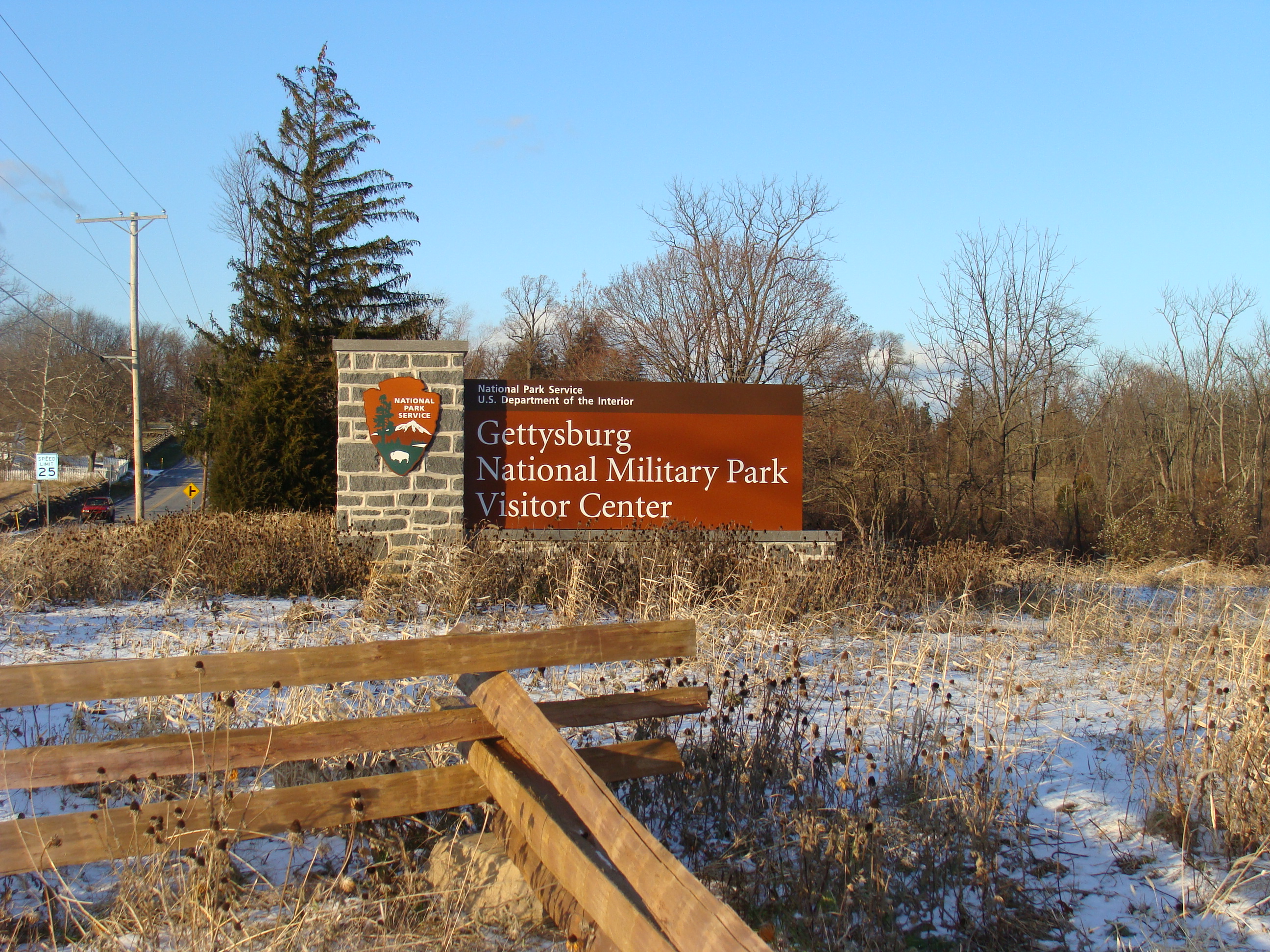
Gettysburg: Three Days That Turned the Civil War
For three days in July 1863, the fields around the small Pennsylvania town of Gettysburg became the killing ground where the American Civil War turned. General Robert E. Lee's Confederate Army of Northern Virginia met General George Meade's Union Army of the Potomac in a battle neither commander had planned. When the smoke cleared, nearly 50,000 men lay dead, wounded, or missing. Lee's invasion of the North was broken. The Confederacy would never again mount an offensive campaign. Four months later, Abraham Lincoln would dedicate a cemetery here with 272 words that defined what the dead had died for.
The Collision
The armies met by accident. Confederate forces under A.P. Hill were marching toward Gettysburg, possibly to seize a supply of shoes, when they encountered Union cavalry on the morning of July 1, 1863. Both sides called for reinforcements. By afternoon, the fighting had escalated far beyond anyone's intention.
The first day went badly for the Union. Confederate forces drove Federal troops through the town and onto Cemetery Hill and Culp's Hill to the south. But the Union held the high ground, and both armies spent the night bringing up their full strength. By morning, 165,000 men faced each other across the Pennsylvania farmland.
The Second Day
July 2 brought some of the war's most desperate fighting. Confederate General James Longstreet attacked the Union left at places that would become legendary - the Peach Orchard, the Wheatfield, Devil's Den, Little Round Top. The Union line bent but didn't break, saved at Little Round Top by the bayonet charge of the 20th Maine under Colonel Joshua Chamberlain.
On the Union right, Confederate forces nearly broke through at Culp's Hill and Cemetery Hill but were repulsed. By nightfall, thousands more were dead and wounded, but the Union line still held. Lee, convinced one more push would break through, planned his attack for the next day.
Pickett's Charge
On July 3, Lee ordered a massive assault on the Union center at Cemetery Ridge. After a two-hour artillery bombardment, 12,500 Confederate soldiers emerged from the trees on Seminary Ridge and began marching across three-quarters of a mile of open ground toward Union cannon and rifles.
Pickett's Charge became the high-water mark of the Confederacy. The men marched into a storm of fire. A few hundred reached the Union line at the Angle, breaching it briefly before being killed or captured. The rest were cut down in the fields. Of 12,500 who stepped off, over half became casualties. The assault was shattered. Lee's invasion was over.
The Address
Four months later, on November 19, 1863, Abraham Lincoln traveled to Gettysburg to dedicate the new Soldiers' National Cemetery. The main speaker, Edward Everett, orated for two hours. Lincoln spoke for two minutes, delivering 272 words that redefined what America meant.
'Four score and seven years ago our fathers brought forth on this continent, a new nation, conceived in Liberty, and dedicated to the proposition that all men are created equal.' The Gettysburg Address transformed the war from a fight to preserve the Union into a struggle for human equality, giving the dead a purpose that still resonates.
Gettysburg Today
The battlefield is now Gettysburg National Military Park, its landscape preserved to look much as it did in 1863. Over a million visitors annually walk the fields, climb Little Round Top, stand at the Angle where Pickett's Charge crested and broke. Over 1,300 monuments mark positions, honor regiments, and memorialize the dead.
Gettysburg has become America's most visited Civil War battlefield - a pilgrimage site for those trying to understand the conflict that nearly destroyed the nation. The peaceful fields give no hint of the slaughter they witnessed. The monuments stand in silence. And visitors read Lincoln's words carved in stone, still trying to ensure that government of the people, by the people, for the people, shall not perish from the earth.
From the Air
Gettysburg (39.83N, 77.23W) lies in south-central Pennsylvania near the Maryland border. The nearest airport is Gettysburg Regional (W05) 2 miles west, a small general aviation field. Harrisburg International (KMDT) is 40 miles northeast. The battlefield is preserved as open farmland - the monuments are visible but small from altitude. The town is visible at the battlefield's center. Seminary Ridge and Cemetery Ridge form parallel lines. Weather is mid-Atlantic - variable, with four distinct seasons.