Gettysburg: The Three Days That Decided America
They met by accident. Neither army planned to fight at Gettysburg - a Pennsylvania town notable only for the roads converging there. But on July 1, 1863, Confederate forces searching for supplies collided with Union cavalry, and the collision escalated into the largest battle ever fought in the Western Hemisphere. For three days, 165,000 soldiers fought across ridges, orchards, and wheatfields. When it ended, 51,000 were dead, wounded, missing, or captured. The Confederacy's invasion of the North had failed; Lee would never again threaten Union territory. Four months later, Lincoln dedicated the battlefield cemetery with 272 words that redefined American purpose. Gettysburg became sacred ground - the place where the nation, as Lincoln said, might have a new birth of freedom.
The Battle
Day one saw Confederate forces push Union defenders through town to Cemetery Hill. Day two brought assaults on Little Round Top, the Wheatfield, the Peach Orchard, and Devil's Den - names that became synonymous with slaughter. Day three climaxed with Pickett's Charge, 12,000 Confederates marching across open ground into Union artillery and rifle fire. Half fell. The charge failed; the battle was over. Lee withdrew to Virginia. The statistics numb: 7,058 killed outright, 33,264 wounded (many fatally), 10,790 missing or captured. The fields were carpeted with bodies; the town's population of 2,400 was overwhelmed by 21,000 wounded soldiers. The scale exceeded anything America had experienced.
The Address
Four and a half months later, Lincoln traveled to Gettysburg to dedicate the Soldiers' National Cemetery. Edward Everett, the era's greatest orator, spoke for two hours. Lincoln spoke for two minutes. His 272 words reframed the war not as a constitutional dispute but as a test of whether democracy could survive - 'government of the people, by the people, for the people.' The Gettysburg Address became America's secular scripture, memorized by schoolchildren, inscribed in marble at the Lincoln Memorial. Lincoln thought the speech a failure; history disagreed. The words he spoke over the dead transformed their sacrifice into national mythology.
The Memory
Gettysburg became a pilgrimage site almost immediately. Veterans returned for reunions; tourists followed. The battlefield was preserved piecemeal through the late 19th century, gradually consolidated into what became Gettysburg National Military Park. Over 1,300 monuments, markers, and memorials cover the landscape - the largest collection of outdoor sculpture in the world. Each regiment wanted its sacrifice remembered; each state wanted its sons honored. The monumentation created a sacred landscape, a cemetery transformed into outdoor museum. Whether the memorialization honored or sanitized the slaughter depends on what you bring to the experience.
The Haunting
Gettysburg may be America's most haunted place. Ghost stories proliferate: soldiers marching through fields, cannon fire at night, figures appearing in photographs. The ghost tourism industry rivals Civil War heritage in economic importance. Skeptics note that suggestion and expectation create experiences; believers argue that violence of this intensity leaves residue. What's certain is that the landscape itself generates awe approaching the numinous. Walking Little Round Top at dusk, imagining the charge, feeling the terrain where thousands died - the experience transcends rational explanation. Whether that's supernatural or psychological may not matter. The dead feel present either way.
Visiting Gettysburg
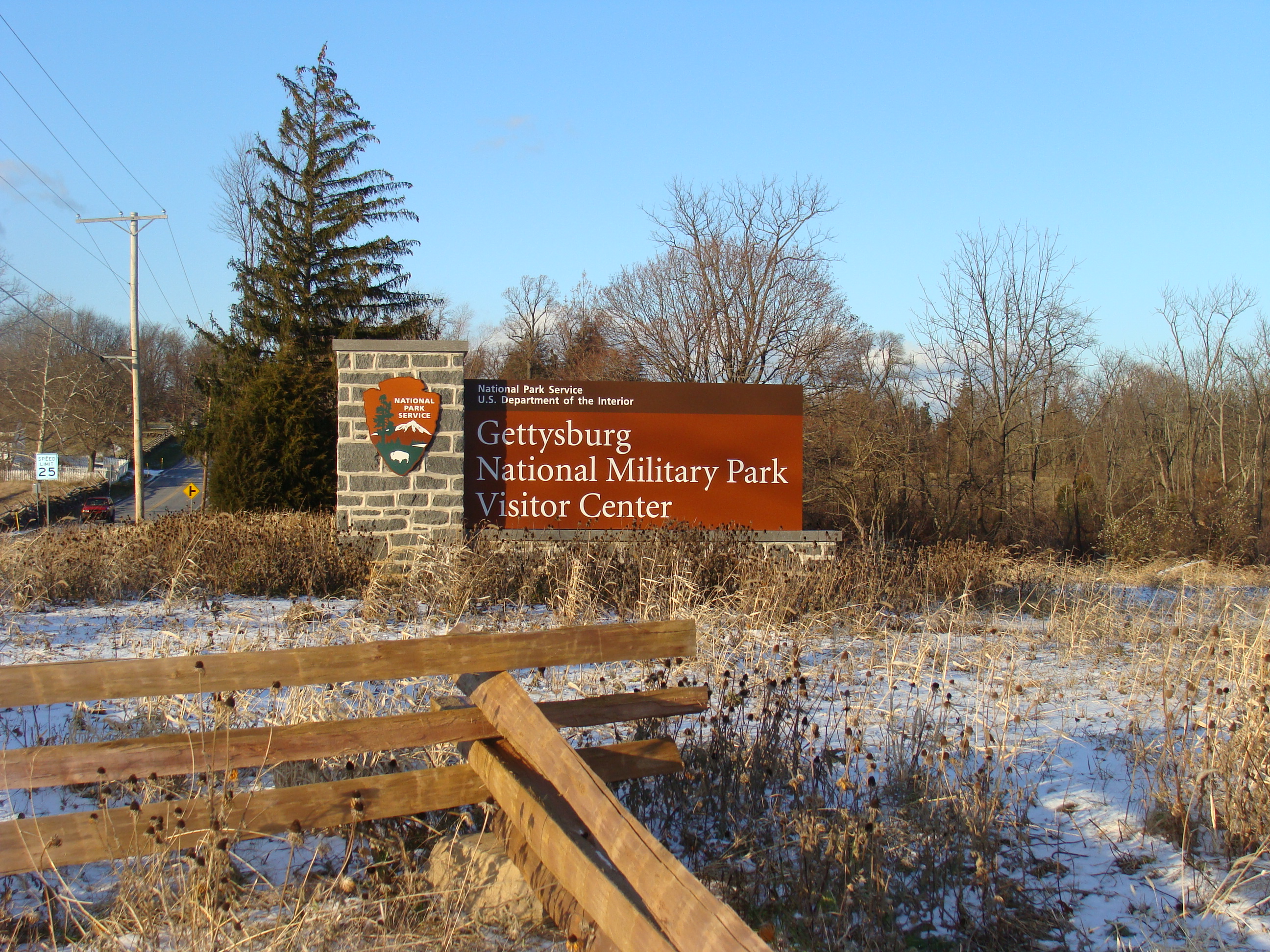
Gettysburg National Military Park is located in Adams County, Pennsylvania, approximately 80 miles north of Washington, D.C. via US-15. The visitor center and museum offer orientation and tickets for the Cyclorama, an 1884 panoramic painting of Pickett's Charge. Auto tours cover the battlefield's 6,000 acres; licensed guides provide detailed interpretation. Walking the battlefield is permitted and rewarding - Little Round Top, Devil's Den, and the High Water Mark are essential. The town offers restaurants, lodging, and ghost tours. The best visits combine battlefield exploration with understanding the battle's context. Allow at least a full day; serious students need multiple days. The experience is profound and, for many visitors, unexpectedly emotional.
From the Air
Located at 39.81°N, 77.23°W in south-central Pennsylvania. From altitude, Gettysburg appears as a small town surrounded by agricultural land and preserved battlefield. The distinctive terrain features are visible: Cemetery Hill and Cemetery Ridge forming the Union 'fishhook' position, the Round Tops rising to the south, the open ground across which Pickett charged. The landscape is dotted with monuments - white specks visible from altitude - and crossed by roads following 1863 alignments. The Eisenhower National Historic Site lies adjacent. The pattern of fields and woodlots remains largely unchanged from 1863, deliberately preserved to approximate what the armies saw. What appears from altitude as pleasant farmland was, for three days in July, the bloodiest ground in American history.