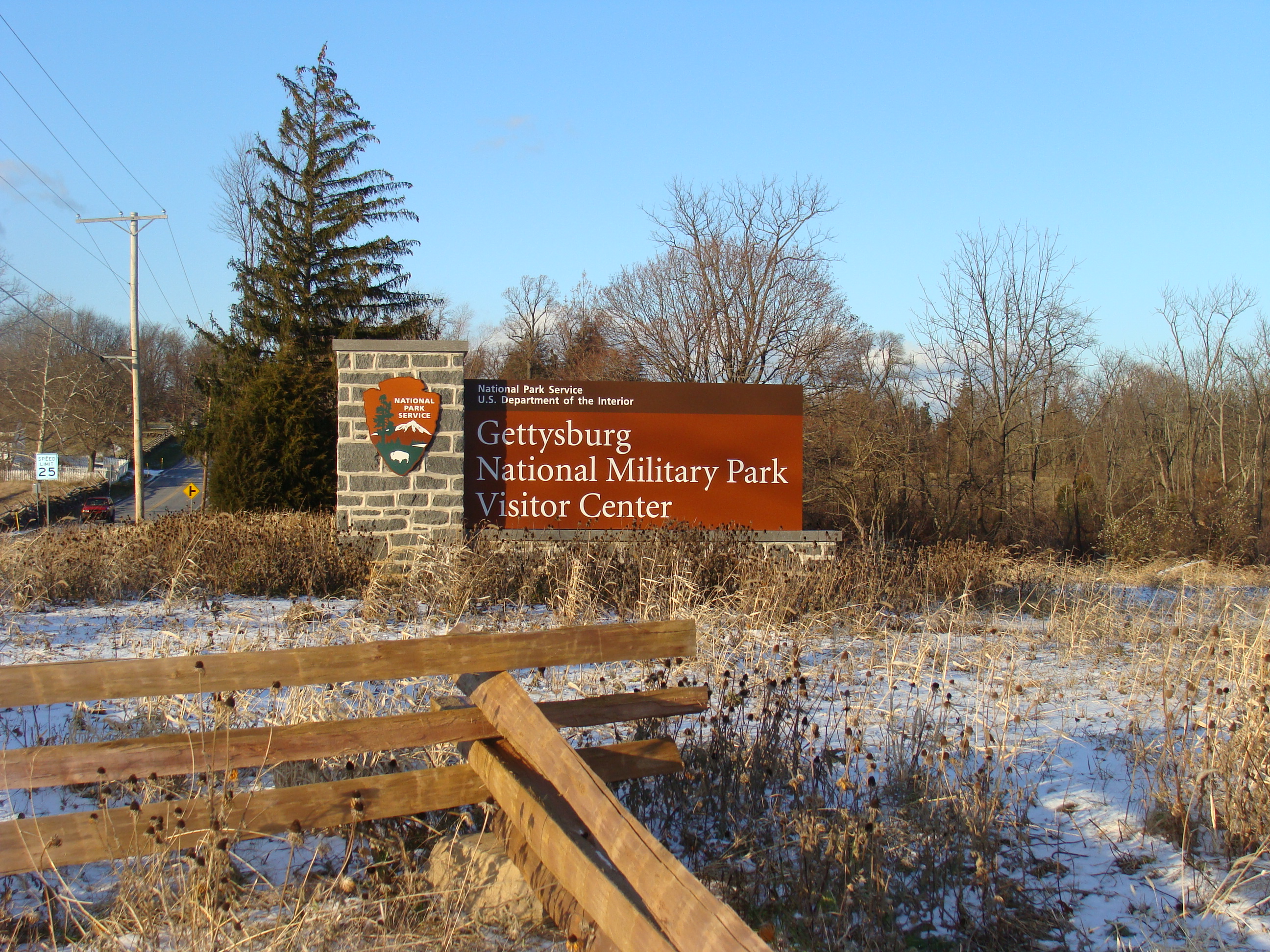
Gettysburg: The Three Days That Decided the War
Neither army intended to fight at Gettysburg. The Confederate invasion of Pennsylvania aimed north toward Harrisburg; the Union army pursued. They collided at a crossroads town of 2,400 people on July 1, 1863, and for three days fought the bloodiest battle of the American Civil War. When Lee retreated on July 4, his invasion was over, his offensive capability permanently reduced. The Union had won, though neither side fully understood what had been decided. Four months later, Lincoln spoke at the dedication of the soldiers' cemetery and reframed the war's purpose - no longer merely union but 'a new birth of freedom.' Gettysburg became the war's turning point and its defining statement, the place where death found meaning.
The Battle
Day one: Confederate forces pushed through the town, driving Union troops to defensive positions on Cemetery Hill and Culp's Hill. Day two: Lee attacked both flanks. The fighting at Little Round Top, Devil's Den, and the Wheatfield produced staggering casualties; the Union line held. Day three: Lee gambled everything on a frontal assault. Pickett's Charge sent 12,500 men across a mile of open ground toward the Union center. Artillery and rifle fire shredded the advance; perhaps half the attackers became casualties. The charge failed. Lee could do nothing but retreat. In three days, approximately 50,000 men were killed, wounded, or captured - more than any other battle in the Western Hemisphere.
The Address
Four months later, a national cemetery was dedicated on the battlefield. Edward Everett, the era's greatest orator, spoke for two hours. Abraham Lincoln followed with 272 words that took two minutes. The Gettysburg Address reframed the war: not merely preservation of the Union but fulfillment of the Declaration of Independence's promise that 'all men are created equal.' The war became a test of whether democracy could survive, whether those who died had died for something worth dying for. Everett wrote to Lincoln afterward: 'I should be glad if I could flatter myself that I came as near to the central idea of the occasion in two hours as you did in two minutes.'
The Memory
Gettysburg became America's most memorialized battlefield. Over 1,300 monuments mark positions and honor regiments. The landscape was preserved while memory was contested: Confederate monuments presented the 'Lost Cause' as noble struggle rather than slavery's defense; Union monuments celebrated victory without always noting what was won. Reunions of aging veterans emphasized reconciliation; the 50th anniversary in 1913 brought thousands of survivors to shake hands across the stone wall where Pickett's Charge climaxed. The reconciliation was white; Black veterans were not invited. The battlefield's meaning has been reinterpreted by each generation, the monuments now themselves artifacts of how Americans have chosen to remember.
The Landscape
The battlefield covers 6,000 acres, much of it looking remarkably as it did in 1863. The peach orchard, the wheat field, the rocky outcrops of Little Round Top and Devil's Den retain their names and their contours. The stone wall at the 'High Water Mark' where Pickett's Charge was repulsed remains. The fields are quiet now, the orchards blooming each spring, the violence commemorated but not visible. Walking the ground reveals what tactical maps cannot: the distance of Pickett's Charge, the steepness of Little Round Top, the vulnerability of soldiers crossing open ground toward rifle-fire. The landscape teaches what statistics cannot convey.
Visiting Gettysburg
Gettysburg National Military Park is located in south-central Pennsylvania, 80 miles from Baltimore and Washington. The visitor center and museum provide orientation and context; the film and cyclorama introduce the battle's narrative. Licensed Battlefield Guides offer personalized tours (reserve ahead); the auto tour allows self-guided exploration. Key sites include Little Round Top, the Peach Orchard, Cemetery Ridge, and the High Water Mark. The Soldiers' National Cemetery, where Lincoln spoke, adjoins the battlefield. The town of Gettysburg offers accommodations, dining, and tourist attractions of varying quality. Ghost tours are popular; the weight of death invites supernatural imagination. Spring through fall provides best conditions; winter offers solitude. The experience requires time - the battle unfolded over days, and understanding it rewards patience.
From the Air
Located at 39.81°N, 77.23°W in the rolling hills of south-central Pennsylvania, near the Maryland border. From altitude, Gettysburg appears as a small town surrounded by preserved battlefield - fields and orchards punctuated by monuments visible as small white markers. The terrain's gentle ridges defined the tactical situation: Cemetery Ridge where Union forces defended, Seminary Ridge where Confederates gathered, the open ground between where Pickett's Charge attempted the impossible. The town itself clusters at the roads' intersection that drew both armies. The patterns of roads and fields remain largely as they were in 1863. What appears from altitude as Pennsylvania farmland is America's most sacred battlefield - where 50,000 casualties decided a war's outcome and Lincoln's words decided what the victory meant.