Ghibli Museum: A Building That Gets Lost on Purpose
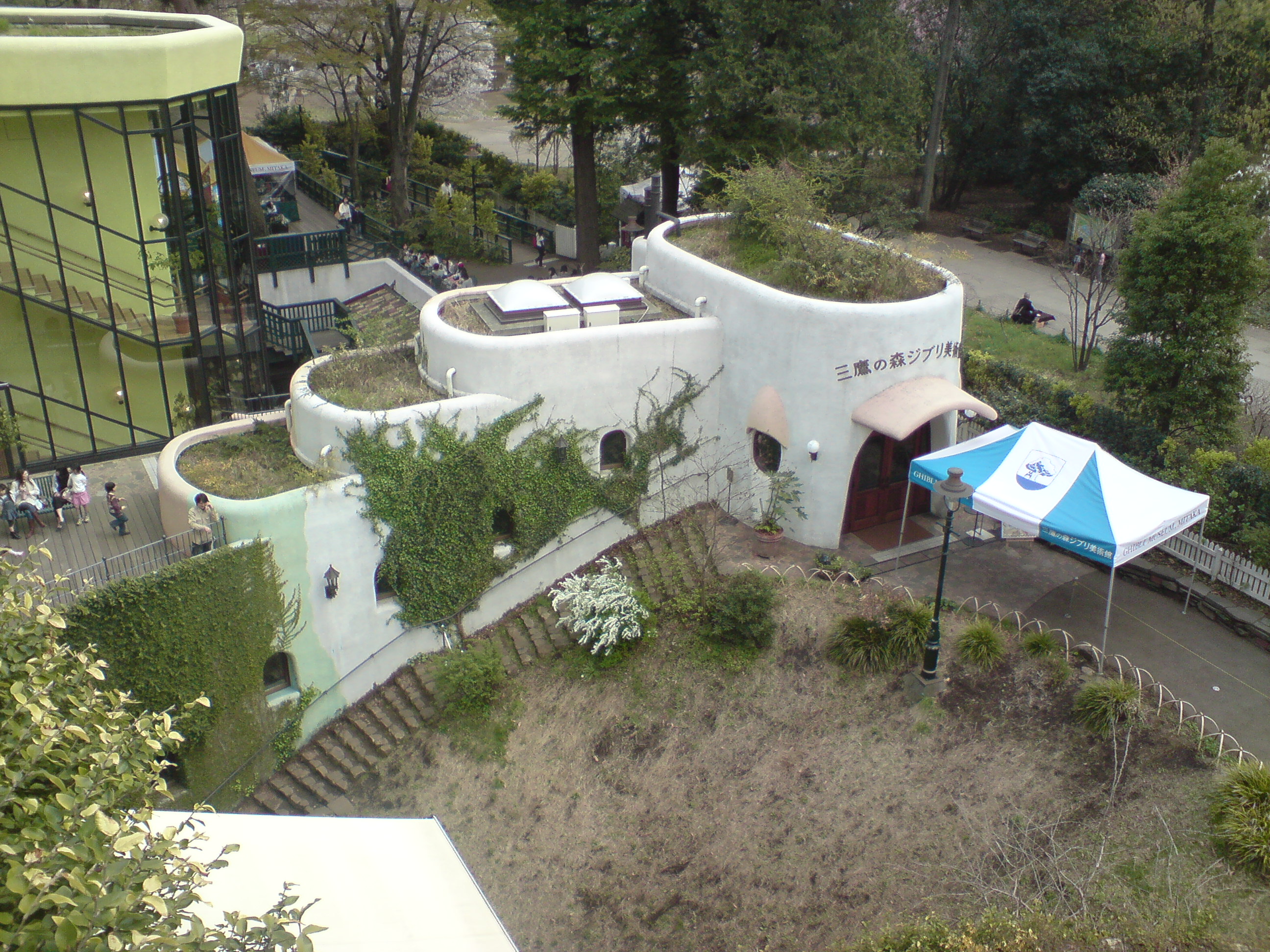
No photographs allowed. The rule greets every visitor to the Ghibli Museum in Mitaka, just west of central Tokyo, and it is the first sign that Hayao Miyazaki designed this place the way he designs his films -- to be experienced, not documented. The museum sits at the edge of Inokashira Park, half-hidden among zelkova and cherry trees, a building made of iron staircases, interior bridges, and deliberate confusion. Stairways spiral upward to unexpected balconies. Corridors lead to dead ends. Passages connect rooms at odd heights. Miyazaki sketched the entire structure in storyboards, the same medium he uses to plan animated films, and the result is a building that feels less like architecture and more like stepping into one of his movies -- which is precisely what he intended.
Drawn Before It Was Built
Planning for the museum began in 1998, with construction starting in March 2000 and the doors opening on October 1, 2001. Miyazaki did not hire an architect to generate the vision; he drew it himself, producing storyboard after storyboard depicting how visitors would move through the space. The design drew inspiration from European architecture, particularly the hilltop village of Calcata in Italy -- a reference that makes sense given how many Ghibli films unfold in Mediterranean-flavored landscapes. The building features internal and external spiral staircases forged from iron, bridges that cross interior voids, and balconies that jut out at unexpected heights. Miyazaki wanted the museum to feel like discovery rather than display. He stated he wanted it to be an experience "that makes you feel more enriched when you leave than when you entered." The building achieves this through disorientation: the layout resists mapping, encouraging visitors to wander rather than follow a prescribed path.
Where a Film Is Born
The permanent exhibitions occupy two main floors and a basement. On the lowest level, an exhibit room traces the history and science of animation, anchored by a three-dimensional zoetrope called "Bouncing Totoro" -- a spinning drum of tiny Totoro figures that, when lit by strobe, appear to leap and dance in three dimensions. The effect is analog magic, animation stripped back to its mechanical roots. On the first floor, a five-room exhibit called "Where a Film Is Born" recreates the creative workspace of an animation filmmaker. The rooms are cluttered with sketches, reference books, paints, and half-finished drawings in a way that feels genuinely lived-in rather than curated. Rotating exhibitions have explored subjects ranging from Ponyo's production process to the optics of lenses to adaptations of The Nutcracker. In the basement, the eighty-seat Saturn Theater screens short films produced exclusively for the museum -- works that cannot be seen anywhere else, each screened once per visitor.
The Robot on the Roof
The rooftop garden holds the museum's most photographed exterior feature: a five-meter-tall Robot Soldier from Castle in the Sky, crafted by artist Kunio Shachimaru from hammered copper plate over the course of two years. The robot stands among the greenery as if it landed there from Laputa, the floating castle of the film. Nearby sits a replica of the keystone from Castle in the Sky, inscribed in Old Persian cuneiform -- the same script used on the control room stone in the movie. Below the rooftop, children aged twelve and under can climb into a stuffed Catbus from My Neighbor Totoro, sized slightly smaller than the film's original to fit the space. At the building's entrance, a fresco painted across the ceiling depicts characters from across the Ghibli catalog: Kiki riding her broomstick, forest spirits, flying machines. The name of the museum's bookstore, Tri Hawks, translates from "Mitaka" -- literally "three hawks" -- the city where the museum stands.
A Portal You Must Plan to Enter
You cannot simply show up at the Ghibli Museum. Tickets must be purchased in advance and are tied to specific entry times, a system that keeps crowds manageable and preserves the intimate atmosphere Miyazaki envisioned. Adult admission is 1,000 yen; children aged four to six pay just 100 yen; younger children enter free. The scarcity is deliberate. Miyazaki described the museum as a "portal to a storybook world," and portals, by nature, are not meant to accommodate everyone at once. The museum closed temporarily in February 2020 during the COVID-19 pandemic, reopening first to Mitaka residents in July before welcoming all visitors again in September. The controlled reopening underscored the museum's deep connection to its host city -- Mitaka contributed the land in Inokashira Park and considers the museum a civic treasure. For those who secure entry, the experience rewards the effort: a building where getting lost is the point, where the craft of animation is treated as both art and science, and where a copper robot stands guard over a garden that Totoro would recognize as home.
From the Air
The Ghibli Museum is located at 35.696°N, 139.570°E on the southern edge of Inokashira Park in Mitaka, western Tokyo. From the air, Inokashira Park is identifiable as a large green space with Inokashira Pond at its center, situated between Kichijoji and Mitaka stations on the JR Chuo Line. The museum building is small and partially concealed by tree cover, making it difficult to spot from altitude. Chofu Airport (RJTF), a general aviation field, lies approximately 3 nm to the south-southwest. Tokyo Heliport (RJTI) is roughly 12 nm to the east. Haneda Airport (RJTT) is approximately 15 nm to the southeast. Best viewed at 1,500-2,000 feet AGL for park context, though the building itself blends into the canopy.