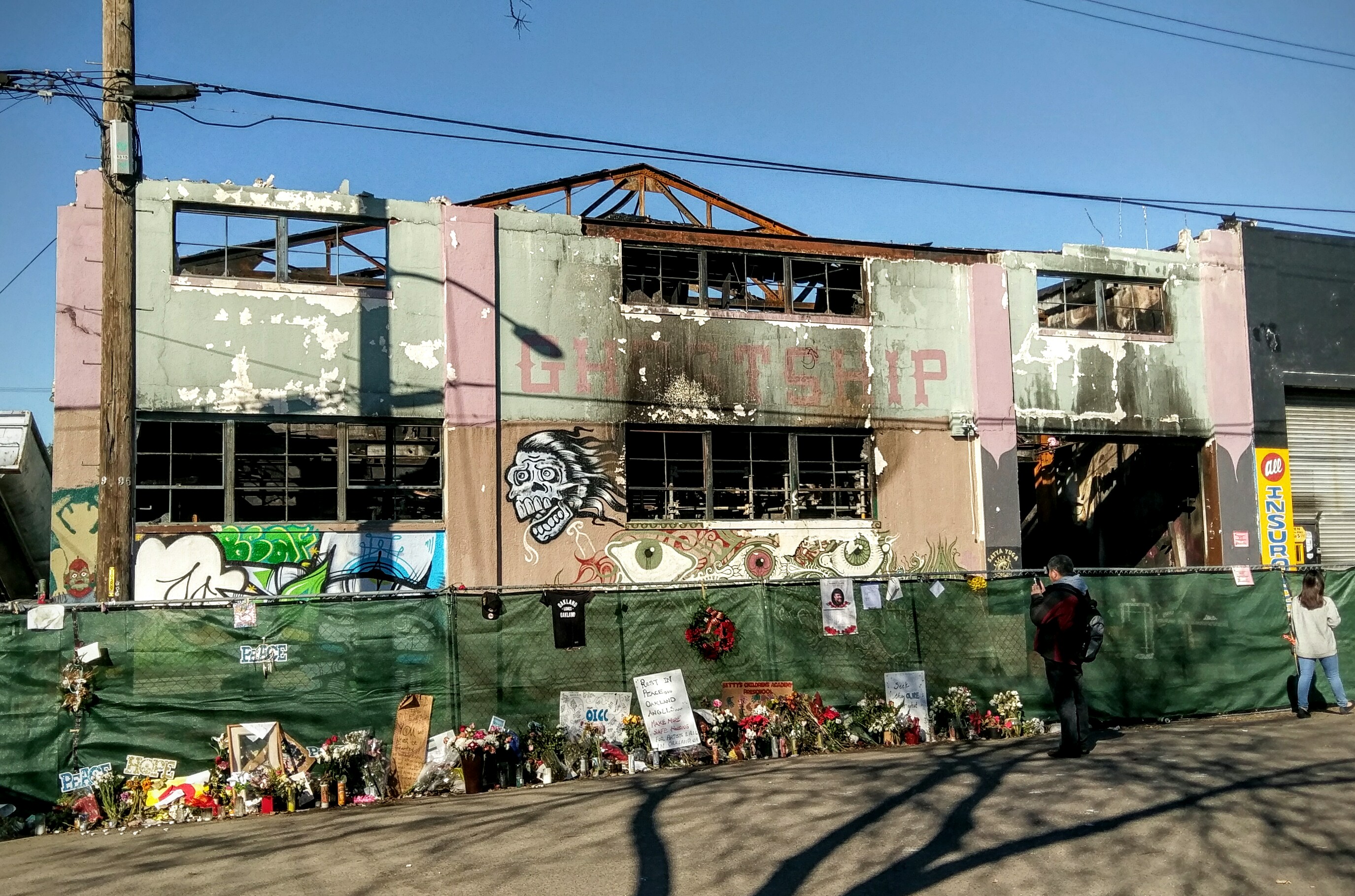
Ghost Ship Warehouse Fire
On December 2, 2016, flames swept through a converted warehouse in Oakland's Fruitvale district during an electronic music event hosted by the record label 100% Silk. Thirty-six people died in what became one of the deadliest building fires in the United States in half a century. The Ghost Ship, as residents called it, had been home to an artists' collective, a living space, and a performance venue operating outside the bounds of fire codes and building permits. The tragedy exposed fault lines running through the Bay Area: soaring rents pushing artists into unsafe spaces, regulatory systems failing to keep pace with underground communities, and the human cost of a housing crisis that forced creativity into the margins.
The Day the Music Stopped
The fire broke out during a Friday night concert featuring artists from 100% Silk, an L.A.-based dance music label. Among the performers and attendees were musicians, visual artists, and members of the underground electronic scene that had found refuge in Oakland as San Francisco rents became impossible. The two-story warehouse at 1315 31st Avenue had no sprinklers, no clearly marked exits, and a makeshift staircase constructed from wooden pallets and scrap lumber. When flames erupted, the building became a trap. Most victims died of smoke inhalation before firefighters could reach them. Nine of the thirty-six confirmed victims had managed to reach an emergency telephone, where one recording went blank mid-call as the fire overtook the caller.
Artists in the Margins
City inspectors later voiced suspicions that dozens of live-work warehouses similar to Ghost Ship existed across Oakland. The building had operated for years as an unlicensed residence and event space, part of an underground network of artist collectives pushed into industrial spaces by the Bay Area's relentless housing pressure. Residents and tenants' rights activists cited the fire as a symptom of a deeper crisis. Within days, Mayor Libby Schaaf announced 1.7 million dollars in grant funding for affordable artist spaces. The city created a fire safety task force and revived planning for artist housing. But for the underground scene, the message was clear: the affordable spaces that had nurtured the Bay Area's creative communities could no longer operate in the shadows.
Accountability and Aftermath
Derick Almena, who operated the collective, was arrested along with his creative director Max Harris. In July 2020, the City of Oakland agreed to pay 32.7 million dollars to the victims' families. Pacific Gas and Electric settled its own lawsuit separately. In 2021, Almena was sentenced for his role in the tragedy. The criminal cases laid bare years of ignored complaints, bypassed inspections, and a regulatory system that had allowed the warehouse to slip through the cracks. Comparisons arose to the 1990 Happy Land fire in New York, which killed 87 in similarly dangerous conditions. Both tragedies shared a common thread: venues operating outside the law, filled with people seeking community and creativity.
Memory and Renewal
In February 2017, an artist known as Vogue painted a memorial mural featuring a sailing ship, thirty-six white doves, and a scroll bearing the victims' names. That same year, Chris Edwards built a boat sculpture near the Emeryville marina as a guerilla art tribute. Friends and family of victims Chelsea Faith and Travis Hough, musicians from the band Easystreet, formed a choir to complete an unreleased track the two had been working on. In 2023, the warehouse remains were razed. The Unity Council purchased the property and adjacent lots for approximately 2.6 million dollars, planning to build affordable housing where the Ghost Ship once stood. The proceeds will help settle the remaining lawsuits, and a community once shattered will see something new rise from the ashes.
From the Air
Located at 37.78N, 122.23W in Oakland's Fruitvale district near the Oakland Estuary. Site now cleared, visible as vacant lot from low altitude. Oakland International Airport (KOAK) lies 4nm south. The Fruitvale BART station is nearby. Best viewed at 1,500-2,500 feet AGL when passing over the East Bay industrial waterfront. The Emeryville marina memorial boat sculpture is 3nm north near the Bay Bridge approach.