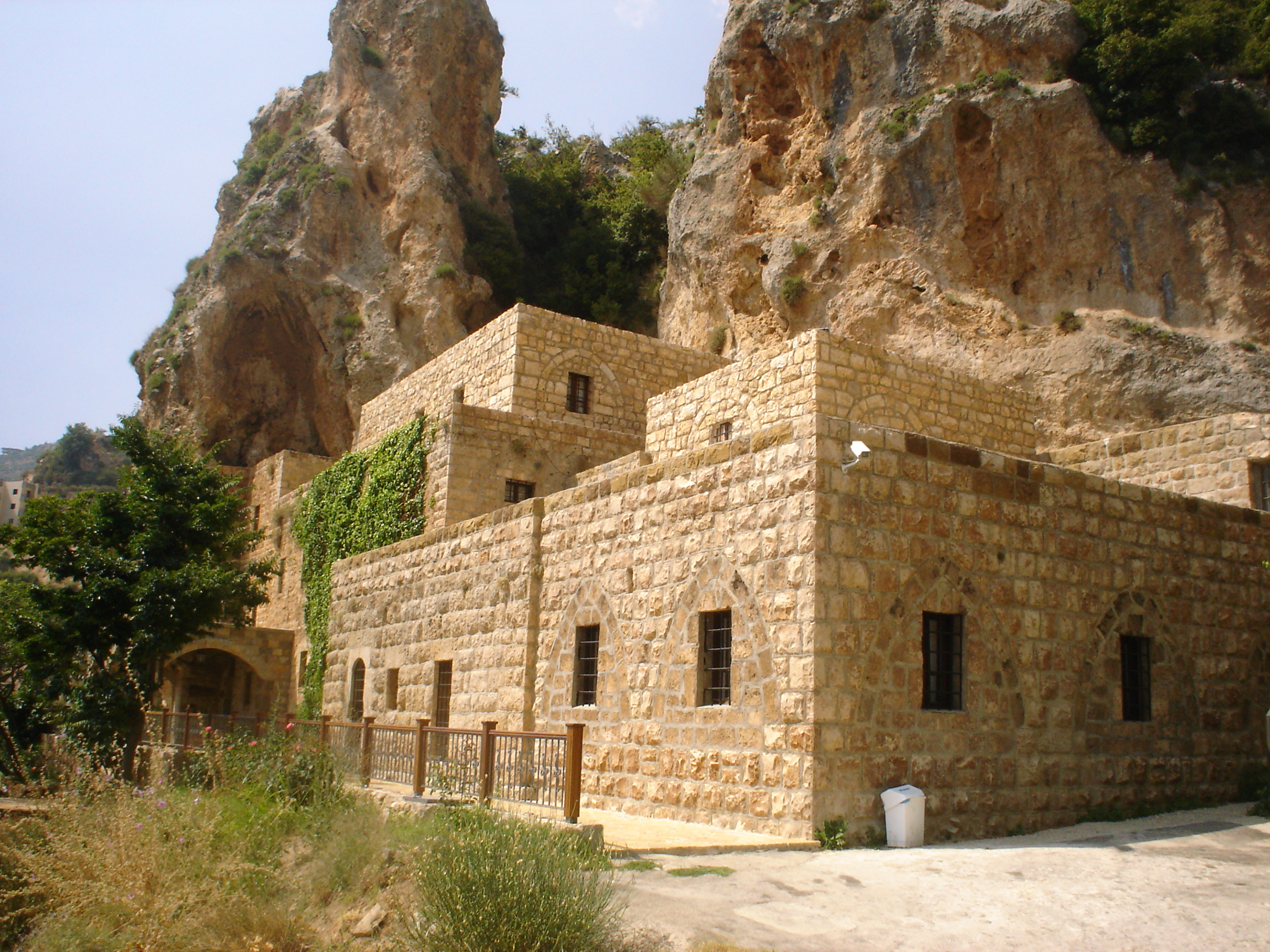
Gibran Museum
"Wherever they might be found, my paintings shall be known as mine." That was Kahlil Gibran's answer to anyone who wondered why he refused to sign his canvases. The author of The Prophet -- a book that has sold over 100 million copies and been translated into more than 100 languages -- was also a painter, and he believed his visual work needed no signature. Today, 440 of those unsigned paintings and drawings hang in 16 rooms carved from the rock of a mountain monastery in Bsharri, Lebanon, 120 kilometers north of Beirut. The artist's body rests in a tomb at the end of the final gallery.
Hermits, Monks, and a Poet's Final Wish
The museum occupies the former Monastery of Mar Sarkis, a structure whose history reaches back further than Gibran's. The cavern at its core sheltered hermits from at least the 7th century. By the end of the 17th century, the people of Bsharri donated the existing building -- erected during the 16th century -- and the surrounding oak forest to the Carmelite Fathers, who had been living in the Qadisha Valley alongside the monks of Saint Elisha Monastery. The Carmelites expanded the monastery progressively until 1862. In 1908, some moved into the town of Bsharri to build the Saint Joseph Monastery, while others stayed behind to care for the valley property. The building might have remained an obscure monastic outpost had Gibran not, in 1926, expressed a wish to buy it from the Carmelites as his retreat and final resting place.
From New York to the Qadisha Valley
Gibran made his wish known while still living in New York, where he had spent most of his adult life writing and painting. He died on April 10, 1931, at the age of 48. On August 22 of that year, his body reached Bsharri. His sister Mariana purchased the monastery and adjoining lands, fulfilling her brother's will: the hermitage would become his burial place. Four years later, in 1935, the Gibran Museum formally opened. It housed the paintings, drawings, furniture, and personal manuscripts from Gibran's New York studio apartment -- the contents of a creative life transported across the Atlantic and installed in rooms of Lebanese mountain stone. His private library came too, along with notebooks in his own hand.
Visions That Cannot Be Titled
Gibran rarely dated, signed, or titled his paintings. "Visions cannot be titled," he would say. This philosophy makes the museum's collection both intimate and enigmatic. Visitors move through three floors of galleries where the works exist without the usual scaffolding of artist statements and explanatory plaques. The paintings themselves -- ethereal, often mystical figures rendered in washes of color -- feel of a piece with the monastery's atmosphere of stone, shadow, and mountain light filtering through small windows. In 1975, the Gibran National Committee restored and expanded the building to accommodate more exhibits. A second expansion followed in 1995, and the museum reopened on August 15 of that year. The journey through all 16 rooms ends at the tomb, where Gibran lies in the rock that hermits inhabited a thousand years before him.
Bsharri and the Sacred Valley
The museum sits above the Qadisha Valley, one of the earliest sites of monastic settlement in the Christian world and itself a UNESCO World Heritage Site. Bsharri clings to the mountain slopes at the head of the valley, surrounded by the remnants of the cedar forests that once defined Mount Lebanon. Gibran drew on this landscape throughout his literary career -- the cedars, the valley, the mountain light appear again and again in his writing. That he chose to return here, to a cave-monastery above the gorge where monks had prayed for centuries, says something about where he believed art and solitude converge. The museum is not merely a biographical archive. It is an argument, made in stone and canvas, that the place where a person chooses to be buried can be as revealing as anything they wrote.
From the Air
Located at 34.250N, 36.019E in the mountains of northern Lebanon at approximately 1,500 meters elevation. The museum sits above the Qadisha Valley gorge, which is visible from altitude as a deep east-west cut into the western face of Mount Lebanon. Bsharri is a small mountain town with no airstrip. Nearest major airports are Beirut-Rafic Hariri International (OLBA), approximately 120 km south, and Rene Mouawad Air Base near Tripoli (OLKA), closer but limited access. The cedar forests on the ridgeline above Bsharri are a useful visual landmark.