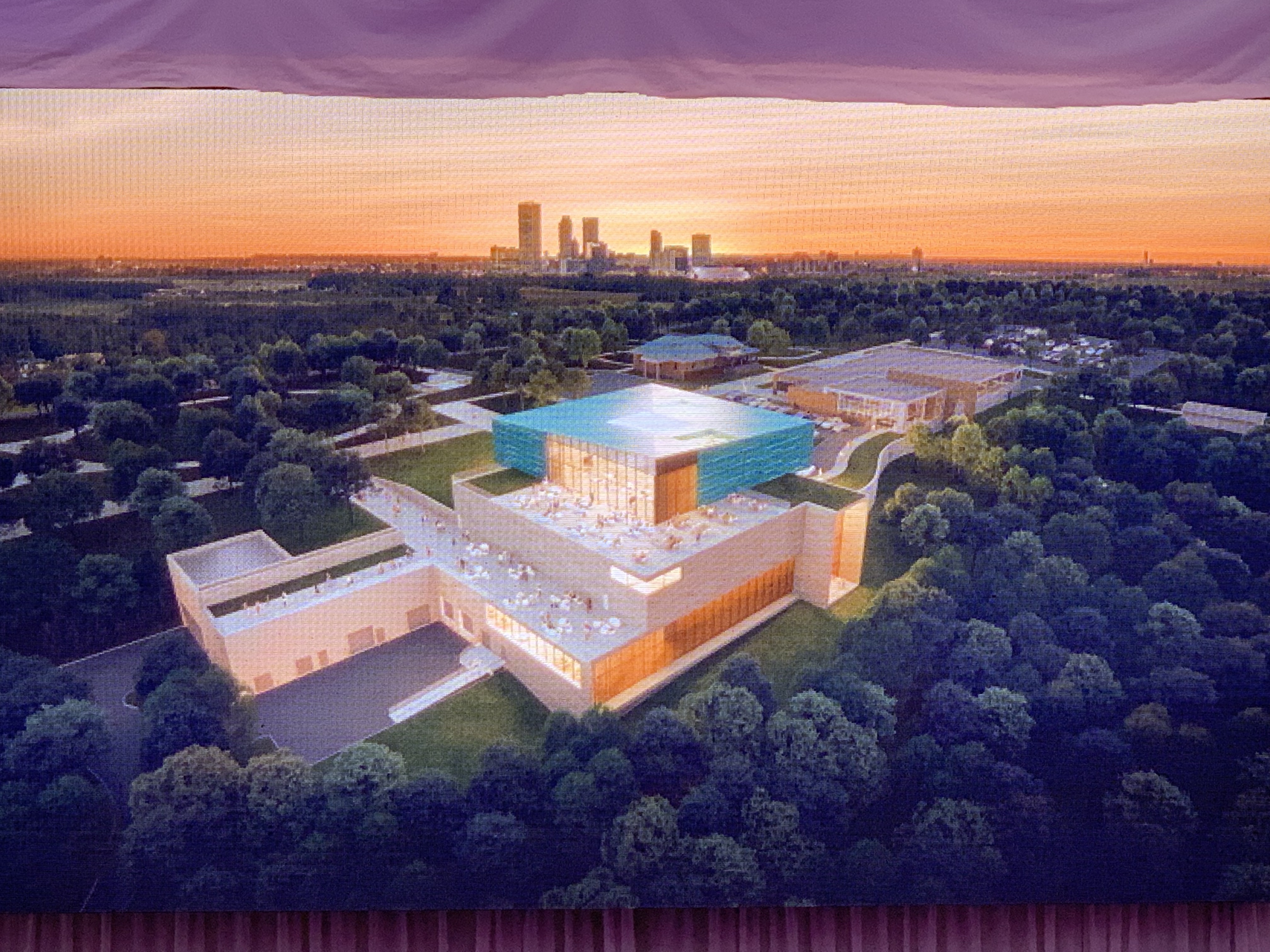
Gilcrease Museum
Thomas Gilcrease was enrolled as Creek Indian number 1501. He struck oil on his allotment land near Tulsa and used the money to pursue a different kind of wealth: the art, artifacts, and documents of the American West. He collected at a time when few people cared about Western art or Native American heritage, so his holdings grew rapidly and at relatively modest cost. By the early 1950s, Gilcrease had assembled the world's largest, most comprehensive collection of art of the American West. Then oil prices crashed, and he faced ruin.
Creek Indian Number 1501
Gilcrease believed the story of the American West could be told through art, and that the history of Native Americans and his own heritage could find expression in painting, sculpture, and craftsmanship. He became a patron to Native American artists, purchasing more than 500 paintings by 20th-century Native American artists alone. His collection grew to encompass approximately 10,000 pieces of art, including 18 of the 22 different bronze sculptures Frederic Remington ever created. The museum also houses works by Charles Marion Russell, George Catlin, Albert Bierstadt, and hundreds of other artists who documented the Western experience.
The Bond Vote That Saved a Legacy
When declining oil prices in the early 1950s made it impossible for Gilcrease to finance further acquisitions, mounting debt threatened the entire collection. Faced with the prospect of selling it off to pay his creditors, Gilcrease offered to part with everything to keep the collection intact. In 1954, fearing that the museum would leave Tulsa, a small group of citizens organized a bond election. The voters of Tulsa approved the measure by a three-to-one margin, paying off Gilcrease's outstanding debts and securing the collection for the city. Gilcrease deeded the collection, building, and property to Tulsa in 1958. It was an extraordinary act of civic preservation: an entire city voting to tax itself to save one man's vision of the West.
Three Continents of History
The Gilcrease collection extends well beyond paintings. The anthropology department holds 300,000 artifacts covering prehistoric and historic archaeology from North, Central, and South America. Among the most significant holdings are pre-Columbian projectile points that archaeologists regularly consult as a reference collection. The archival holdings exceed 100,000 books, manuscripts, documents, and maps dating from 1494 to the present. Treasures include a letter signed by Diego Columbus in 1512, the Cortez Decree of 1521, copies of the Declaration of Independence and Articles of Confederation signed by Benjamin Franklin, and a letter written by Thomas Jefferson dated July 1, 1776. The museum also holds substantial manuscript collections from Cherokee principal chief John Ross and Choctaw chief Peter Pitchlynn.
Gardens in the Osage Hills
Nestled in the Osage Hills northwest of downtown Tulsa, the museum grounds include twenty-three acres of themed gardens reflecting four periods of Western horticulture: Pre-Columbian, Pioneer, Colonial, and Victorian, along with a rock garden. Gilcrease is the only known art museum to maintain such educational gardens on a single site. Since 2008, the University of Tulsa has managed the museum through a public-private partnership with the city. The Helmerich Center for American Research, added in 2014 at a cost of $14 million, provides secure archival space where researchers can access the vast documentary holdings. Voters approved an $83.6 million plan to build an entirely new museum building, ensuring that Gilcrease's collection, born from one man's oil money and one city's pride, continues to grow.
From the Air
Located at 36.17°N, 96.02°W, northwest of downtown Tulsa in the Osage Hills. The museum grounds and gardens are visible as a green oasis amid the suburban landscape. Nearest major airport: Tulsa International (KTUL), approximately 8 nm northeast. At 2,000-3,000 ft AGL, look for the museum campus and surrounding gardens on the elevated terrain of the Osage Hills. The Arkansas River corridor lies to the south and east.