Gillespie Field
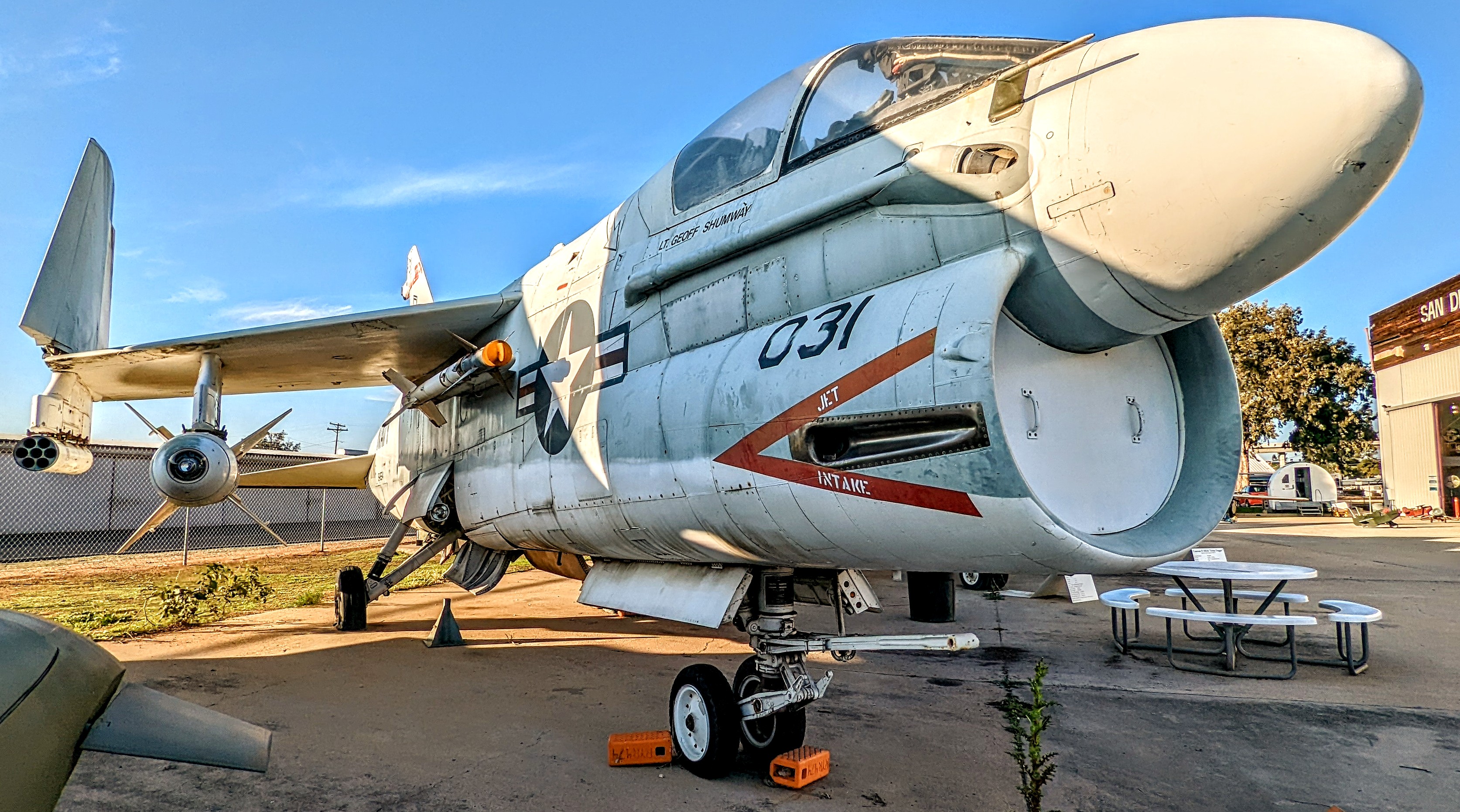
The three 256-foot jump towers at Camp Gillespie were built so that Marine parachutists could practice controlled descents before jumping from aircraft. They went up in 1942 and came down long before the Marines departed, replaced by something more functional and less dramatic: a county airport. The man the camp was named for — Lieutenant Archibald H. Gillespie, a Marine who had played a pivotal role in separating California from Mexico in the 1840s — would not have recognized what the land became. The towers are gone, the barracks are gone, and in their place are runways, hangars, and a Grumman F-14A Tomcat mounted on a gate guard pedestal, the specific aircraft used in Top Gun: Maverick.
The Name and the Man
Archibald H. Gillespie was a Marine officer who arrived in Alta California in 1846 carrying secret dispatches from President Polk to American consul Thomas Larkin and explorer John C. Frémont. His presence, and the actions that followed, helped precipitate the Bear Flag Revolt and the American takeover of California. He held the rank of lieutenant and was wounded during the fighting. A century later, when the Marine Corps established a training installation in El Cajon's broad valley in September 1942, they named it Camp Gillespie in his honor. The mission was practical: train parachutists for Pacific theater operations. Three jump towers were erected, and Marine recruits learned to fall correctly before they were asked to do it from an airplane.
From Base to Airport
Camp Gillespie's military purpose ended with the war, and in 1946 the county of San Diego took over the facility and converted it to general aviation use. The runways the military had built proved adaptable; the flat El Cajon valley, low winds, and clear weather that had made it useful for parachute training made it equally useful for civilian flight. Today Gillespie Field covers 758 acres and operates three runways. It is consistently among San Diego County's busiest general aviation facilities, serving a mix of private pilots, flight schools, charter operations, and corporate aviation. The San Diego Air and Space Museum maintains an annex on the field, giving the airport a museum function alongside its operational one.
Gate Guards and Film History
Military airports often display retired aircraft as gate guards — symbolic sentinels at the entrance — and Gillespie has accumulated several over the years. An Atlas ICBM rocket stands near the road. An F-102A Delta Dagger interceptor represents the Cold War era. But the most culturally prominent artifact on the field is a Grumman F-14A Tomcat, the specific aircraft used during filming of Top Gun: Maverick, the 2022 film that became one of the highest-grossing American films ever made. The Tomcat's association with that production gives the gate guard a contemporary relevance that purely historical aircraft rarely achieve. People stop to photograph it.
Incidents on the Field
In 1988, a Navy F-14A crashed into two hangars at Gillespie Field. No one on the ground was killed — an outcome that owed more to timing than to any structural protection the hangars provided. In 2021, a Learjet 35 crashed on departure and killed four people aboard. These incidents sit within the broader statistical reality of general aviation, which has a higher accident rate than commercial aviation while remaining a fundamental part of American transportation infrastructure. The field continues to operate. The accident history is part of its record, neither concealed nor dwelt upon — the kind of institutional memory that active airports carry without letting it define them.
From the Air
Gillespie Field (KSEE) is located at approximately 32.826°N, 116.973°W in El Cajon, San Diego County. The airport's three runways and 758-acre footprint are clearly identifiable from the air; the field lies immediately west of the San Vicente Freeway (SR-67) corridor. The gate guard aircraft — including the F-14A Tomcat and Atlas ICBM — are near the main entrance on N. Marshall Avenue. Nearest major airport: KSAN (San Diego International) 16 miles west. Pattern altitude is 1,467 feet MSL; the surrounding valley is broadly visible at 3,000–4,000 feet.