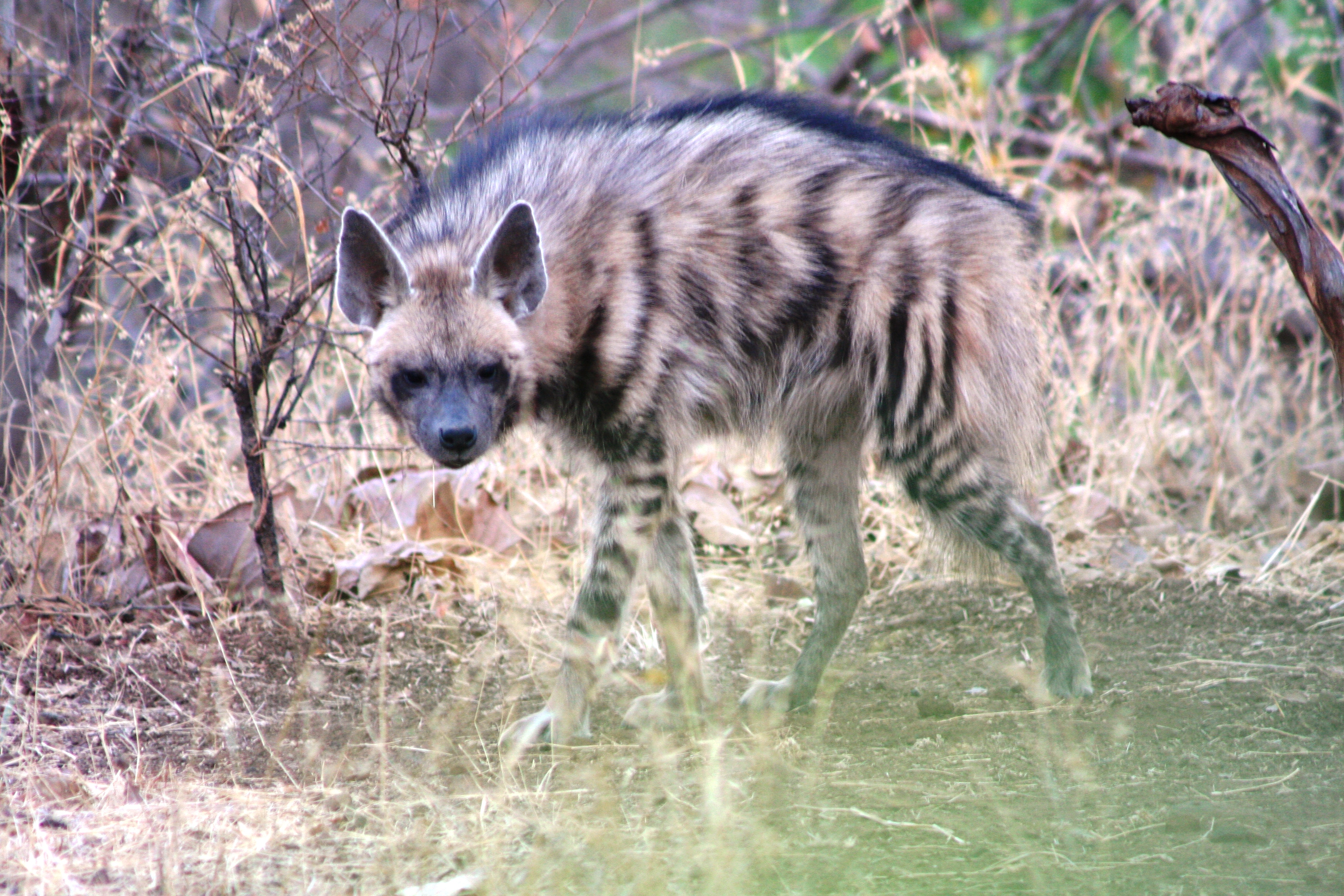
Gir National Park
By the end of the 19th century, roughly a dozen Asiatic lions remained on the entire planet. All of them lived in one forest, on one peninsula, in the private hunting grounds of one man - the Nawab of Junagadh. That forest was Gir. Today it covers 1,410 square kilometers of dry deciduous woodland in Gujarat's Saurashtra region, and the lions number over 650 -- the 2020 census recorded 674, with the population continuing to grow. It is the only place in Asia where Asiatic lions survive in the wild, making Gir not just a national park but an ark - the thin margin between a species and its extinction.
From Hunting Ground to Sanctuary
The irony of Gir's survival is that it was saved by the same institution that nearly destroyed it. In the 19th century, rulers of Indian princely states routinely invited British colonists for hunting expeditions, and the Asiatic lion population plummeted. When British viceroys finally brought the crisis to the Nawab of Junagadh's attention, he established protections over the forest. It was a princely decision in the most literal sense - one man's decree preserved the last viable habitat for an entire species. The park was formally established in 1965, with 258 square kilometers designated as fully protected national park and the remaining 1,151 square kilometers as wildlife sanctuary. The Kamleshwar Dam, built on the Hiran River, became what locals call "the lifeline of Gir," one of four reservoirs fed by the seven perennial rivers - the Hiran, Shetrunji, Dhatarvadi, Shingoda, Machhundri, Ambajal, and Raval - that keep this dry landscape alive.
Counting Lions
Every five years, Gir conducts a census of its lions - a logistical operation involving roughly a thousand forest officials, experts, and volunteers. The trajectory tells a story of slow recovery. In 1900, the population stood at an estimated 100. A 1936 census recorded 289. The first modern count was conducted by Mark Alexander Wynter-Blyth, principal of Rajkumar College in Rajkot, working alongside R.S. Dharmakumarsinhji sometime between 1948 and 1963. By 2005, the count reached 359. In 2010, it rose to 411. The 2015 census - the 14th Asiatic Lion Census - recorded 523 individuals, a 27 percent increase in five years: 109 males, 201 females, and 213 cubs, distributed across Junagadh, Gir Somnath, Amreli, and Bhavnagar districts. Earlier censuses relied on tracking pugmarks. The 2005 count introduced the "Block-Direct-Total Count" method, a more rigorous approach prompted by controversies over vanishing tiger populations elsewhere in India.
A Forest of Teak and Teeth
Gir is classified as "very dry teak forest" - the largest dry deciduous forest in western India, where teak grows mixed with scrub and savannah grasslands the locals call vidis. Botanical surveys have recorded over 500 plant species. But the wildlife extends far beyond lions. Indian gray mongooses and ruddy mongooses hunt through the undergrowth. Honey badgers prowl the forest floor. Asiatic wildcats and the rarely seen rusty-spotted cat - the world's smallest wild cat - inhabit the deeper woods. Along stream banks, pythons sun themselves, and Indian cobras thread through the bush. In 1977, the Gujarat State Forest Department released close to 1,000 mugger crocodiles into Kamleshwar Lake and surrounding water bodies as part of the Indian Crocodile Conservation Project. More than 300 bird species have been recorded, including crested serpent eagles, Bonelli's eagles, Indian eagle-owls, and six species of vultures.
The Threats That Remain
Recovery has not meant safety. Lions are still occasionally poached or poisoned in retaliation for attacking livestock. The park faces cyclones, drought, and forest fires as recurring natural threats. Human pressures compound the problem: overgrazing by cattle, encroachment on park boundaries, weed infestation from vehicle traffic, mining along the periphery, and pollution from railway lines running through the buffer zone. Tourism itself contributes to environmental degradation. The Sakkarbaug Zoo in Junagadh has successfully bred about 180 lions through the Lion Breeding Programme and distributed 126 pure Asiatic lions to zoos worldwide, providing a genetic backup. But Gir remains the species' only wild home. The park closes entirely from mid-June through mid-October during monsoon season - a necessary rest for a forest that carries the weight of a species' survival on its branches.
From the Air
Located at 21.14°N, 70.80°E in Gujarat's Saurashtra peninsula. The park is a large expanse of green forest visible amid drier surroundings, with the Kamleshwar Reservoir as a prominent water feature. Nearest airports are Diu Airport (DIU/VADU), about 65 km southwest, and Rajkot Airport (RAJ/VARK), about 160 km north. Junagadh, the nearest major city, lies 65 km to the northwest. At medium altitude, the forest boundary is clearly distinguishable from agricultural land. Recommended viewing altitude: 5,000-10,000 feet AGL for the full forest canopy spread.