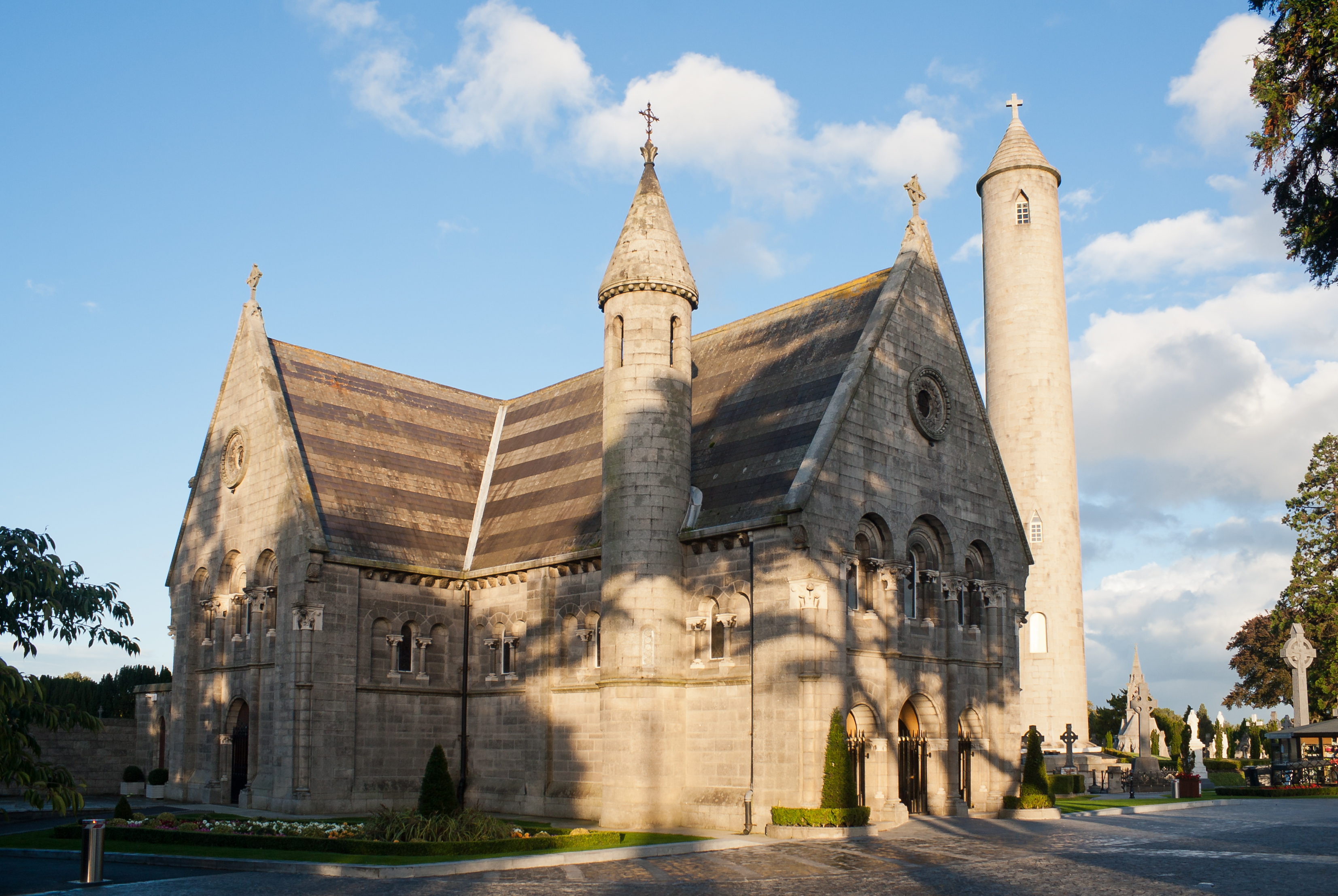
Glasnevin Cemetery
On a day in 1823, a Protestant sexton at St. Kevin's Churchyard reprimanded a Catholic priest for daring to perform a funeral service. The incident was minor, bureaucratic even -- but in a country where the Penal Laws had stripped Catholics of the right to bury their own dead in their own cemeteries, it struck a nerve that would not quiet. Nine years later, Daniel O'Connell opened Glasnevin Cemetery as Ireland's first non-denominational burial ground, a place where Catholics could finally lay their dead to rest without asking permission. More than 1.5 million people have been buried here since. Their stories, taken together, are the story of Ireland itself.
Bloodhounds and Bodysnatchers
The high walls and watchtowers that still surround the oldest part of Glasnevin were not built for ceremony. They were built to stop bodysnatchers. In the early 19th century, Dublin's medical schools paid handsomely for fresh cadavers, and newly filled graves were easy targets. Glasnevin's founders took the threat seriously: watchmen patrolled the grounds at night, accompanied by a pack of bloodhounds whose presence discouraged all but the most determined thieves. The walls gave the cemetery a fortress-like appearance that it retains today -- an oddly appropriate look for a place that was founded as an act of resistance against laws that denied Catholics even the dignity of mourning.
The Republican Plot
Glasnevin became the resting place for the architects of Irish independence almost from the start. O'Connell himself was initially buried on the grounds in 1847, then reinterred in 1869 in a crypt at the base of the 55-metre round tower that bears his name. But the cemetery's most politically charged moment came on August 1, 1915, when Patrick Pearse delivered his graveside oration at the funeral of the old Fenian Jeremiah O'Donovan Rossa. Standing in Glasnevin, Pearse declared that 'Ireland unfree shall never be at peace' -- words that mobilized a generation and set the stage for the Easter Rising eight months later. When Michael Collins was killed in the Civil War in 1922, an estimated 500,000 people lined the streets of Dublin for his funeral procession to Glasnevin -- roughly one-fifth of Ireland's entire population.
The Weight of Names
Walking Glasnevin is walking through an encyclopedia of modern Irish history. Charles Stewart Parnell lies here, his grave still marked annually on Ivy Day each October. Constance Markievicz, the first woman elected to the British Parliament and a commandant during the Easter Rising, is buried nearby. So are Eamon de Valera, Arthur Griffith, Roger Casement, James Larkin, and Brendan Behan. Beyond the famous names, 183 soldiers of the Irish Free State are buried around Collins's grave, their names recorded on a memorial erected in 1967. In 1993, remains from a mass grave at a Magdalene laundry -- one of the institutions where women deemed 'fallen' were confined and forced to work -- were cremated and reburied at Glasnevin, adding a grimmer chapter to the cemetery's already complex narrative.
Bombs and Neglect
Even the dead were not spared from the Troubles. In January 1971, a gelignite bomb planted at the base of the O'Connell Tower demolished the original staircase and damaged the crypt. The attack was attributed to Ulster loyalists, retaliating for the destruction of Nelson's Pillar on O'Connell Street five years earlier. Through the following decades, lack of government funding allowed the cemetery to fall into serious decline -- by the late 1970s, parts of the grounds had become a dumping site for Dublin Corporation's refuse. Restoration finally began in the mid-1980s, and the cemetery museum opened in 2010, transforming Glasnevin from a neglected burial ground into a heritage site that draws visitors from around the world.
The Living and the Dead
Glasnevin remains an active cemetery. Catholic Mass is celebrated every Sunday, and an annual blessing of the graves continues a tradition dating to 1832. The Angels Plot, one of the few sections in any Irish cemetery that accepted stillborn babies in consecrated ground, speaks to a gentler side of the cemetery's mission. James Joyce set the 'Hades' episode of Ulysses here, following Leopold Bloom through the graves on a June morning in 1904. Outside the gates, the pub John Kavanagh's -- known locally as 'The Gravediggers' -- has served pints since 1833, making it almost exactly as old as the cemetery it adjoins. In Glasnevin, the living and the dead have always kept close company.
From the Air
Glasnevin Cemetery is located at 53.3722N, 6.2778W on Dublin's northside. From altitude, the cemetery's 124 acres are identifiable by the high perimeter walls and the distinctive O'Connell Round Tower (55m). Adjacent to the National Botanic Gardens to the east. Nearest airport: Dublin Airport (EIDW) approximately 7km north.