GLBT Historical Society
The GLBT Historical Society museum is the first full-scale, stand-alone LGBTQ history museum in the United States and only the second in the world after the Schwules Museum in Berlin. The GLBT Historical Society, headquartered in San Francisco's Castro District, maintains one of the most extensive collections of LGBTQ archival materials, artifacts, and graphic arts in the United States. Its holdings document not just San Francisco's queer history but the broader American LGBTQ experience, with a depth and specificity that no other institution matches. What began in the early 1980s as two men sharing a passion for preserving gay and lesbian history has become a museum, archive, and cultural institution of international significance.
Two Collectors Meet
The roots of the GLBT Historical Society extend to the early 1980s, when Willie Walker and Greg Pennington discovered their shared interest in gay and lesbian history and began collecting materials that other institutions would not preserve. In an era when LGBTQ history was being actively erased or ignored by mainstream archives, Walker and Pennington understood that if the community did not save its own story, no one else would. They began gathering photographs, posters, organizational records, personal papers, and ephemera from San Francisco's queer community -- the raw material of a history that was being lived faster than it could be recorded.
The Museum in the Castro
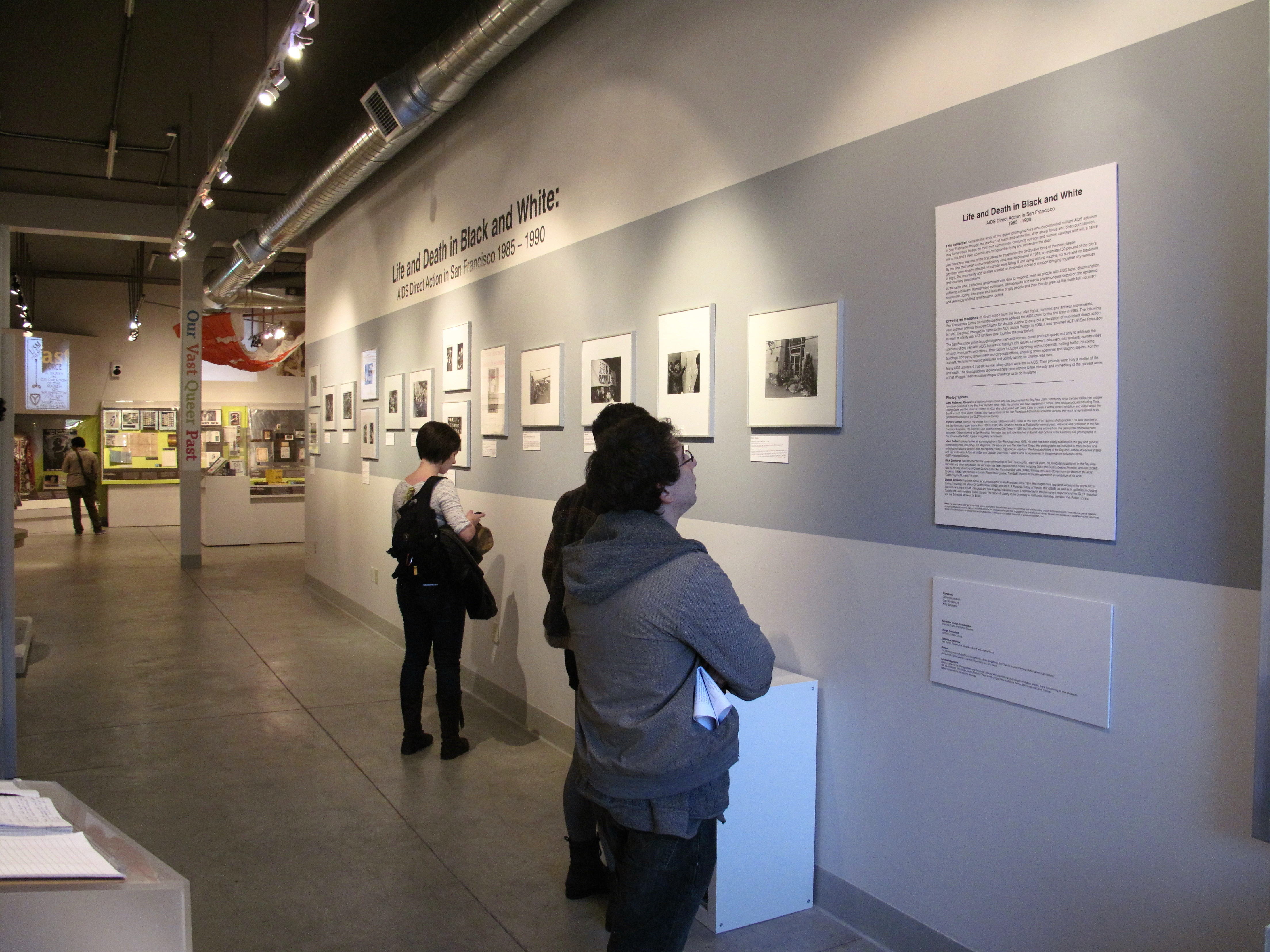
On January 13, 2011, the GLBT Historical Society opened its museum in the Castro District, creating a physical space where the collection could be exhibited to the public. The museum -- later slightly renamed the GLBT History Museum -- occupies a storefront on 18th Street, placing it at the center of the neighborhood that has defined LGBTQ life in San Francisco for half a century. Rotating exhibitions draw on the archive's holdings to tell stories that range from the intimate to the political: personal letters, protest signs, bar matchbooks, photographs of pride marches, and the everyday objects that document how a community lived, loved, and fought for recognition.
Preserving What Others Wouldn't
The collection's significance lies not in individual treasures but in its comprehensiveness. The GLBT Historical Society holds the kind of materials that mainstream archives historically rejected: the records of gay bars, leather organizations, drag clubs, and activist groups; the personal papers of people whose lives were considered unworthy of preservation; the ephemera of a community that created its own culture because the dominant culture excluded it. The archive is an act of defiance against erasure -- proof that LGBTQ people existed, organized, celebrated, mourned, and built institutions, preserved in boxes and folders by an organization that understood the revolutionary power of keeping records.
From the Air
Located at 37.7607°N, 122.4356°W in the Castro District of San Francisco. The museum is on 18th Street near Castro Street, in the heart of the LGBTQ neighborhood. Best viewed at 1,500-3,000 feet AGL. Nearest airports: KSFO (12 nm south), KOAK (11 nm east).