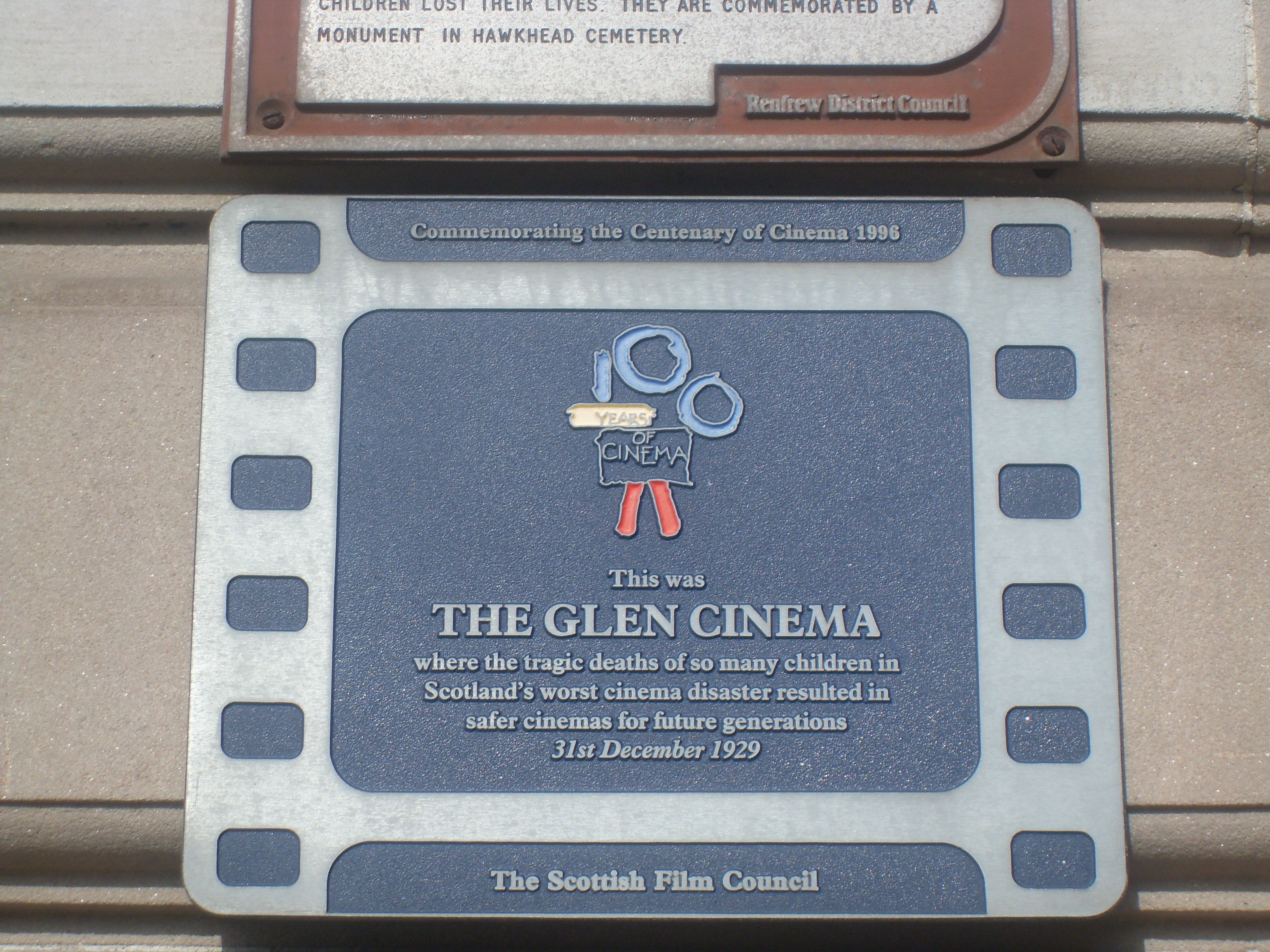
Glen Cinema Disaster
The parents of Paisley sent their children to the pictures on the afternoon of 31 December 1929 so they could clean their houses for Hogmanay. It was a common enough arrangement -- the Glen Cinema on High Street was showing a matinee, the children would be entertained for a few hours, and the adults could scrub floors and polish brasses in peace. Between 700 and 1,000 children filed into the auditorium, some as young as infants, none older than fourteen. By the time the afternoon was over, 71 of them were dead. It remains one of the worst disasters in Scottish history, and the most painful.
A Room Full of Children
The Glen Cinema had opened in 1901 and gone through several names, including 'The Royal Animated Pictures.' By 1929 it was a fixture of Paisley life, the kind of neighborhood picture house where families sent their children without a second thought. The Hogmanay matinee drew an enormous crowd. Parents across the town had the same idea at the same time, and the cinema filled far beyond what was safe. Inside the darkened auditorium, children sat in every seat, crowded along the rows, pressed together in the way that only children can be -- unaware of danger, absorbed in the flickering images on the screen.
Smoke and the Word 'Fire'
A film canister in the spool room had been placed on top of a battery, causing a short circuit. The canister began to smoke. There was no actual fire -- but smoke curled into the auditorium, and someone shouted the word that turns any crowded room into a death trap. Children leapt from their seats and ran for the exits. Some jumped from the balconies onto those seated below. Hundreds surged down the stairs toward the escape door on Dyers Wynd. They arrived to find it locked. The door had been padlocked and was designed to open inward -- even without the lock, the crush of small bodies pressing against it would have made it impossible to open. Children piled up behind it, fallen bodies trapping those who came after, the weight of the crowd compressing those at the front until they could no longer breathe.
Paisley's Black Hogmanay
Seventy-one children died, most from traumatic asphyxia in the crush behind that locked door. Forty more were injured. As news spread through Paisley on what should have been a night of celebration, parents ran to the cinema and then to the morgues. Hogmanay festivities across the town were abandoned. Church bells that would normally ring in the New Year fell silent. In the days that followed, funeral processions moved through the streets of Paisley in a seemingly unbroken line. The scale of loss in such a small community was almost incomprehensible -- every street seemed to have lost a child.
A Door That Opened the Wrong Way
The inquiry, held in Edinburgh in April 1930, laid bare a cascade of failures. The cinema had been inspected and pronounced safe by the Paisley fire brigade on the very morning of the disaster. The owner, James Graham, acknowledged there were insufficient exits but claimed he had told his manager, Dorward, never to lock the escape doors during performances. Dorward admitted the doors had sometimes been padlocked to stop children sneaking in without paying. He was charged with culpable homicide but found not guilty. The inquiry concluded that the tragedy was worsened by insufficient exits, inadequate staffing, and overcrowding -- failures that everyone involved had known about and no one had corrected.
Seventy-One Reasons to Change the Law
The Glen Cinema disaster transformed safety law across Britain. The Cinematograph Act of 1909 was amended to require more exits, doors that opened outward, and the installation of push bars. Seating capacity limits became mandatory. Municipal authorities were compelled to inspect cinemas regularly. A relief fund raised five thousand three hundred pounds for the bereaved families and injured children. Paisley Town Council offered the surviving children a week at the seaside -- a gesture of impossible tenderness. At Paisley Museum, a small display holds newspaper clippings, a receipt for a child's funeral, a pair of shoes, and a hat. Among the letters sent to the Provost from across Europe and America are some from women unable to keep their own children, offering them to the devastated families of Paisley. On every Hogmanay since 2009, a memorial service has been held at the Cenotaph, with survivors laying wreaths for the children who did not come home from the pictures that afternoon.
From the Air
The Glen Cinema site sits at 55.846°N, 4.423°W on High Street in central Paisley, approximately 7 nm west of Glasgow city center. Paisley is identifiable from the air by Paisley Abbey and the White Cart Water running through the town center. Nearest airport: Glasgow International (EGPF, 2 nm northeast). The cinema building still stands, now a furniture store. The Cenotaph where annual memorial services are held is nearby in the town center.