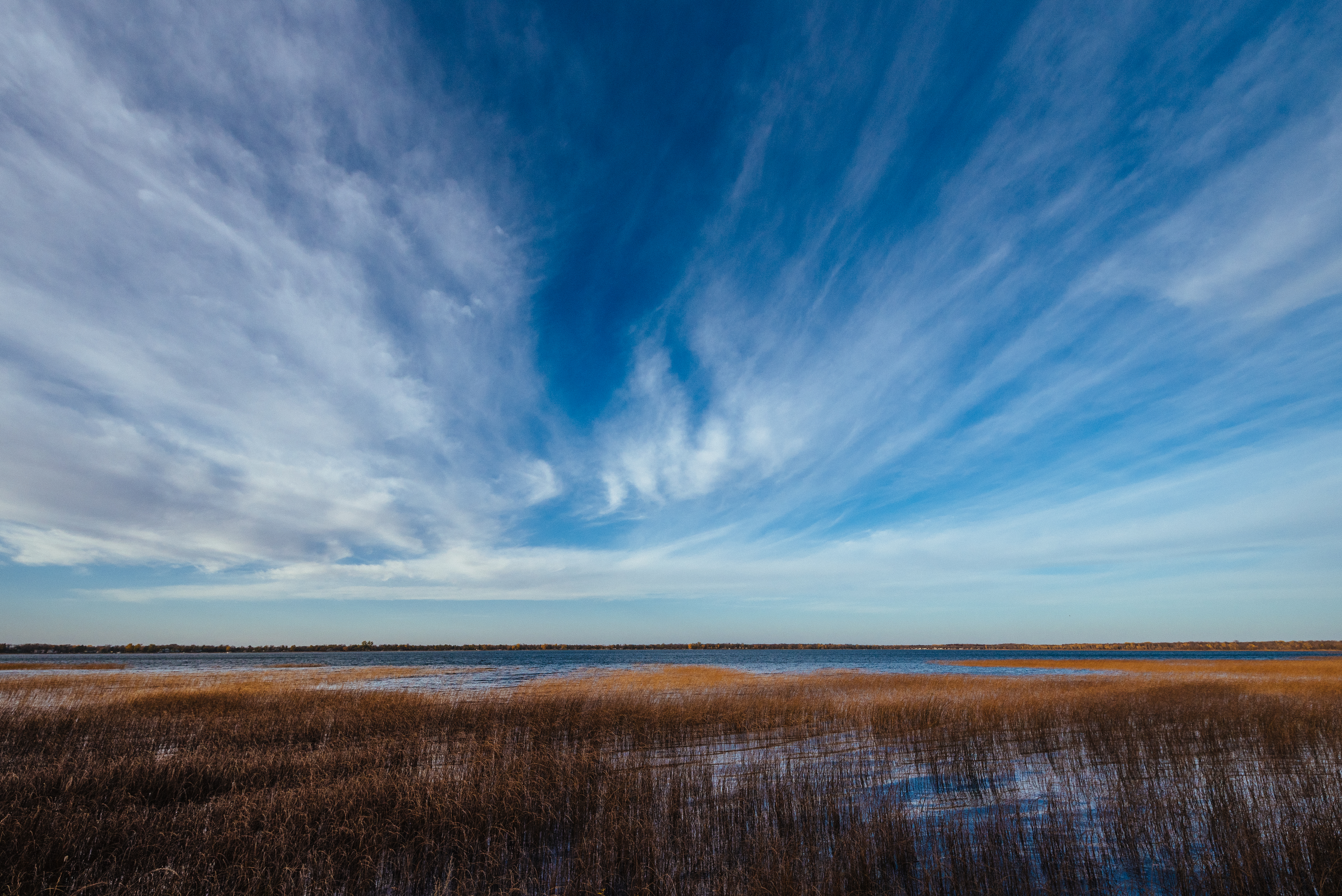
Glendalough State Park
Presidents fished here, but you would never know it. Glendalough State Park in Otter Tail County, Minnesota, keeps its secrets well -- tucked along the shores of Annie Battle Lake and Molly Stark Lake, it feels more like a forgotten corner of the north woods than a place where Dwight D. Eisenhower and Richard Nixon once cast lines. The reason for that privacy is the park's unusual origin. For most of the twentieth century, Glendalough was not public land at all. It was a private game farm owned by the family behind the Minneapolis Tribune, a retreat so exclusive that a sitting vice president could visit without anyone much noticing. The transformation from private playground to public park happened on Earth Day 1990, and the timing was no accident.
From Valentine's Camp to a Media Empire
The story begins in 1903, when Ezra G. Valentine carved a summer retreat out of the lake country and named it Valentine's Camp. His children, John Alden and Miss Blanche, inherited the land in 1905 and eventually sold it to Fred A. Everts. The next owner changed everything. F.E. Murphy, who owned and operated the Minneapolis Tribune, purchased the property and renamed it Glendalough -- after the famous monastic valley in County Wicklow, Ireland, where a sixth-century saint built a community among the lakes. Murphy saw echoes of that landscape in the rolling Minnesota terrain. During the Depression, when land prices cratered, Murphy expanded the camp and established a game farm. In 1941, Cowles Media Company, partially owned by John Cowles Sr., purchased both Glendalough and the Minneapolis Tribune. The game farm became an exclusive retreat where power brokers and politicians came to fish, hunt, and conduct business away from public scrutiny.
The Presidential Lodge
The historic Glendalough Lodge stands as tangible evidence of the park's elite past. Presidents Eisenhower and Nixon stayed here, as did Vice President Walter Mondale. The lodge was not a grand resort in the Adirondack style -- it was a private retreat, comfortable but deliberately understated, designed to feel like a getaway rather than a destination. Today, the lodge is available for rental, open to family gatherings and tours rather than confidential fishing trips with cabinet members. The contrast between its exclusive past and democratic present captures the park's broader transformation. A Trail Center, whose planning began in 2017 but was delayed by the COVID-19 pandemic and construction setbacks, opened in July 2025 near the lodge, adding bathrooms, a common space, and vendor facilities to the park's infrastructure.
Earth Day and the Gift
On Earth Day 1990, Cowles Media Company donated Glendalough to The Nature Conservancy. The choice of date was deliberate -- a statement that this private paradise was becoming a public trust for ecological stewardship. The Nature Conservancy transferred the title to the State of Minnesota in June 1992, and Glendalough was officially declared a state park with a celebration held around Earth Day, April 22, 1992. The park's anniversary continues to be marked near that date. The donation preserved not just the land but its character. Unlike state parks that had been logged, farmed, or developed before acquisition, Glendalough arrived relatively intact, its lakes healthy and its forests mature. That ecological head start made it an ideal candidate for prairie restoration work, where native plants like Big Bluestem, Pasque Flower, and Pussy Toe are slowly reclaiming acres that had been managed for game rather than biodiversity.
Storms and Resilience
Nature tested the park's new custodians swiftly. In August 2004, a severe thunderstorm with straight-line winds tore through Glendalough, flattening trees and reshaping the landscape in minutes. The park closed for a week to clear debris. Less than ten months later, in 2005, another thunderstorm struck. This time the staff and volunteers managed to keep the park open, posting warnings about hazards from downed trees throughout the trail system. The back-to-back blowdowns scarred the canopy but also opened clearings that accelerated natural succession, letting sunlight reach the forest floor in ways it had not for decades.
Primitive by Design
Glendalough is one of only three Minnesota state parks to offer yurts. The canoe-in campsites on the far shore include three tent sites and two yurts accessible only by water, enforcing a solitude that feels earned rather than accidental. Three camping areas ring the lakes: the west shore of Annie Battle Lake, the stretch between Annie Battle Lake and Molly Stark Lake, and the southeast corner of Annie Battle Lake. Cart-in campsites along the west shore include four cabins and four electric cabins, one of them handicapped-accessible, while a group camp along the creek between the two lakes accommodates up to 45 people. Between Labor Day and Memorial Day, the main campground facilities shut down entirely for rustic-season camping. Wildlife runs through the park in every direction -- bald eagles and ospreys patrol the lakes, barred owls call at dusk, beavers reshape the creeks, and the park's advice to store food in lockers rather than tents is not a suggestion but a lesson learned from raccoons and their persistence.
From the Air
Located at 46.333N, 95.667W in Otter Tail County, Minnesota, near the town of Battle Lake. The park's chain of lakes -- Annie Battle Lake and Molly Stark Lake -- are visible from altitude as connected blue ovals in the rolling lake country terrain. Minnesota State Highway 78 passes nearby. Battle Lake Municipal Airport (no ICAO code) is a small grass strip to the southwest; Fergus Falls Municipal Airport (KFFM) is roughly 20 miles to the west. The Otter Tail County lake district is one of Minnesota's most lake-dense regions, and from 4,000-6,000 feet AGL the landscape reads as a mosaic of blue water, green forest, and golden prairie.