Glenfinnan Monument
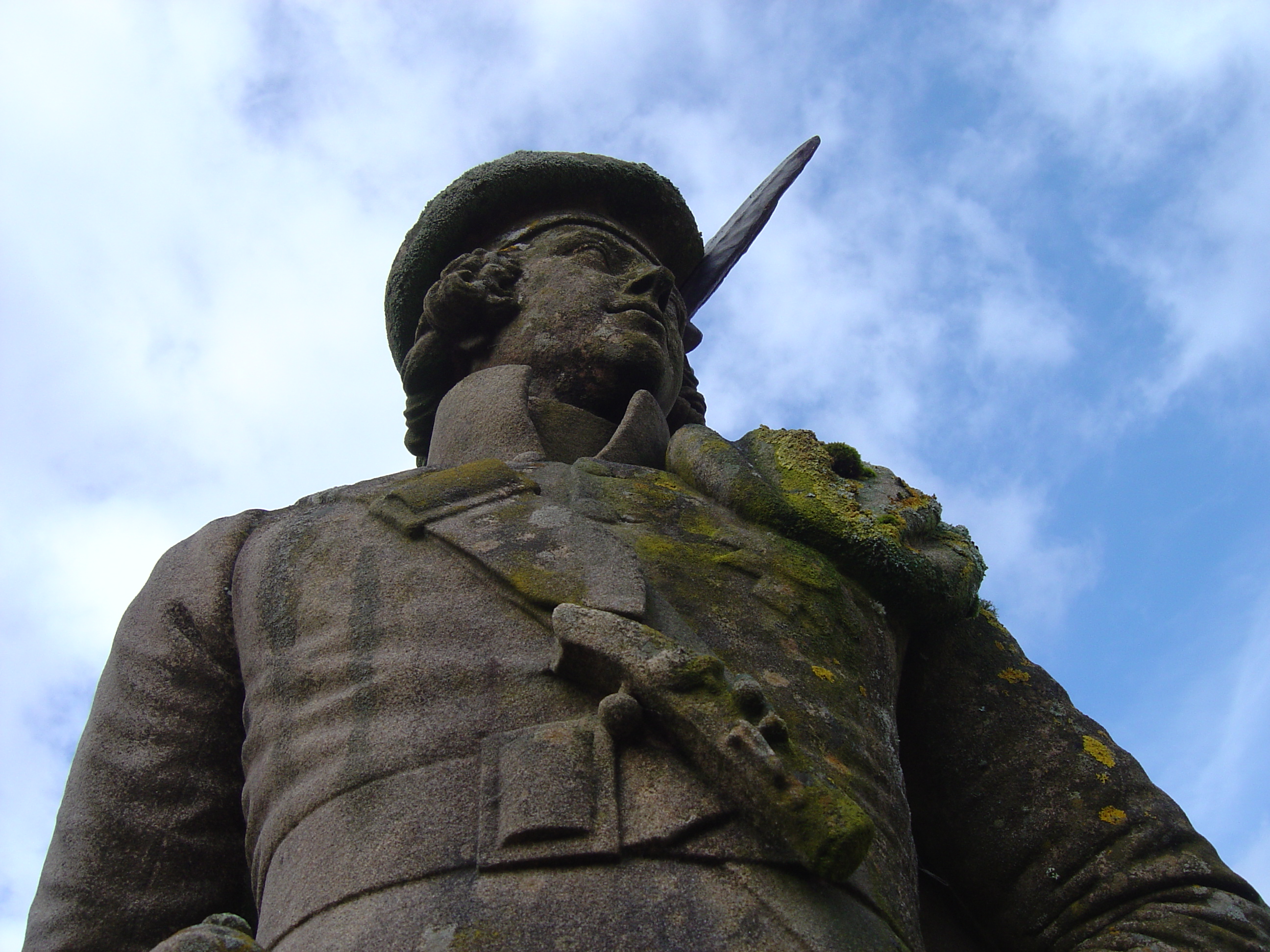
The figure atop the column is not Bonnie Prince Charlie. Visitors assume it must be -- who else would stand sentinel at the head of Loch Shiel, overlooking the very spot where Charles Edward Stuart raised his standard on 19 August 1745? But the statue, added in 1835 by sculptor John Greenshields, depicts an unknown Highlander, a deliberate choice that shifts the monument's meaning from royal cult to something more democratic: a memorial to the ordinary clansmen who answered the call, marched south, and in many cases never returned.
A Son's Tribute, a Father's Wealth
By 1814, Jacobitism had been defanged. The House of Hanover sat secure on the throne, and the Highlands had been thoroughly subdued by decades of military occupation, clearances, and cultural suppression. It was safe, even fashionable, to romanticize the lost cause. Alexander Macdonald, a member of Clan Macdonald of Clanranald, commissioned the tower to honor the Highlanders who had fought for Stuart. His father had hosted the prince for a night during the campaign. The monument's location at Glenfinnan became possible only after Thomas Telford completed a new road between Fort William and Arisaig in 1812, opening this remote headland to construction. But the wealth that funded the tower came, in part, from slave plantations in Jamaica owned by Macdonald's father. The monument commemorates one form of suffering while being built on the proceeds of another.
Reckoning at the Visitor Centre
The National Trust for Scotland has cared for the monument since 1938, constructing a visitor centre with exhibitions, a shop, and a cafe. In 2021, the Trust replaced a portrait of Charles Edward Stuart with a display detailing the links between the monument and the transatlantic slave trade, including information about Highland elites who owned enslaved people. The decision reflected a broader reckoning across Scotland's heritage institutions, an acknowledgment that the romantic narrative of Jacobite martyrdom had long obscured less comfortable truths. The monument remains a Category A listed structure -- the highest heritage protection in Scotland -- but the story it tells has grown more complex, and more honest.
The View from the Column
Stand at the base and look south. Loch Shiel stretches seventeen miles into the distance, a glacial valley dammed by rubble to become freshwater. Mountains rise on both sides, their lower slopes still carrying remnants of Scotland's primeval Caledonian forest. On 19 August 1745, roughly a thousand Highlanders gathered here, won over by the young prince's 'now or never' rhetoric despite his arriving nearly empty-handed after the Royal Navy blasted his supply ship. The force marched south, occupied Edinburgh, routed a counter-attack at Prestonpans, and pushed deep into England before retreating to destruction at Culloden in April 1746. Just fifteen miles west of this monument, at the Prince's Cairn near Arisaig, Charles fled into exile in September 1746. The monument stands between those two points -- between the hope and the ruin, the raising of the standard and the last boat to France.
From the Air
Glenfinnan Monument at 56.8692N, 5.4369W stands as a tall column at the head of Loch Shiel. Easily visible from the air alongside the Glenfinnan Viaduct to the northeast. Best viewed at 1,500-2,500 ft. Nearest airport: Fort William heliport. The A830 'Road to the Isles' passes directly by. Loch Shiel stretching south provides excellent orientation. Expect frequent low cloud and rain in this west-facing valley.