Global TransPark
What if you could fly raw materials into a factory, assemble a product, and ship it out again -- all without leaving the airport? That was the audacious question John D. Kasarda posed around 1990, and the answer eventually materialized on 2,500 acres of coastal plain outside Kinston, North Carolina. The Global TransPark sits on what was once the lightly trafficked Kinston Jetport, its runway now stretched to 11,500 feet -- one of the longest commercial runways in the state. It is a place where Airbus fuselage sections take shape, where emergency crews stage hurricane relief operations, and where the ghost of tobacco-settlement money has been channeled into composite-materials training labs. The story of the TransPark is a story about reinvention: a rural region's decades-long attempt to trade tobacco fields for aerospace hangars.
The Professor's Blueprint
John D. Kasarda was an academic on the North Carolina Economic Future Study Commission when he sketched out his vision: a purpose-built site where air cargo infrastructure and manufacturing would merge under one roof. Companies would fly in unfinished goods, complete assembly onsite, then ship the finished products outward. Governor Jim Martin embraced the concept and proposed a $250-million development with a two-mile runway and 5,000 acres of industrial zoning. In 1991 the General Assembly created the North Carolina Air Cargo Airport Authority to make it real. The location debate split the state. Piedmont boosters argued the project should anchor itself to the existing urban economy; state leaders countered that rural eastern North Carolina needed the economic jolt more. In May 1992, the authority chose the Kinston Jetport, and Eastern North Carolina's great experiment had its home.
Tobacco Money Meets Aerospace Ambition
For years, the TransPark struggled with the same slow-growth trajectory as its famous neighbor to the west, Research Triangle Park, which also took decades to mature. The breakthrough came in 2008 when Spirit AeroSystems of Wichita, Kansas, committed $570 million to build a manufacturing plant at the site. Spirit chose the TransPark to produce the center fuselage section of the Airbus A350 XWB. State grants totaling roughly $125 million sweetened the deal, and the Golden LEAF Foundation -- steward of North Carolina's tobacco-settlement funds -- approved another $100 million for Spirit's 500,000-square-foot facility. By 2011, Spirit was expanding again, adding production of the Gulfstream G280 wing and projecting 150 to 200 additional jobs. In December 2025, Airbus acquired the Kinston facility outright and rebranded it Airbus Aerosystems Kinston, cementing the TransPark's role as a transatlantic aerospace hub. The irony is rich: a region built on curing tobacco leaves is now curing carbon-fiber composites.
More Than a Runway
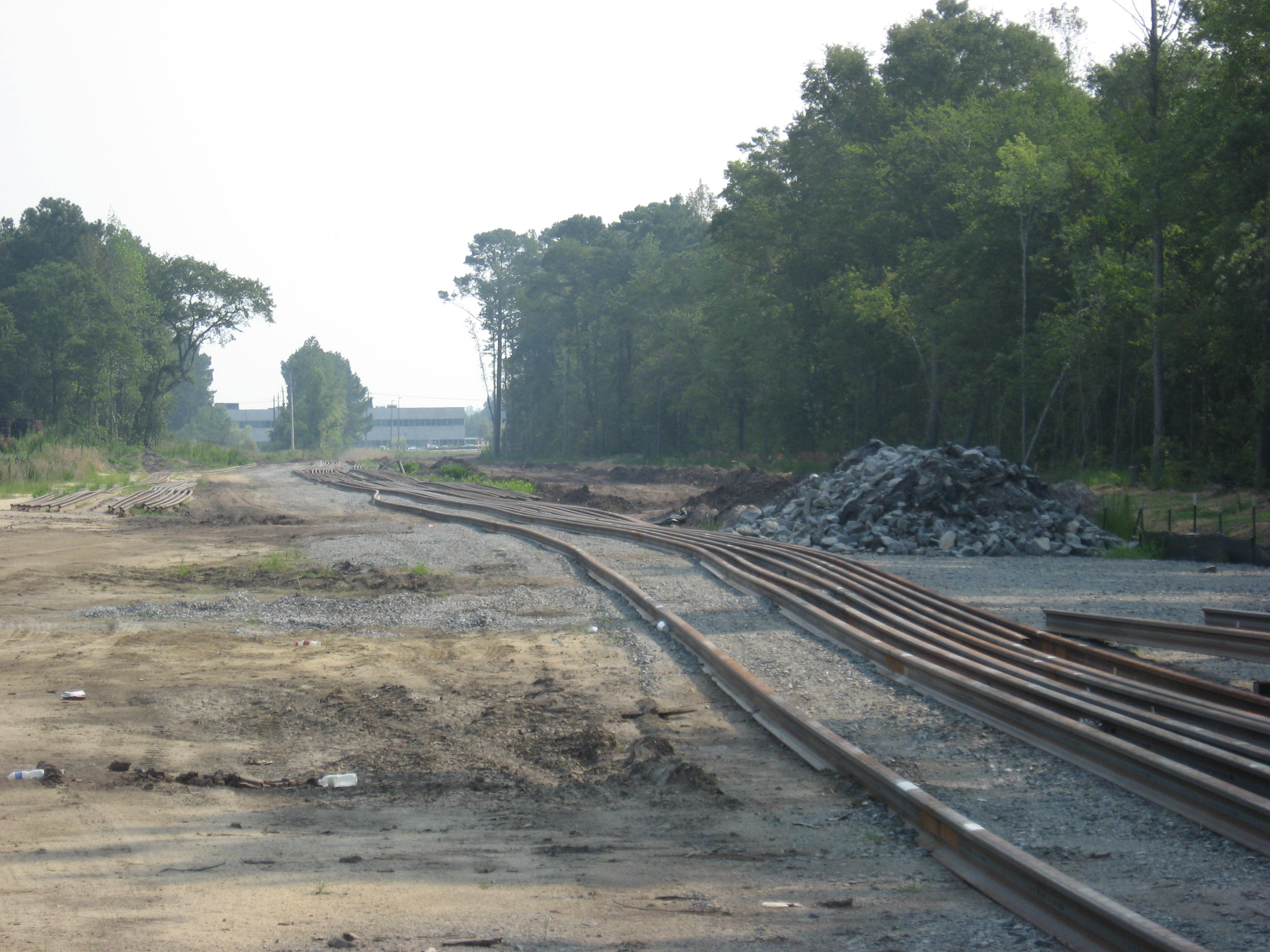
The TransPark was designated Foreign Trade Zone 214 in May 1996, meaning companies can move goods in and out with reduced customs friction. A rail spur connects the manufacturing complex to the North Carolina Railroad's east-west line, which runs through Kinston to the Port of Morehead City 75 miles to the east. The North Carolina Department of Transportation invested in road improvements to handle the movement of aircraft components and heavy industrial cargo. Multi-modal is the operative word: air, rail, highway, and port access converge on a single campus. Southern Business & Development named it one of the ten outstanding logistics parks in the South. Tenants now include Mountain Air Cargo, Delta Private Jets, DB Schenker, and several other aviation and logistics firms.
Storm Shelter for a Hurricane Coast
Eastern North Carolina sits squarely in hurricane country, and the TransPark has taken on an unexpected second life as the region's emergency nerve center. The North Carolina Forestry Service, Highway Patrol, and Emergency Management all maintain facilities on site. When Hurricane Floyd swamped the coastal plain in 1999, the TransPark served as the regional coordinating center for relief efforts. It played the same role when Hurricane Irene bore down in 2011. The combination of a massive runway, open acreage, and multi-modal transport links makes it an ideal staging ground for disaster response -- a purpose its original designers never quite imagined.
The Long Game
The TransPark's critics point to decades of modest growth and tens of millions in public investment. Its supporters counter that Research Triangle Park looked much the same in its early years before becoming a global innovation hub. The Airbus Aerosystems Kinston facility and the Composite Center of Excellence -- where Lenoir Community College designs custom workforce-training programs -- suggest the concept may finally be gaining traction. On the ground, this stretch of eastern North Carolina still feels more agricultural than industrial, but inside those hangars, workers are laying up carbon-fiber panels destined for wide-body jets that will circle the globe. The bet Kasarda placed in 1990 is still being called.
From the Air
Located at 35.32°N, 77.61°W at Kinston Regional Jetport (ICAO: KISO). The 11,500-foot runway is unmistakable from altitude -- look for it approximately 30 minutes south of Greenville, NC. Approach from the east and the long runway slashes across flat agricultural land. Nearby airports include Pitt-Greenville Airport (KPGV) to the north and Cherry Point MCAS (KNKT) to the southeast. Best viewed at 3,000-5,000 feet AGL for runway and campus scale.