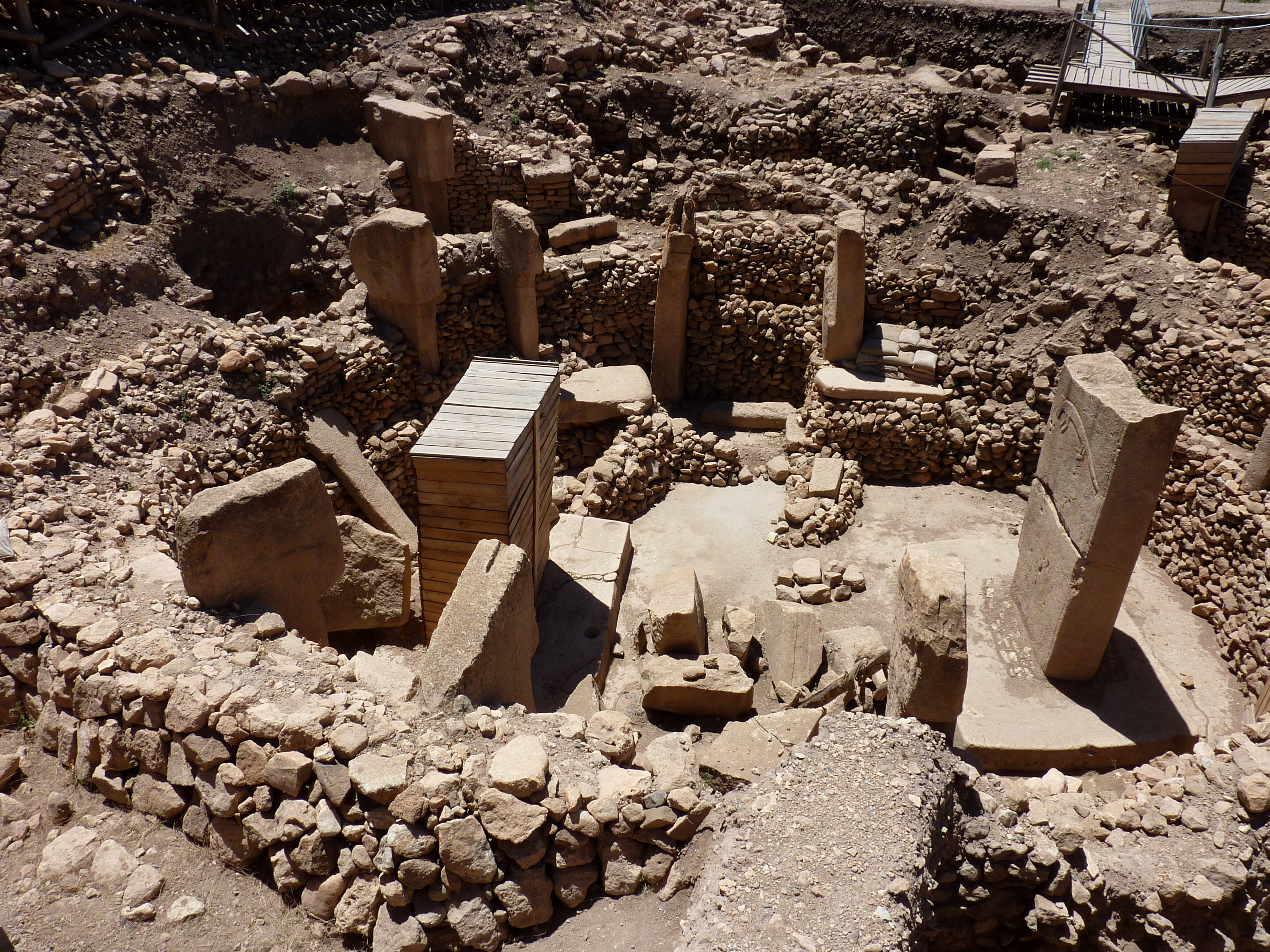
Göbekli Tepe: The Temple Built Before Agriculture
In 1994, German archaeologist Klaus Schmidt visited a hilltop in southeastern Turkey that locals had long known held ancient stones. What he found would rewrite human history. Göbekli Tepe is a temple complex built around 9500 BC - 11,500 years ago. That's 6,000 years before Stonehenge, 6,500 years before the Great Pyramid. The builders were hunter-gatherers who hadn't yet invented farming, pottery, or metalworking. They carved massive T-shaped pillars weighing up to 50 tons, decorated with intricate animal reliefs, then deliberately buried the entire complex. We still don't know why.
The Discovery
The site was first surveyed in 1963, when archaeologists dismissed the stones as medieval grave markers. For thirty years, farmers plowed around them. Then Klaus Schmidt arrived. He recognized the T-shaped pillars from other Neolithic sites and realized immediately: 'Within the first minute of seeing it, I knew this would change my life.'
Excavations revealed massive stone circles - not houses, not fortifications, but apparent temples. Radiocarbon dating placed construction at around 9500 BC, making Göbekli Tepe the oldest known monumental architecture in the world. Nothing like it should have existed.
The Architecture
Göbekli Tepe consists of multiple enclosures, each containing T-shaped limestone pillars arranged in circles. The tallest pillars stand 18 feet high and weigh up to 50 tons. They were carved from bedrock quarries 100 meters away and moved without wheels or draft animals.
The pillars are covered with relief carvings: lions, foxes, boars, snakes, spiders, scorpions, vultures. Some pillars have arms and hands carved into their sides, suggesting they represent stylized humans or gods. The iconography includes symbols found nowhere else - abstract signs whose meaning is lost.
The Paradox
Before Göbekli Tepe, archaeologists believed civilization followed a pattern: first agriculture, then surplus food, then settlements, then organized religion. Complex temples came last, built by societies with thousands of specialized workers.
Göbekli Tepe inverts this sequence. Its builders were hunter-gatherers - mobile groups who followed game and gathered wild plants. They had no permanent settlements, no domesticated crops, no pottery. Yet they organized labor forces of hundreds to quarry, carve, and erect massive stone temples. Some scholars now argue that religion drove civilization, not the reverse. Perhaps people settled down not to farm but to worship.
The Burial
Around 8000 BC, the builders of Göbekli Tepe deliberately buried the entire complex. They filled the enclosures with rubble, bones, and stone tools, covering the pillars completely. Then they built new enclosures on top and buried those too. This continued for centuries.
Why? No one knows. Burial preserved the structures remarkably well - the pillars show no weather erosion. Some archaeologists suggest the sites were sacred and couldn't be abandoned, only entombed. Others propose the temples were periodically 'killed' and renewed. The burial may be the greatest mystery of all.
The Implications
Göbekli Tepe changed everything archaeologists thought they knew about prehistoric humans. Hunter-gatherers could organize massive construction projects. Religion may have preceded rather than followed civilization. The 'agricultural revolution' may have happened because settled temples needed feeding, not because settled farmers needed temples.
Only about 5% of the site has been excavated. Radar surveys show at least 20 enclosures still buried. Göbekli Tepe may reveal more secrets for generations. For now, it stands as evidence that our ancestors were far more sophisticated than we imagined - building monuments to their gods before they built homes for themselves.
From the Air
Göbekli Tepe (37.22N, 38.92E) sits on a hilltop in southeastern Turkey, 15km northeast of Şanlıurfa. Şanlıurfa GAP Airport (LTCS) is 40km southwest. The site appears as a series of partially excavated circles on a prominent hill. The surrounding landscape is semi-arid steppe. The city of Şanlıurfa, ancient Edessa, is visible to the southwest. Weather is continental - hot dry summers, cold winters with occasional snow.