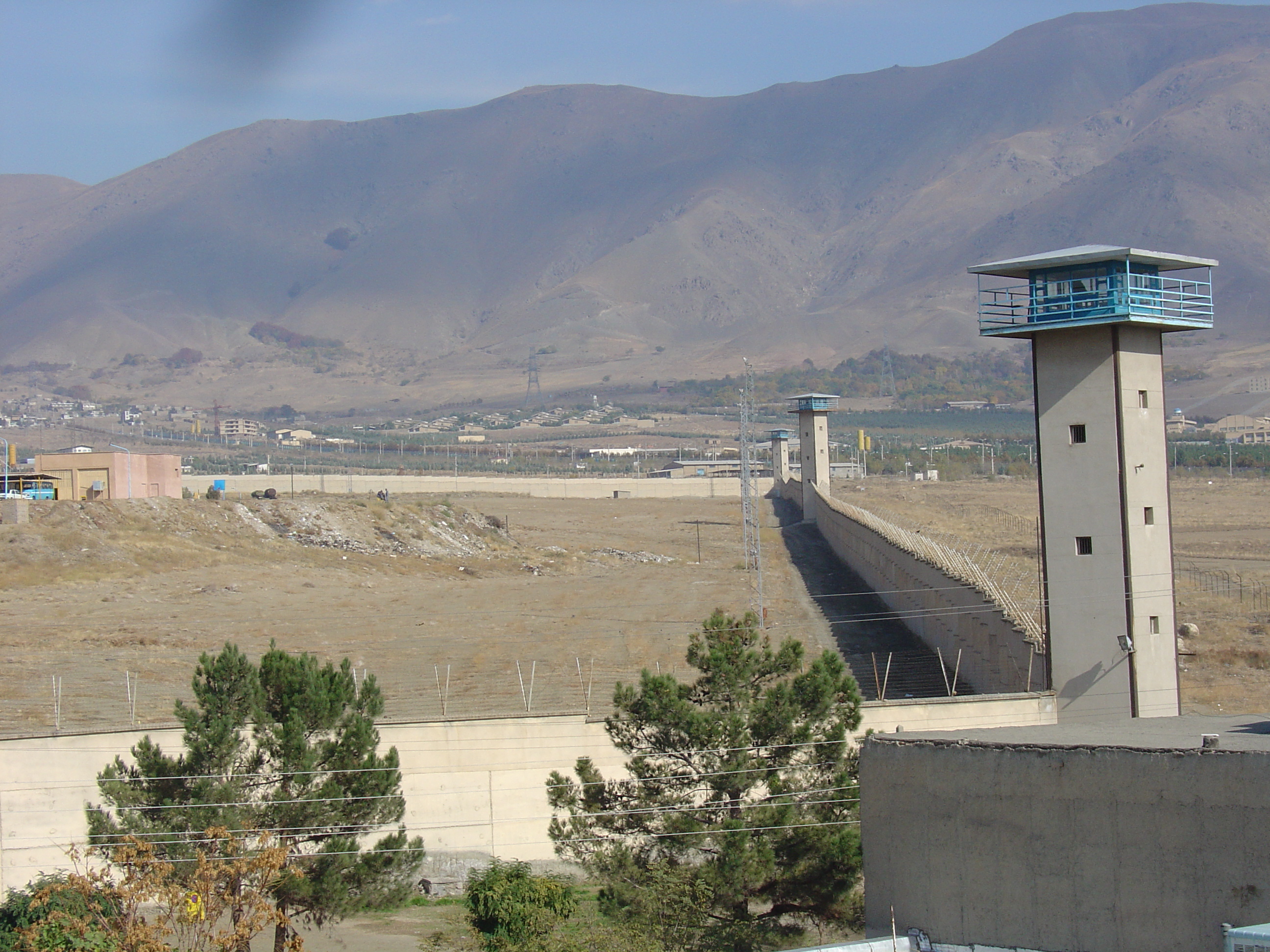
Gohardasht Prison
The name changes depending on who is speaking. Guards and officials call it Rajai Shahr. Human rights organizations call it Gohardasht. Amnesty International calls it one of Iran's most brutal detention facilities. Located on the northern outskirts of Karaj, approximately 20 kilometers west of Tehran, the prison holds both common criminals and political prisoners -- though it is the treatment of the latter that has made Gohardasht a name known far beyond Iran's borders. Ward 12 is where prisoners of conscience are typically sent, and it is from Ward 12 that the worst reports emerge.
After the Revolution
In the immediate aftermath of the 1979 Islamic Revolution, Gohardasht became a processing center for the old regime. Former members of the overthrown Pahlavi monarchy and military were brought here for interrogation and, in many cases, execution. The violence was systematic and swift, part of the revolutionary government's effort to eliminate any possibility of counter-revolution. But the executions did not end with the monarchists. Through the 1980s, the prison filled with a new category of political prisoner: university students and activists affiliated with liberal, Marxist, and socialist groups, along with supporters of the People's Mujahedin of Iran. Many had opposed the Shah, only to find that the theocratic government that replaced him considered them equally dangerous.
Summer of 1988
The mass executions that took place in Iranian prisons during the summer of 1988 remain one of the darkest chapters in the country's modern history. Gohardasht, along with Evin Prison in Tehran, was a primary site of the killings. Political prisoners who had already been tried and sentenced were brought before commissions and asked about their political affiliations and beliefs. Those who maintained their convictions were executed, often within hours. The exact number of people killed across Iranian prisons that summer remains disputed, with estimates ranging from several hundred to several thousand. For the families of those who died at Gohardasht, the lack of accountability has been a wound that has never closed. Many were never told where their relatives were buried.
Suffering Behind Walls
Reports from Gohardasht have continued to emerge in the decades since. In 2012, The Guardian described it as one of Iran's harshest prisons, citing documented cases of torture, rape, and murder. The Islamic Revolutionary Guard Corps maintains solitary confinement cells within the facility. In June 2012, the Campaign to Free Political Prisoners in Iran told EU Parliament representatives that ailing political prisoners were being denied urgent medical attention. In September 2015, union activist Shahrokh Zamani died while imprisoned at Gohardasht. That same year, Amnesty International condemned the prison's practice of blinding prisoners as a form of retributive justice. In October 2016, political prisoners issued a public statement protesting violations of their basic rights, describing conditions that amounted to what they called the slow death of prisoners.
Names and Silences
Gohardasht occupies a painful place in Iranian memory. It is both notorious and, within Iran itself, difficult to discuss openly. The prison's multiple names -- Gohardasht, Rajai Shahr, Rajaee Shahr, Karaj Prison -- reflect a bureaucratic instinct to obscure, to make the facility harder to pin down in conversation. Student activist Majid Tavakoli was transferred here in 2010. Journalists have been imprisoned here. Religious minorities, including Baha'is and Sunni Muslims, have reported persecution within its walls. The facility was closed in August 2023, with prisoners transferred to Ghezel Hesar and other facilities under conditions that drew their own human rights condemnations. Human rights organizations have called the closure a destruction of evidence of crimes against humanity committed at the site. For the families of those imprisoned and executed there, Gohardasht is not history — it is a wound that has never been addressed.
From the Air
Located at 35.868N, 50.979E on the northern outskirts of Karaj, approximately 20 km west of Tehran. This prison facility was closed in August 2023 -- exercise caution regarding restricted airspace near former detention facilities. The nearby Ghezel Hesar Prison is also in the Karaj area. Nearest civilian airport: Mehrabad International (OIII) approximately 25 km east, Payam International Airport (OIIP) approximately 15 km southwest. Exercise caution regarding restricted airspace near detention facilities.