Gokayama
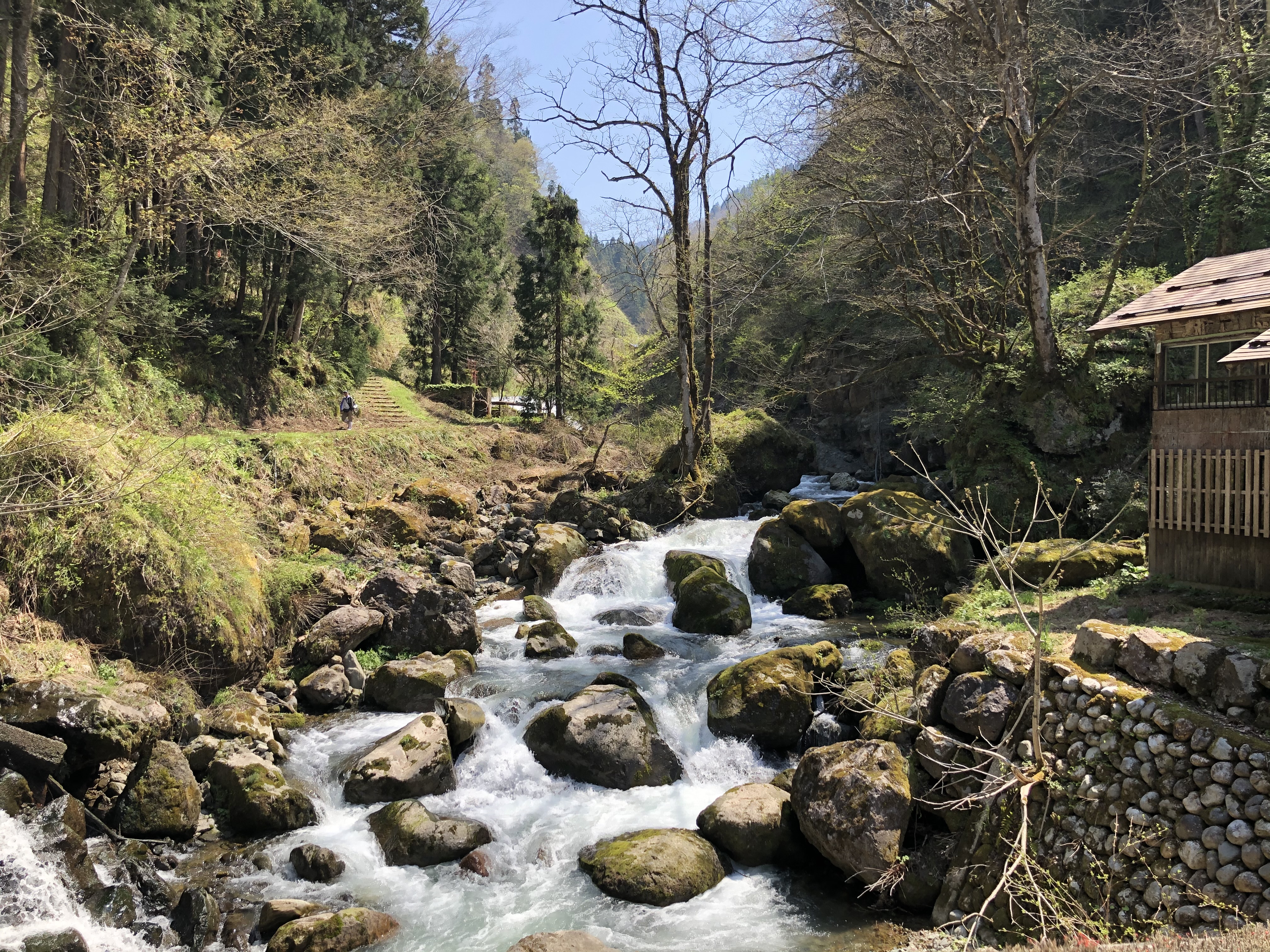
The name means "five mountains," and for centuries those mountains served as walls. Tucked into the upper reaches of the Shōgawa River valley in Toyama Prefecture, Gokayama remained so isolated that its residents developed their own folk songs, crafted their own washi paper, and quietly manufactured gunpowder for the ruling Kaga Domain -- all while the rest of Japan modernized around them. When UNESCO inscribed the area on its World Heritage List in December 1995, it recognized not just the distinctive gasshō-zukuri farmhouses clustered here, but an entire way of life that geography had preserved like amber.
Hands Pressed in Prayer
The gasshō-zukuri style takes its name from the Japanese word for prayer hands -- gasshō -- because the steep thatched roofs resemble palms pressed together in supplication. The design is not decorative. It is survival architecture. With snowfall routinely burying this valley under four meters of white, the roofs pitch at roughly 60 degrees so snow slides off rather than accumulating and crushing the structure. No nails hold the roof framework together. Instead, oak beams are lashed with rope and flexible Japanese witch-hazel, creating joints that flex under the weight of heavy snow rather than snapping. The massive attic space created by these towering roofs was not wasted; families used the upper floors for cultivating silkworms, stacking trays of mulberry leaves in the warm air that rose from the hearth below.
Ainokura and Suganuma
Gokayama's World Heritage designation covers two hamlets. Ainokura, the larger settlement, preserves 20 gasshō-zukuri houses. Most are between 100 and 200 years old, but the oldest has stood for roughly 400 years. Prince Akishino, second son of Emperor Emeritus Akihito, visited Ainokura as a high school student on a geography seminar and later declared it one of his three favorite places in the world. He returned nine years later with his wife. The smaller hamlet of Suganuma sits on a natural peninsula, enclosed on three sides by the bends of the Shōgawa River. Its 12 houses -- nine in the gasshō-zukuri style -- range from the late Edo period through the early twentieth century, the most recent built in 1925. Together, these two hamlets anchor a landscape where rice paddies, forested slopes, and ancient timber create a scene that has changed remarkably little in centuries.
Gunpowder and Paper
Gokayama's isolation was not merely geographical -- it was strategic. During the Edo period, the powerful Kaga Domain exploited the valley's remoteness to operate a secret saltpeter production industry. Saltpeter, the key ingredient in gunpowder, was cultivated using a fermentation process that relied on silkworm waste and local soil, carried out beneath the very floors of the gasshō-zukuri houses. The villagers also produced washi, traditional Japanese paper, and practiced sericulture -- raising silkworms for their silk. These cottage industries, combined with rice cultivation on the narrow valley floor and slash-and-burn farming on surrounding slopes, sustained communities that had little contact with the broader Japanese economy. The seclusion that enabled these trades also preserved the folk traditions, music, and communal way of life that still characterize Gokayama today.
The Weight of Thatch
Maintaining a gasshō-zukuri roof is a communal event. The thatching must be replaced every 30 to 40 years, and the labor required is enormous -- far beyond what any single family could manage. The practice of yui, a system of cooperative labor, brings the entire village together for re-thatching. Neighbors work alongside the homeowners, bundling and layering miscanthus reeds to rebuild the thick roof covering. Each property owner bears direct responsibility for their house's upkeep, but preservation plans overseen by Japan's Agency for Cultural Affairs ensure that traditional methods and materials are used. The result is a living heritage site where the buildings are not museum pieces but working homes, maintained by the same communal bonds that built them generations ago.
A Sister in Stone
Gokayama is twinned with Alberobello, a town in Puglia, Italy, famous for its trulli -- whitewashed limestone dwellings with distinctive conical roofs. The pairing is more than ceremonial. Both communities share the challenge of preserving clusters of traditional vernacular architecture that evolved in response to local materials and climate, and both face the tension between heritage tourism and the daily life of residents who still call these ancient structures home. Where Gokayama's steep thatch sheds mountain snow, Alberobello's dry-stone cones resist Mediterranean heat. Different answers to the same question: how to build shelter from whatever falls from the sky.
From the Air
Located at 36.43°N, 136.94°E in the Shōgawa River valley of the Japanese Alps. The villages sit at approximately 500 meters elevation, nestled between steep forested mountains. Best viewed at 3,000-5,000 feet AGL to appreciate the valley setting and the distinctive white triangular roofs against the green mountainsides. The nearest airport is Toyama Airport (RJNT), about 50 km to the north. Look for the narrow river valley cutting through the mountains south of the Tonami Plain. In winter, the entire valley is blanketed in deep snow, making the dark thatched roofs stand out dramatically.