Golden Gate Highlands National Park
In 1875, a farmer named J.N.R. van Reenen was traveling with his wife to their new farm in Vuurland when they stopped at a valley flanked by massive sandstone cliffs. As the last rays of the setting sun struck the rock faces on either side, the stone turned from ochre to deep, luminous gold. Van Reenen called the place Golden Gate, and the name stuck because the effect keeps happening. Every evening, the same alchemy of light and sandstone repeats itself across this highland valley near the Lesotho border, turning eroded cliffs and outcrops into something that looks less like geology and more like architecture designed to catch fire at dusk.
A Park Built for Scenery
Golden Gate Highlands is unusual among South Africa's national parks. It was proclaimed in 1963 not for its wildlife, not for its ecological significance, but specifically to preserve the scenic beauty of its landscape. That makes it the Free State's only national park and arguably the most honest one in the country: it exists because it is beautiful, and it has never pretended otherwise. The initial proclamation covered just 47.92 square kilometers. Expansions in 1981 and 1988 grew it to 116 square kilometers, and the amalgamation of the former QwaQwa National Park in 2007 brought it to its current 340 square kilometers. The park sits in the upper regions of the Little Caledon River, near the villages of Clarens and Kestell, roughly 320 kilometers from Johannesburg. Its highest point, Ribbokkop, reaches 2,829 meters, making it the tallest peak in the entire Free State province.
Fossils Older Than Flight
The sandstone that makes Golden Gate beautiful also makes it scientifically extraordinary. In 1978, researchers discovered fossilized dinosaur eggs in the park's rock formations. The eggs dated to the Triassic Period, between 220 and 195 million years ago, and contained the fossilized fetal skeletons of Massospondylus, a prosauropod dinosaur. They were the oldest dinosaur embryos ever found. More nests have been discovered since, suggesting that the area served as a nesting site for these early plant-eating dinosaurs during the early Jurassic. Other fossils found in the park include advanced cynodonts, small thecodonts, and bird-like and crocodile-like dinosaurs. The Kgodumodumo Dinosaur Interpretation Centre now gives visitors a chance to see these discoveries in context, standing on the same sandstone where Massospondylus mothers once laid their eggs in shallow scrapes more than 200 million years before the first human walked the Earth.
Vultures and Wildflowers
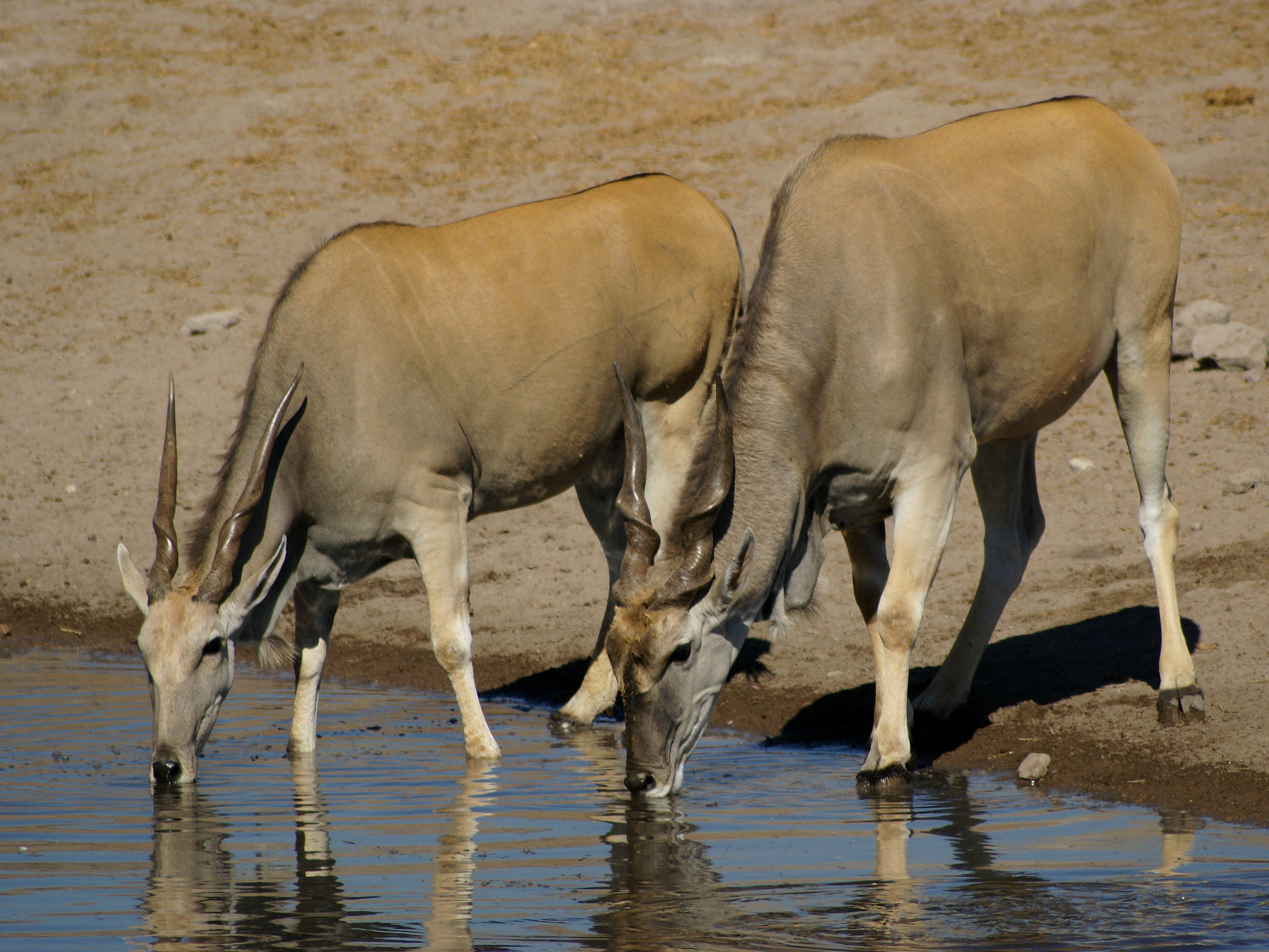
More than 210 bird species have been observed in the park, a count that would be impressive anywhere and is remarkable for a highland area with a relatively harsh climate and 800 millimeters of annual rainfall. The headliners are the raptors. The bearded vulture, one of the rarest birds in southern Africa, nests on the park's cliff faces. The endangered Cape vulture soars on thermals rising from the sandstone walls. Verreaux's eagles hunt rock hyraxes along the escarpment, and secretary birds stalk through the grasslands with their distinctive high-stepping gait. On the ground, grey rhebok and mountain reedbuck have been present since before the park was proclaimed, and reintroduced populations of eland, black wildebeest, blesbok, and Burchell's zebra graze the highland meadows. Seven snake species inhabit the park, including the puff adder and the rinkhals, a spitting cobra that plays dead when cornered.
San Paintings and Sandstone Caves
The same soft sandstone that erodes into Golden Gate's dramatic formations also creates caves and overhangs that sheltered the San people for thousands of years. Numerous rock shelters in the park display San paintings, images of animals and rituals rendered in ochre pigments on stone surfaces that have protected them from the worst of the Free State's weather. The Basotho Cultural Village, located within the park, offers a different historical perspective, reconstructing the traditional homestead of the Basotho people who inhabited this region after the San. The village's thatched huts and kraals sit against a backdrop of sandstone cliffs that shift color throughout the day, from pale cream in the morning to the deep amber that gives the park its name. It is a landscape where human history and geological time overlap in visible layers: San paintings on Triassic sandstone, Basotho culture rooted in the same highland soil where dinosaurs once nested.
Highland Light
Golden Gate occupies a transitional zone between the flat Free State grasslands and the Drakensberg escarpment to the east, and that position gives it a quality of light found nowhere else in South Africa. The altitude, the clear highland air, and the reflective sandstone surfaces combine to produce colors that shift continuously through the day. Morning light turns the cliffs pale yellow. Midday bleaches them to near white. And then, as Van Reenen discovered in 1875, the setting sun transforms the valley into something that justified naming a national park after a single moment of illumination. The park will eventually be incorporated into the Maloti-Drakensberg Transfrontier Conservation Area, linking it to protected lands in Lesotho and creating a cross-border peace park. For now, it remains a place where South Africans come not for the thrill of a Big Five sighting but for something quieter: the spectacle of light on ancient stone.
From the Air
Coordinates: 28.52°S, 28.62°E. The park is located in the northeastern Free State, near the Lesotho border, about 320 km from Johannesburg. From the air, the golden-to-ochre sandstone formations are distinctive against the green highland grasslands, especially in late afternoon light. The Brandwag rock is a prominent landmark. Terrain ranges from 1,600 m to 2,829 m (Ribbokkop). The Drakensberg escarpment rises to the east. Mountain weather can deteriorate quickly; afternoon thunderstorms are common in summer. Nearest airports: Bethlehem (FABM) approximately 30 nm north; Harrismith (no ICAO) to the east. The park lies beneath the Johannesburg-Durban air corridor.