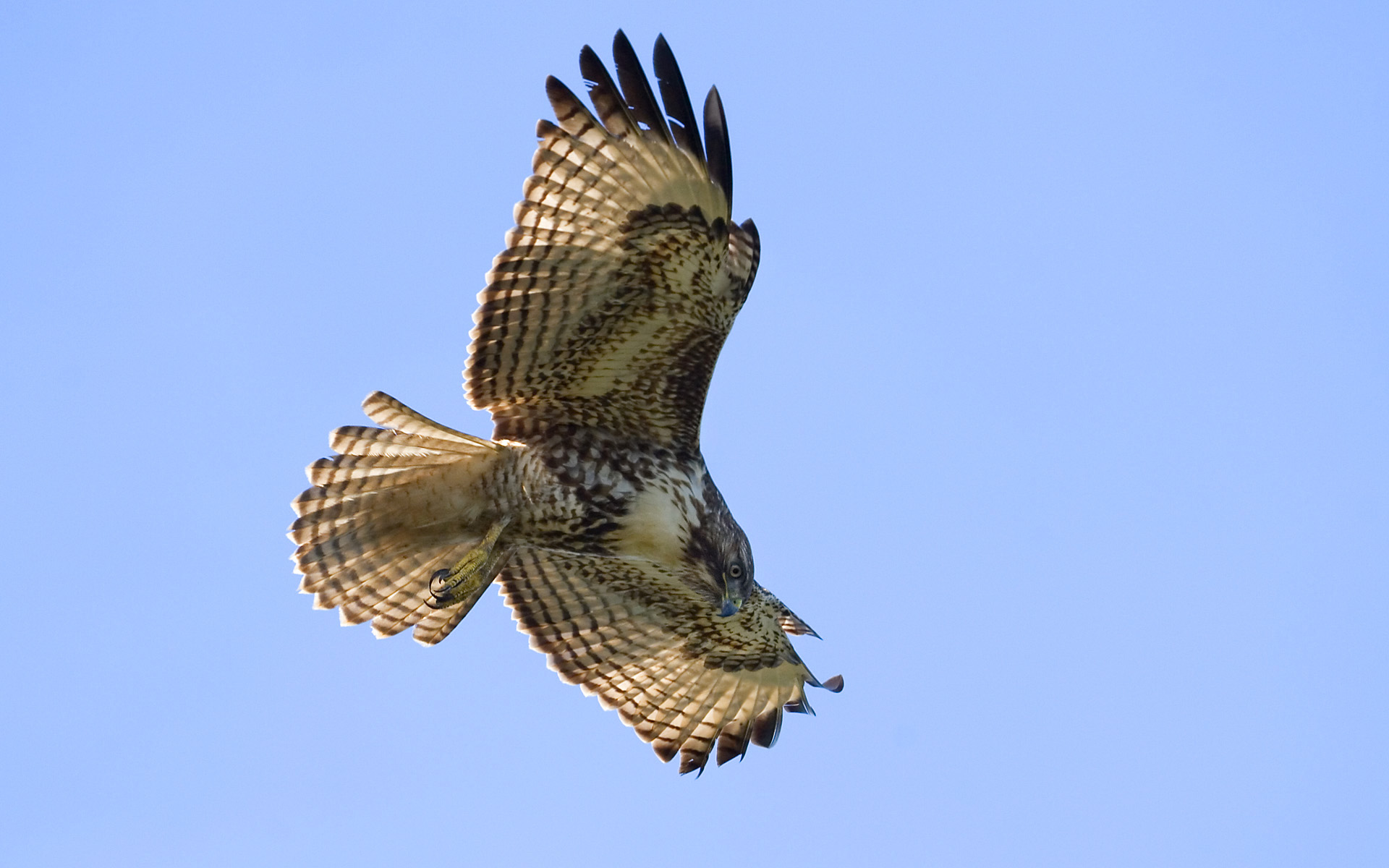
Golden Gate Raptor Observatory
Every autumn, thousands of hawks, falcons, eagles, and other raptors funnel through the Marin Headlands on their southward migration along the Pacific Coast. They ride the thermals rising off the sun-warmed ridges, banking over the Golden Gate Bridge and the fog-wrapped hills north of San Francisco. Since 1985, the Golden Gate Raptor Observatory has been watching them from Hawk Hill, a 920-foot promontory overlooking the strait, counting every bird that passes.
The Funnel Effect
The geography of the Golden Gate creates a natural bottleneck for migrating raptors. Birds moving south along the Pacific Coast encounter the San Francisco Bay, a body of water most species prefer not to cross. Instead, they follow the Marin Headlands to the narrowest point of the strait and cross at or near the Golden Gate. This concentration effect makes Hawk Hill one of the premier raptor observation sites in western North America. On peak days during September and October, observers can count hundreds of birds per hour -- red-tailed hawks, Cooper's hawks, sharp-shinned hawks, American kestrels, turkey vultures, and occasional rarities like peregrine falcons and golden eagles.
Counting and Banding
The GGRO is a program of the Golden Gate National Parks Conservancy in cooperation with the National Park Service. Its mission is to study migrating birds of prey along the Pacific Coast and to inspire the preservation of raptor populations in California. Trained volunteers staff observation points during the fall migration season, recording species, numbers, flight altitude, and direction. In addition to visual counts, the observatory operates a banding program that captures raptors using mist nets and other methods, fits them with numbered leg bands, and releases them. Recaptures and band recoveries provide data on migration routes, survival rates, and population trends that complement the visual count data.
Decades of Data
Since its founding in 1985, the GGRO has accumulated one of the longest continuous raptor migration datasets on the Pacific Coast. This data has documented population trends that reflect broader environmental changes: the recovery of peregrine falcon populations after the banning of DDT, shifts in migration timing that may be linked to climate change, and fluctuations in species composition that track prey availability and habitat conditions. The observatory's volunteers -- hundreds of dedicated birdwatchers who return year after year -- are citizen scientists in the most literal sense, generating data that researchers and wildlife managers use to make conservation decisions.
Hawk Hill
The experience of standing on Hawk Hill during peak migration is both scientific and visceral. The headlands drop steeply to the ocean on three sides. The Golden Gate Bridge stretches across the strait to the south. San Francisco's skyline rises beyond it. And overhead, raptors wheel and soar on invisible columns of rising air, following a route they have flown for millennia -- long before the bridge, the city, or the humans counting them from below. The GGRO has turned this ancient phenomenon into a public event: during the fall season, volunteers set up spotting scopes and share their knowledge with visitors who happen to be hiking the headlands. A casual walk becomes a lesson in migration ecology, delivered against one of the most spectacular backdrops in American birding.
From the Air
The Golden Gate Raptor Observatory's main observation point, Hawk Hill, is located at approximately 37.83N, 122.50W in the Marin Headlands, elevation 920 feet. Pilots should be aware of raptor migration activity in fall (August-December) around the Golden Gate strait. Nearby airports: KSFO (14nm S), KOAK (13nm E). The headlands ridgeline and Golden Gate Bridge are prominent visual references.