Golden Temple
Every night, the Guru Granth Sahib is carried to bed. Attendants close the holy scripture, lift it onto their heads, and place it into a flower-decorated palanquin. A procession chants its way across the marble causeway to the Akal Takht, where the book is tucked into pillows for the night. At dawn, it returns. This has happened every day for over four centuries at the Harmandir Sahib in Amritsar, the place the world calls the Golden Temple -- a gurdwara so central to Sikh identity that empires have razed it, armies have stormed it, and the faithful have rebuilt it every single time.
A Pool of Nectar
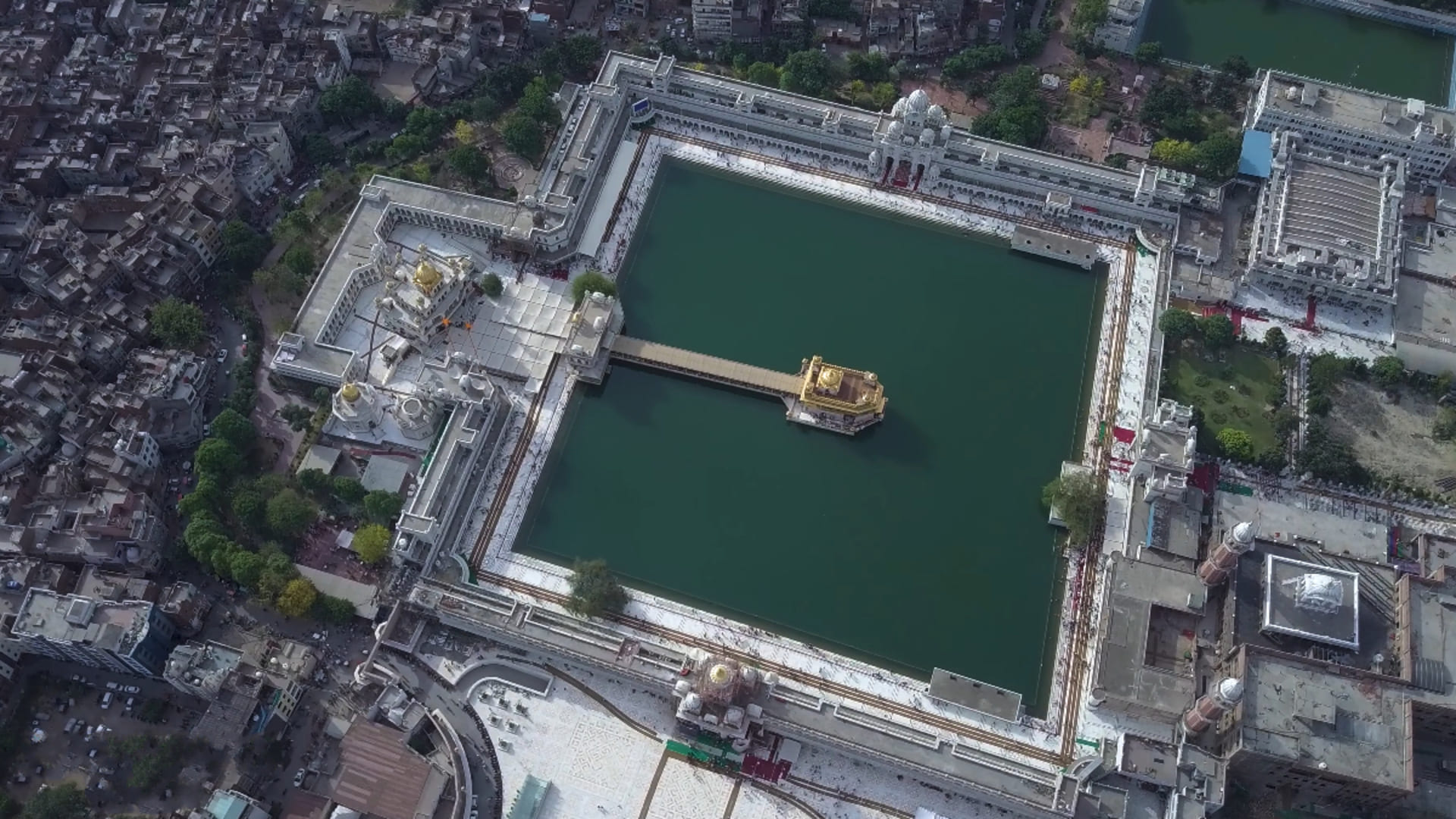
The story begins with water, not gold. In the 1570s, the third Sikh Guru, Amar Das, asked his disciple Ram Das to find land for a new town centered on a man-made pool. Ram Das acquired the site and began digging what would become the Amrit Sarovar, the "pool of nectar" that gave Amritsar its name. The fifth Guru, Arjan, expanded the town and the temple, installing the first copy of the Adi Granth in 1604. The pool measures roughly 150 by 150 meters, ringed by a marble circumambulatory path. At its center sits the sanctum: a 12.25-meter square, two stories tall, connected to the walkway by a single causeway. Sikh devotees believe that bathing near the Dukh Bhanjani Ber tree on the pool's far side delivers the spiritual merit of 68 pilgrimages across the Indian subcontinent.
Destroyed, Restored, Destroyed Again
Mughal rulers and Afghan invaders saw the temple as the heart of Sikh resistance and struck it repeatedly. Ahmad Shah Durrani filled the sacred pool with waste and cow entrails before departing for Afghanistan. When the Sikhs restored it, Durrani returned in 1762 and had the temple blown up with gunpowder -- the third time Afghan forces destroyed it. Each time, the faithful rebuilt. By the early 19th century, Maharaja Ranjit Singh took over the temple's management, appointing Sardar Desa Singh Majithia to oversee operations and assigning land-grant revenue to fund maintenance. His general Hari Singh Nalwa decorated the Akal Takht with gold and added the gleaming dome that would give the temple its popular English name. The Nizam of Hyderabad, Mir Osman Ali Khan, contributed yearly grants. What stands today is not one building but layers of devotion, each reconstruction an act of defiance against those who believed Sikh faith could be demolished along with its walls.
The Langar and the Open Door
The Golden Temple feeds everyone. Its langar, or community kitchen, serves free meals to an estimated 100,000 visitors daily, regardless of religion, caste, or nationality. Volunteers chop vegetables, roll chapatis, and wash dishes in shifts that run from before dawn until well after dark. The kitchen operates on donations and labor alone. This radical hospitality is not incidental to the temple's purpose -- it is the purpose. Sikhism's founders built egalitarianism into the architecture itself: the temple has four entrances, one on each side, symbolizing openness to all four castes and all directions of the compass. The sanctum sits lower than the surrounding walkway, requiring worshippers to descend toward it rather than climb, a deliberate inversion of the usual hierarchy of sacred spaces. Visitors remove their shoes, cover their heads, and walk clockwise around the pool -- pilgrims, tourists, soldiers, families, all moving in the same direction together.
Operation Blue Star and Its Aftermath
In the early 1980s, the temple complex became entangled in a separatist crisis. Militant leader Jarnail Singh Bhindranwale moved into the complex in 1982, and his followers fortified the Akal Takht with bunkers and weapons including Chinese-made rocket-propelled grenade launchers. On 1 June 1984, after negotiations collapsed, Prime Minister Indira Gandhi ordered the Indian Army to launch Operation Blue Star. The army surrounded the complex on 3 June; fighting began on 5 June and lasted three days. Tanks and heavy artillery were deployed against the fortified Akal Takht. Official estimates reported 83 soldiers killed, 249 injured, and 493 combined militant and civilian casualties, though journalist Brahma Chellaney's dispatches from inside the media blackout -- front-paged by the New York Times, the Times of London, and the Guardian -- reported a death toll roughly double the government's figures. The Akal Takht was destroyed. Within days, some 2,000 Sikh soldiers across India mutinied. Five months later, on 31 October 1984, Gandhi was assassinated by her two Sikh bodyguards. The faithful rebuilt the Akal Takht once more.
Gold at Dusk
The temple earns its name most honestly at sunset. As the light drops, the gold leaf covering the upper stories catches the last of the sun and throws it back across the water. The reflection doubles the building, creating a shimmering image that seems to float. The marble walkway, warm from the day's heat, cools under bare feet. Kirtan -- devotional singing -- drifts from speakers around the pool, mixing with the murmur of the crowd. The complex is a UNESCO World Heritage Site nominee, its application still pending. But the designation hardly matters to the tens of thousands who arrive each day. They come for the water, for the food, for the scripture carried to bed each night like a living being. They come because this place has been torn down and raised up so many times that the rebuilding has become the point -- an architecture of persistence, written in marble and gold leaf and the sound of grain being ground for tomorrow's bread.
From the Air
Located at 31.62N, 74.88E in Amritsar, Punjab, India. The gold-leafed dome and large rectangular pool are distinctive from the air. Sri Guru Ram Dass Jee International Airport (IATA: ATQ, ICAO: VIAR) is approximately 11 km northwest of the temple. Best viewed at low altitude (2,000-3,000 feet AGL) approaching from the south, where the temple complex contrasts sharply with the dense urban surroundings. The white marble walkway and reflective pool are visible even at moderate altitudes.