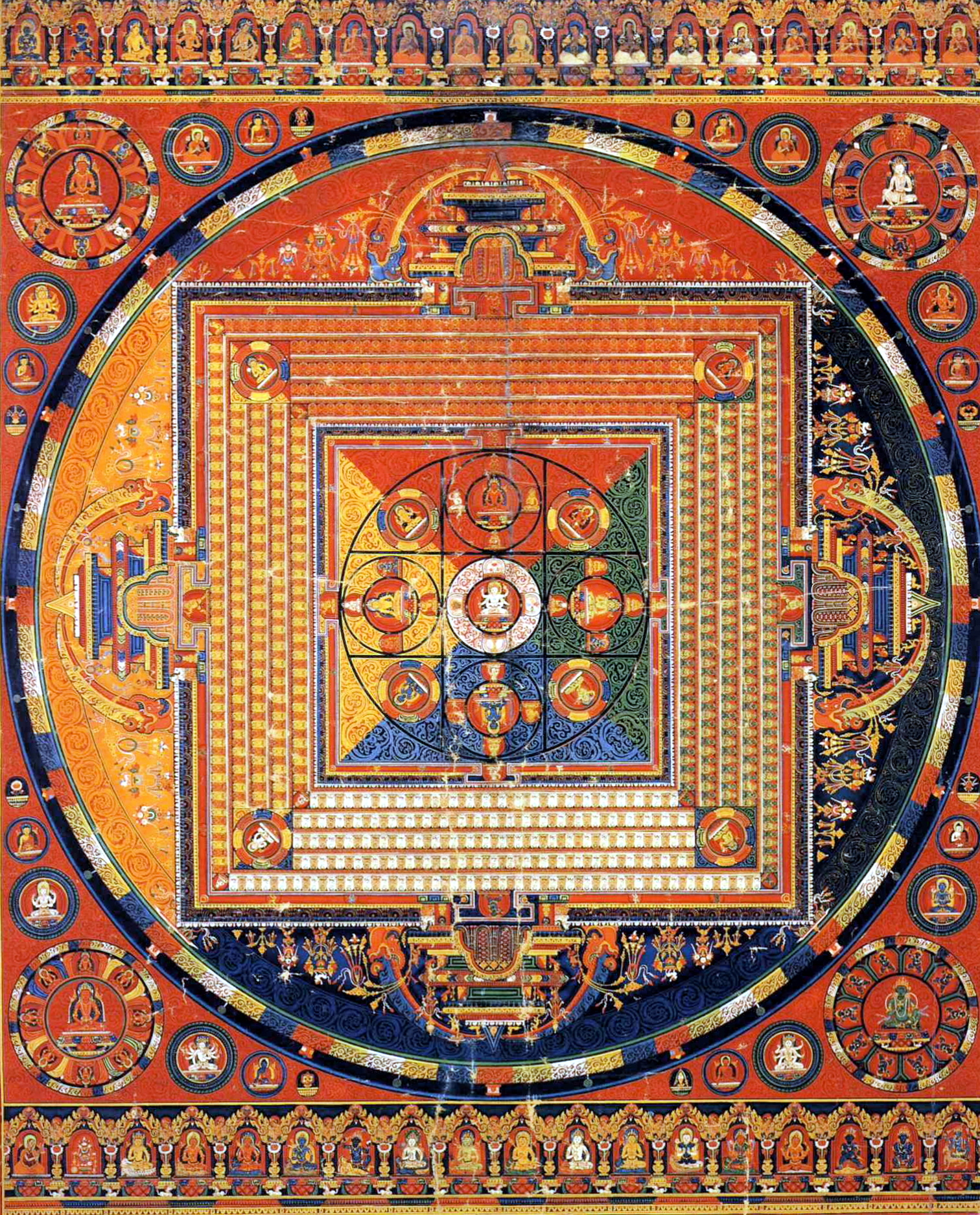
Gongkar Cho Monastery
A leaf of scripture, caught by the wind, landed on a hillside above the Tsangpo River. According to tradition, the 15th-century master Dorje Chang Kunga Namgyal was sitting on his rooftop in Gongkar Dzong, reciting from the Vajradhatu, when the breeze plucked a page from his hands and carried it to a spot on the valley's southern slope. He built a monastery where it fell. Gongkar Cho Monastery has stood on that site since 1464, 75 kilometers from Lhasa, its walls holding some of the most important paintings in Tibetan art -- paintings that survived decades of political upheaval through a stroke of accidental fortune.
A Prophecy Fulfilled
The monastery's origin story actually begins centuries before its founder. Jowo-je Palden Atisha, the Bengali Buddhist teacher who traveled from the Pala Empire to Tibet in the 11th century, reportedly stopped near this hillside during his first visit, prostrated in the direction of the future monastery, and prophesied that a great institution would one day stand here. He marked the location with a mound of white pebbles arranged in the form of a mandala. That mound was destroyed during the Cultural Revolution, but the prophecy it represented had already been fulfilled. Kunga Namgyal, born in 1432, received training in Sutra, Tantra, and Tantric rituals from masters across all Buddhist traditions before becoming the holder of the Dzongpa tradition of the Sakya school. The monastery he established became the anchor of Sakyapa power in the Tsangpo valley, one of seven Sakyapa gompas between Gongkar and Tsetang.
The Khyenri Breakthrough
What elevates Gongkar Cho from a significant monastery to an art-historical landmark are its wall paintings. In the 16th century, the artist Jamyang Khyentse Wangchuk, born in 1524, decorated the monastery's interior in what became known as the Khyenri style -- a distinctively Central Tibetan school of painting that blended traditional Buddhist iconography with influences from Chinese art. The style originated here and spread outward. Along the circumambulatory path around the inner sanctum, original frescoes depict the 12 Deeds of Shakyamuni and the Thousand Buddhas of the Aeons. The Gongkhang, to the left of the main hall, features black-ground paintings of sky burial practices on its outer chambers and gilt-on-black murals of Mahakala in his form as the Sakyapa Protector. The inner sanctum holds frescoes of the Sakyapa founders in Khyenri style, alongside spirit traps of striking craftsmanship.
Saved by Barley
When Red Guards swept through Tibet during the Cultural Revolution, they ransacked Gongkar Cho. Murals were defaced with Mao Zedong slogans, and the main hall was converted into a barley silo. It was, paradoxically, the monastery's salvation. Across the Tsangpo valley, the seven Sakyapa monasteries survived where others were demolished, largely because the Chinese army repurposed them as grain storage facilities and offices. The thick stone walls that kept barley dry also kept frescoes intact beneath layers of soot and whitewash. What the Red Guards covered, art restorers later uncovered. The ground-floor murals, whitewashed in the 1960s, were restored in the 1980s. A three-story-high image of Buddha that once stood in the inner sanctum is gone, along with the skull of the Indian master Gayadhara that accompanied it. But the Khyenri paintings endure -- damaged, partially obscured, yet unmistakably present.
Thirty Monks and Twenty-Eight Mandalas
The monastery that once housed 160 monks now has 30. Its monastic college, the Shedra, still holds painting classes in the morning and debating classes in the afternoon. Each year, from the 6th to the 15th day of the first lunar month, the remaining community performs a festival of mandala rituals that reveals the depth of what Gongkar Cho preserves. Over two days, 28 sand mandalas are created according to the Carya, Yoga, and Anuttarayoga Tantras. Forty-five dancers perform a dance called the "sun disk" to prepare the ground. For seven days, 60 dancers perform hundredfold offering services daily, building to a thousandfold offering on the full moon. A large scroll painting of Shakyamuni is unveiled to receive white silk scarves from devotees. Fire rituals based on the Hevajra tantra close the festival, including a fire dance by a retinue of eight goddesses. The 64-pillared assembly hall fills with the sound of horns and incense, and the chant rises: "May I become the protector of all sentient beings without exception."
From the Air
Gongkar Cho Monastery is located at 29.27N, 90.81E on a hilltop above the southern bank of the Tsangpo River, approximately 75 km from Lhasa. The monastery sits just south of the main road leading to Lhasa Gonggar Airport (ICAO: ZULS), which is the nearest airport and only about 15 km away. The Tsangpo River valley is a prominent east-west corridor clearly visible from altitude. The monastery complex and its hilltop location are identifiable in clear conditions. Expect high-altitude conditions around 3,600-3,800 meters.