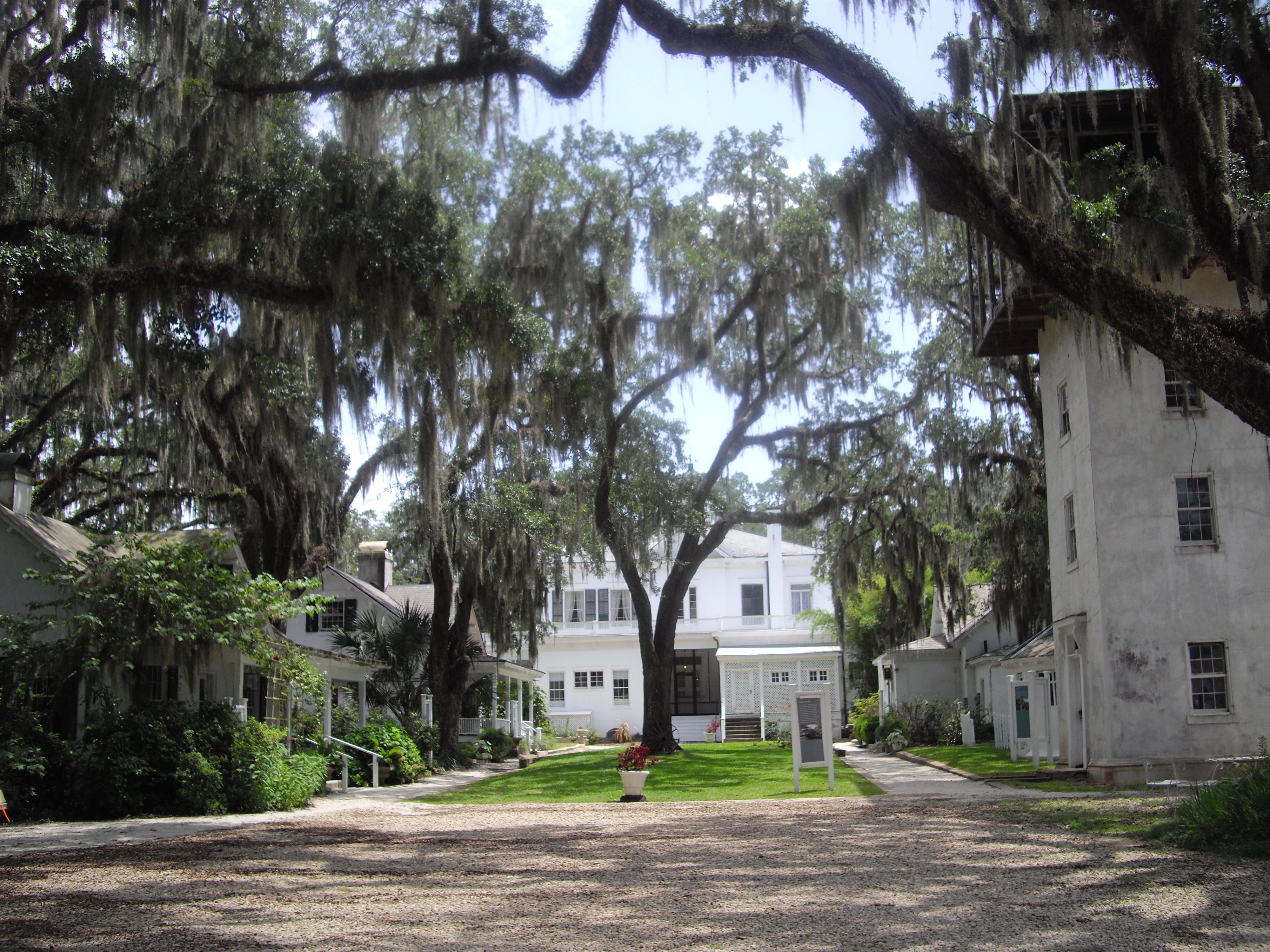
Goodwood Plantation
On Saturday, October 7, 1837, Hardy Bryan Croom boarded the packet steamer S.S. Home in New York City with his wife, two daughters, his son, and a maternal aunt. They were bound for Charleston, then onward to the Florida plantation Hardy had been building on land once granted to the Marquis de Lafayette. The Home never reached Charleston. It sank off the coast of North Carolina during the Racer's Storm, a hurricane that killed approximately 90 of the passengers. Hardy and his entire family drowned. Survivors testified they saw his young son clinging to a spar in the ocean after the rest of the Crooms had perished -- the last to die. No will was found. The question of who inherited Goodwood Plantation would reach the Florida Supreme Court and become a landmark case in American inheritance law.
Lafayette's Gift, Croom's Ambition
The land beneath Goodwood traces to an extraordinary act of gratitude. In 1824, the United States Congress granted the Marquis de Lafayette a full township in the Florida Territory -- over 23,000 acres -- in recognition of his service during the Revolutionary War. Lafayette never set foot on his Florida property, instead designating an agent to sell it piecemeal. The Croom family of Lenoir County, North Carolina, wealthy tobacco planters looking to expand into cotton, began purchasing parcels in the 1820s. Hardy Bryan Croom, a planter and amateur naturalist who brought attention to the now-rare stinking cedar (Torreya taxifolia), bought roughly 2,400 acres from the Lafayette Land Grant in 1833 and 1834. His younger brother Bryan Hardy Croom made similar purchases. Together, they transported some 60 enslaved people from their North Carolina plantations to Florida and set about building a cotton empire in the Big Bend.
The Shipwreck and the Courtroom
Hardy's death in the 1837 shipwreck triggered a legal battle that consumed two decades. His brother Bryan assumed he had inherited the Florida property and proceeded to build Goodwood into something grand -- ordering construction of a 10,000-square-foot mansion with an Italianate design and ornate burgundy railings, a plan Hardy may have drafted before his death. The house was built by enslaved laborers and finished around 1850, delayed by financial depression, yellow fever epidemics, and a banking crisis. But Hardy's wife's relatives -- primarily her mother, Henrietta Smith -- contested the inheritance. The case turned on two questions: Was Hardy a resident of North Carolina or Florida when he died? And who in the family died last in the shipwreck? The Florida Supreme Court decided Hardy was a North Carolina resident, and that his son -- seen clinging to the spar -- was the final survivor. The Smith family won much of the estate in 1857. Bryan moved to Alabama.
Cotton, Commerce, and the Enslaved
The 1850 Federal Census Slave Schedule listed Bryan Croom as owning 129 enslaved people, with an additional 40 controlled through his mother-in-law, Ann Hawks. At Goodwood's greatest extent in the 1850s, the Croom holdings encompassed some 8,000 non-contiguous acres. The 1860 Agricultural Census documented the plantation's scale: 1,050 acres of improved land, 625 unimproved, a cash value of $33,640, production of 2,500 bushels of corn and 150 bales of cotton. Curiously, no enslaved people were listed in the 1860 census -- the reason remains unknown. After the Smiths sold the estate in 1858, buyer Arvah Hopkins purchased 1,576 acres and 41 enslaved people. He ran a store downtown and continued farming operations through the Civil War and beyond, transitioning to sharecropping and tenant farming with formerly enslaved laborers after 1865.
Reinvention After Reinvention
Goodwood changed hands and character with remarkable regularity. In 1885, an Englishman named Dr. William Lamb Arrowsmith purchased the estate; he died eight months later, leaving his wife and her companion, Martha Dykes, to occupy the property for over 25 years. In 1911, the wealthy widow Frances Tiers bought Goodwood and transformed it into a winter retreat for Northern socialites. She remodeled the house in Mount Vernon style, replacing the wrought-iron railings with Georgian columns, and added a heated swimming pool, tennis courts, guest cottages, and a water tower. Florida State Senator William C. Hodges purchased Goodwood in 1925, and he and his wife Margaret hosted politicians, artists, and writers at lavish gatherings. After Margaret's death in 1978, her second husband, Major Thomas Milton Hood, dedicated his remaining years to preserving Goodwood as a museum and public park, resisting pressure to sell the land for development.
What Remains
Today Goodwood operates as the Goodwood Museum and Gardens, managed by the Margaret E. Wilson Foundation established in Margaret Hodges Hood's memory. The plantation house displays original family furniture, porcelain, textiles, and personal effects spanning its many eras, with particular strength in artifacts from the World War I period. Three antebellum outbuildings -- the original kitchen, a small house, and a structure that may have served as a storehouse or brick-making facility -- still stand on the grounds. The property was added to the National Register of Historic Places on June 30, 1972. Located at 1600 Miccosukee Road in central Leon County, Goodwood sits quietly amid Tallahassee's suburban growth -- a place where Lafayette's legacy, enslaved people's labor, a shipwreck's legal aftermath, and a Northern widow's winter parties all occupy the same 1,675 acres of Florida earth.
From the Air
Located at 30.46°N, 84.26°W on the east side of Tallahassee, along Miccosukee Road in central Leon County. The plantation grounds appear as a distinctive wooded parcel amid suburban development. Tallahassee Regional Airport (KTLH) lies approximately 8nm to the southwest. The property sits northeast of the Florida Capitol complex. Look for the canopy of mature live oaks that distinguish Goodwood's acreage from surrounding development. Nearby Waverly Plantation adjoins to the east.