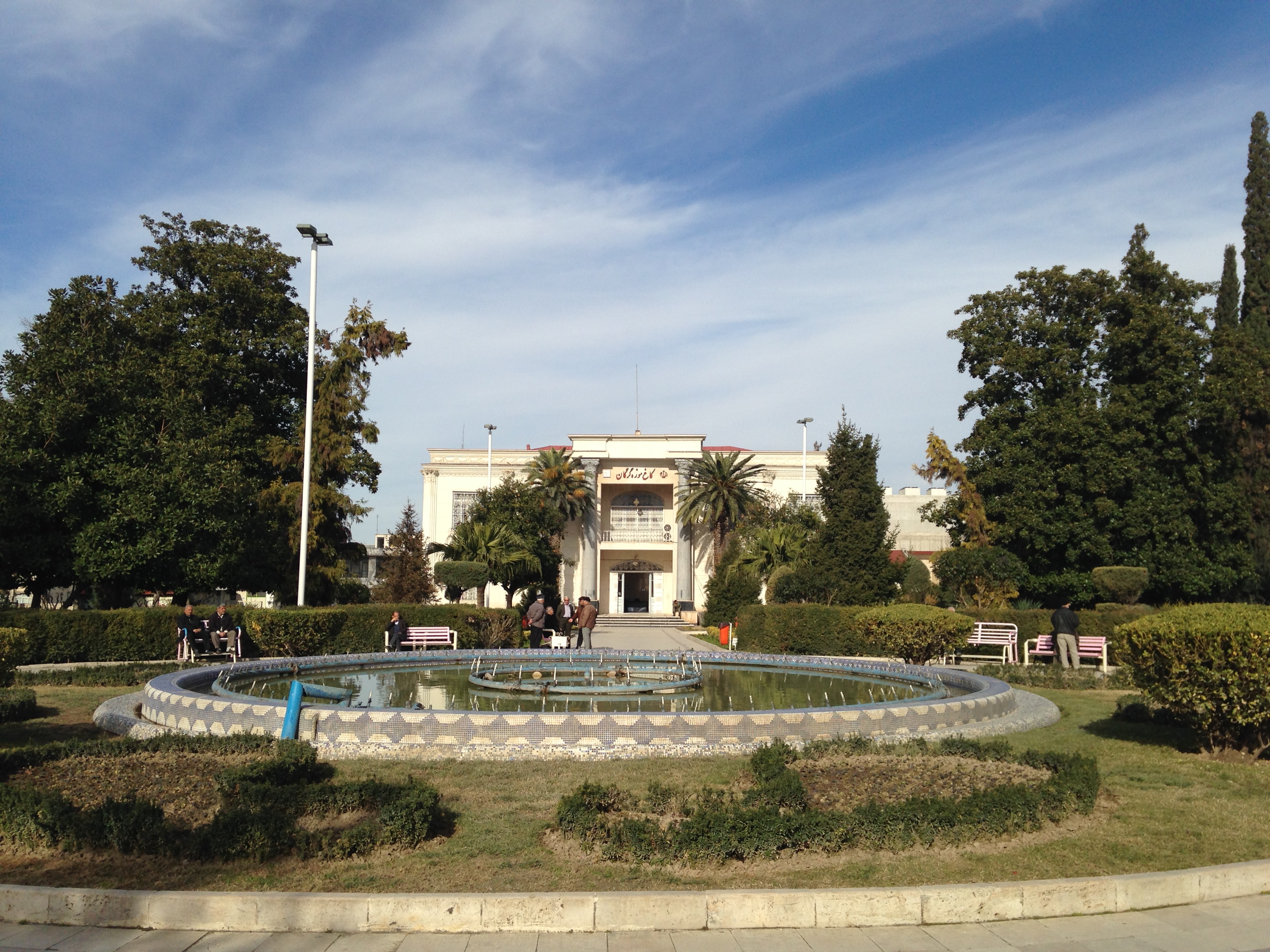
Gorgan: The Yellow City at the Caspian Gate
The Greek historian Arrian recorded that Zadracarta was the largest city of Hyrcania and the site of a royal palace. The name meant "the yellow city," earned from the orange and lemon trees blanketing its outskirts. That ancient city stood near where Gorgan sits today, 400 kilometers northeast of Tehran and 30 kilometers from the Caspian Sea, in a corridor between mountains and water that has funneled armies, traders, and nomads for millennia. Gorgan has been destroyed, renamed, relocated, and rebuilt. The Mongols leveled it in the 13th century. The Georgians sacked it in 1210. It held out as a Zoroastrian state even after the Arab conquest of Persia. Through it all, the city endured - a stubborn presence at one of the most strategically important crossroads in Central Asia.
Before History Had a Name
The Gorgan Plain holds more than 50 archaeological sites dating to the Neolithic and Chalcolithic periods - millennia before the first empires took shape. Tureng Tepe and Shah Tepe, both within a short drive of the modern city, contain remains of settlements stretching back to the 4th and 5th millennia BC. Sange Chaxmaq and Yarim Tepe add further depth to the record. This was not a marginal landscape. The plain's fertile soil, fed by runoff from the Alborz mountains and moisture from the Caspian, supported dense populations long before anyone thought to build walls or palaces. When Cyrus the Great incorporated Hyrcania into the Achaemenid Empire in the 6th century BC, he was absorbing a region with thousands of years of continuous habitation behind it.
Empires and Invaders
Gorgan's location made it wealthy and vulnerable in equal measure. The Achaemenids held it. The Parthians fortified it. The Sasanians built the Great Wall of Gorgan - 195 kilometers of fired brick, one of the longest defensive walls in the ancient world - to protect the corridor it commanded. When the Arab armies conquered Persia in the 7th century, Gorgan resisted. It maintained its independence as a Zoroastrian holdout while the rest of the empire fell, a defiance that speaks to the city's geographic defensibility and its people's determination. The independence could not last forever. Georgian forces under the Mkhargrdzeli brothers sacked the city in 1210. Then the Mongols came. The 13th-century invasion destroyed "Old Gorgan" so thoroughly that the population center shifted to nearby Astarabad, the name the city carried for centuries before reverting to Gorgan.
Scholars and Shahs
For a provincial capital, Gorgan has produced a remarkable roster of intellectuals. Fakhroddin Asaad Gorgani, the 11th-century poet who took his name from this city, composed Vis and Ramin - a romance that predates and likely influenced the story of Tristan and Isolde. Al-Masihi, the 10th-century physician, taught Avicenna, the most famous medical mind of the medieval Islamic world. Abd al-Qahir al-Jurjani reshaped Arabic literary theory in the 11th century. Fazlallah Astarabadi founded the mystical movement of Hurufism in the 14th century. And Agha Mohammad Khan Qajar, who reunified Iran and established the Qajar dynasty as Shah from 1789 to 1797, traced his roots to this region. Gorgan was never merely a garrison town. It was a place where empires intersected, and that intersection generated ideas.
The Caspian Edge
Modern Gorgan is a city of roughly 390,000 people, the capital of Golestan Province. Its climate is subtropical Mediterranean - hot and humid in summer, cool and wet in winter, shaped by the Alborz range to the south and the Caspian Sea 30 kilometers to the north. The Dasht-e Gorgan, the wide plain stretching north of the city, covers about 170 square kilometers. Golestan National Park, 150 kilometers to the east, shelters a significant portion of Iran's remaining wildlife. The Gorgan Dam, 60 kilometers northeast, holds 100 million cubic meters of water. The landscape remains what it has always been: a fertile corridor between mountain and sea, green and productive, worth fighting over.
Between Worlds
Gorgan sits at a cultural crossroads as much as a geographic one. Turkmen communities live alongside Persian speakers in a province where ethnic diversity reflects centuries of movement through the Caspian corridor. The city's sister city relationships reach to Aktau in Kazakhstan, Guangzhou in China, and Samsun in Turkey - a geographic spread that mirrors the old Silk Road connections this region once anchored. Basketball thrives here; Shahrdari Gorgan competes in the Iranian Basketball Super League, a mark of the city's modern sporting culture. Five universities serve the population, including Golestan University and the Golestan University of Medical Sciences. The city that Arrian called Zadracarta - the yellow city of citrus groves and royal palaces - has become something different but no less layered. Each era left its mark. The dig sites beneath the plain whisper of the Neolithic. The wall fragments recall the Sasanians. The mosques remember the Arab conquest. Gorgan accumulates history the way its plain accumulates soil: steadily, deeply, without forgetting.
From the Air
Located at 36.85°N, 54.43°E in Golestan Province, northeastern Iran, approximately 30 km from the Caspian Sea coast. From altitude, Gorgan appears as a substantial urban area on the southern edge of the wide Gorgan Plain (Dasht-e Gorgan), with the Alborz mountain range rising to the south. Gorgan International Airport (OING) serves the city directly. The Caspian Sea coastline is visible to the northwest. In clear conditions, traces of the Great Wall of Gorgan may be visible as cropmarks on the plain to the north. Best viewed from moderate altitude to appreciate the corridor geography between mountains and sea.