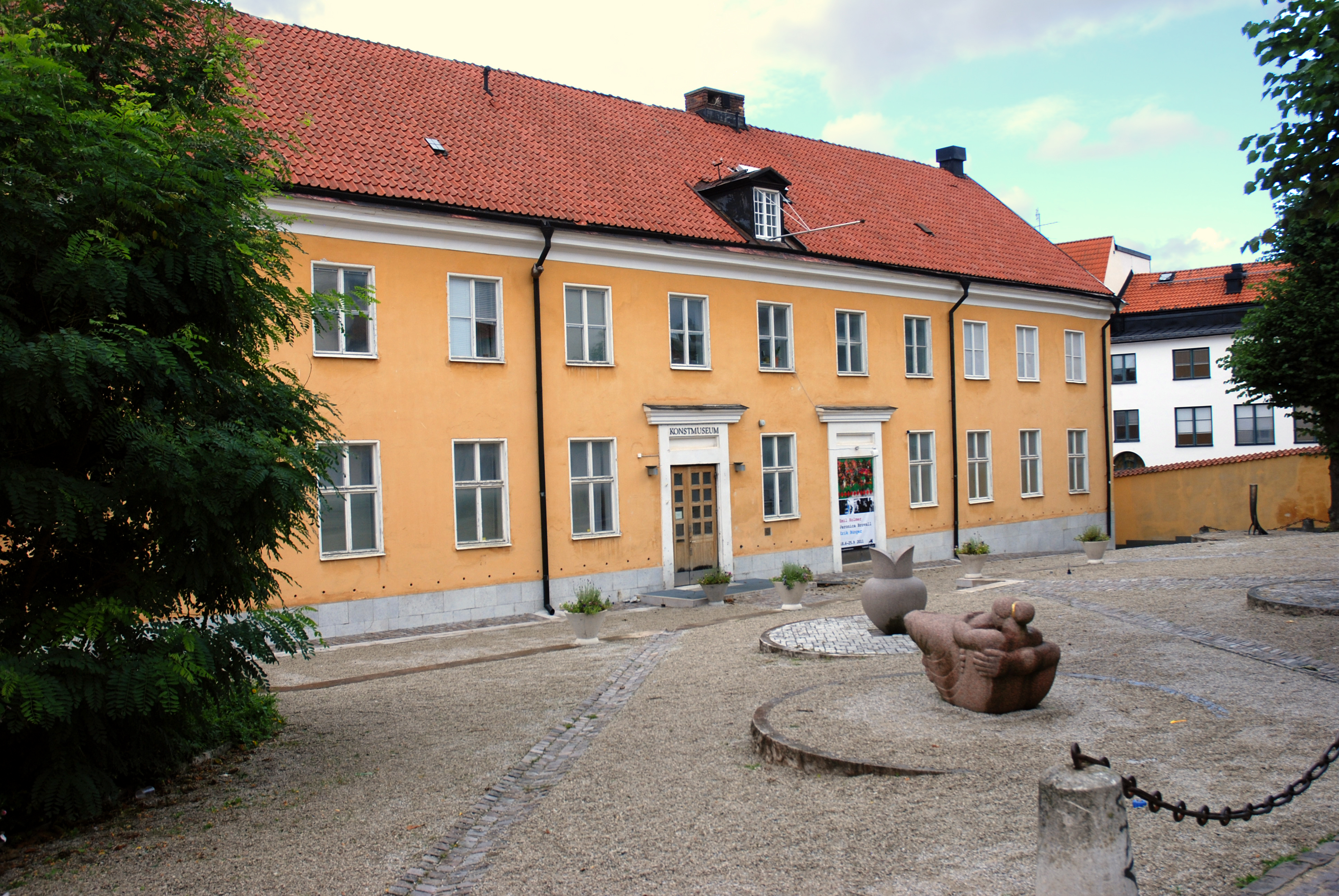
Gotland Museum
On May 22, 1875, at five o'clock in the afternoon, a small group of Gotlanders decided to save their island's past. The Friends of Gotland's Antiquity society, just a year old and founded at the urging of Pehr Arvid Säve, voted to rent premises for a Hall of Antiquities. They first took a room in an old girls' school near Visby Cathedral. Five years later, they purchased something more permanent: a former brännvin distillery on Strandgatan. The irony was fitting. Where spirits once flowed, history would now be preserved. Today the Gotland Museum holds 400,000 objects spanning 7,000 years, from Stone Age axes to medieval seals, including the Spillings Hoard, the largest Viking-era silver treasure ever discovered in a single deposit.
The Weight of Silver
The Spillings Hoard draws visitors from around the world. Discovered in 1999 on a farm in northern Gotland, the treasure contained over 67 kilograms of silver and 20 kilograms of bronze, buried around 870 AD when Viking trade networks stretched from Scandinavia to Baghdad. The museum's permanent exhibition on the hoard places it in context: Gotland sat at the crossroads of Baltic commerce, a waypoint for merchants traveling between the Byzantine Empire, the Islamic Caliphate, and the emerging kingdoms of Northern Europe. Arabic dirhams mingle with Scandinavian arm rings, evidence of an interconnected medieval world that few museums can illustrate so dramatically. The Picture Stone Hall presents another unique collection, displaying carved limestone monuments that tell stories of mythology, warfare, and daily life from centuries before written records.
1361: The Year Everything Changed
One of the museum's most powerful exhibitions tells the story of the Danish invasion of 1361. Valdemar Atterdag's forces landed on Gotland that summer, meeting resistance at Mästerby and then outside the walls of Visby itself. The Battle of Visby was not a fair fight. Local farmers, poorly armed and barely trained, faced professional soldiers. Archaeological excavations of the mass graves have revealed horrific details: skulls split by swords, legs severed at the knee, bodies showing wounds from multiple attackers. The museum displays armor recovered from these graves, chainmail still bearing the marks of the weapons that penetrated it. Through careful scholarship and respectful presentation, the exhibition forces visitors to confront the human cost of medieval warfare on this island that seemed so peaceful before the ships appeared on the horizon.
A Network of Places
The Gotland Museum extends far beyond its main building on Strandgatan. Gotlands Konstmuseum, the art museum on Sankt Hansgatan, occupies a building constructed between 1847 and 1858 as Visby's first public school. The Kapitelhusgården, or Chapter House Manor, served as the residence of the Bishop of Linköping during his medieval visits to Gotland, its ground floor dating to the first half of the 13th century. The Kajsar Tower, built as part of the Visby City Wall, operated as the town's prison from 1681 to 1859 and now functions as a prison museum. Beyond Visby, three historic farms complete the collection: Kattlunds in Grötlingbo with its partially medieval buildings, Petes in Hablingbo illustrating 19th-century coastal farm life, and Norrbys in Väte, Gotland's first and only Cultural Reserve, preserved exactly as a working farm appeared in the early 1900s.
The Bishop's Woodshed
The Kapitelhusgården earned an undignified nickname in its long history. After the Reformation ended Catholic episcopal visits, the grand Chapter House became the town's firewood depot. Locals called it the bishop's woodshed. The building has since reclaimed its dignity. Each summer, the courtyard transforms into a medieval garden with herbs, a tavern serving period-appropriate food, and workshops where craftspeople demonstrate medieval techniques. The main house hosts museum exhibitions. Adjacent to the farm at Kattlunds stands a 12th-century citadel, still three storeys high in the 18th century, examined archaeologically in 1950. These scattered buildings tell a story that no single museum could contain: the layered history of an island shaped by trade, invasion, faith, and the slow turning of agricultural seasons.
Preserving the Island's Voice
From those few founding members in 1874, the Friends of Gotland's Antiquity society has grown to over 2,400 members. Membership remains open to anyone willing to pay the fee. The society's mission has never changed: collect objects from everyday island life, document the intangible aspects of Gotlandic culture, preserve them for future generations. Folktales, songs, traditions, and craft skills were to be written down and archived alongside the physical artifacts. The museum's publishing house, Fornsalens Förlag, continues this documentary tradition through scientific journals and books. In 2011, the museum initiated a networking project with other museums around the Baltic Sea, recognizing that Gotland's history cannot be understood in isolation. The island was always connected, always part of larger currents of trade and culture flowing through the Baltic waters.
From the Air
Located at 57.64°N, 18.29°E in Visby on the western coast of Gotland. The main museum building on Strandgatan sits within the medieval city walls, near the harbor. Visby Airport (ESSV) is approximately 3 km northeast of the city center. The UNESCO World Heritage Site of Visby's medieval walls and church ruins is visible from altitude, with the museum located in the commercial district near the waterfront. Multiple museum buildings are scattered throughout the old town and across the island at Kattlunds, Petes, and Norrbys farms.