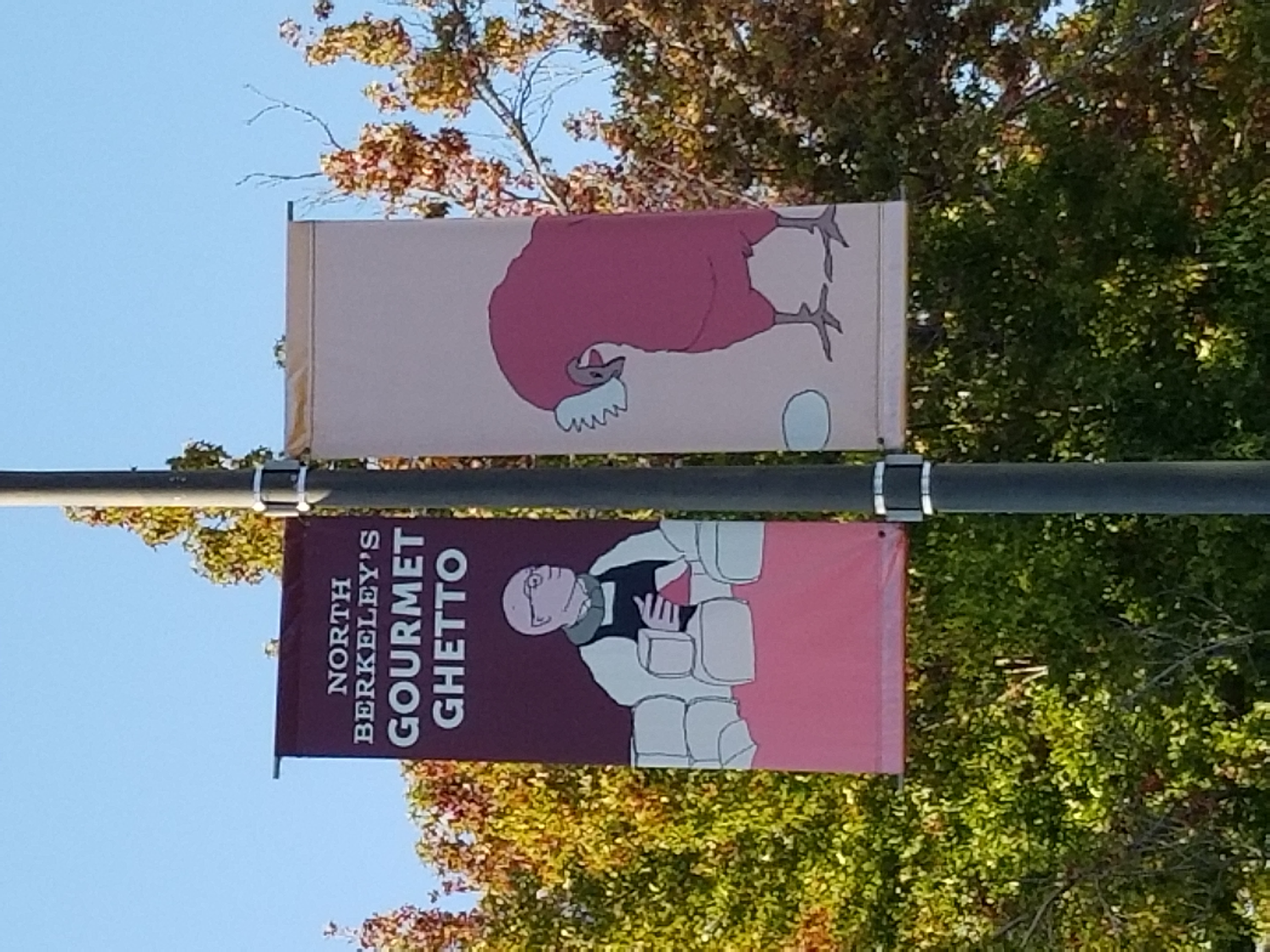
Gourmet Ghetto
It started with a Dutchman who thought American coffee was terrible. On April 1, 1966, Alfred Peet opened a small shop at the corner of Walnut and Vine streets in North Berkeley, roasting beans in a style Americans had never tasted -- dark, rich, uncompromising. Within a few years, the stretch of Shattuck Avenue around Peet's had attracted a cheese collective, a celebrated restaurant built inside an Arts and Crafts bungalow, and a chocolate shop whose lumpy truffles became a California icon. By the late 1970s, comedian Darryl Henriques had given the neighborhood a name that would stick for four decades: the Gourmet Ghetto. It was the kind of place where a food revolution could happen almost by accident -- a collision of Berkeley activism, European tastes, and backyard produce that reshaped how America eats.
Cheese, Bread, and the Accidental Collective
The ingredients were already in place before anyone planned a culinary district. The activist-oriented Berkeley Co-op grocery store anchored the neighborhood with its focus on natural foods. Several old-fashioned butcher shops had survived the supermarket era. Into this mix, in 1967, academics Elizabeth and Sahag Avedisian opened the Cheese Board a few doors from Peet's, intending to sell fine cheeses while they pursued their studies. The business had other plans -- it consumed their lives, and in 1971 the Avedisians sold it to their six employees, who reformed it as an employee-owned collective. The Cheese Board Collective baked bread because bread and cheese belonged together, and in 1975 they introduced the sourdough baguette to American consumers. It sold remarkably well alongside soft cheeses, establishing a pairing that now seems inevitable but was, at the time, genuinely novel.
Alice Waters and the Backyard Revolution
In 1971, UC Berkeley film studies professor Paul Aratow and Alice Waters -- a French-language student, political activist, and world traveler -- founded Chez Panisse in an Arts and Crafts-style house on Shattuck Avenue. The concept was deceptively simple: French-style dinners made with locally grown ingredients. At first, Waters sourced her produce from the Berkeley Co-op and smaller neighborhood markets. Staff foraged for wild blackberries. Neighbors showed up with vegetables from their backyards. Chef Jeremiah Tower pushed the kitchen further toward regional sourcing, and in October 1976 he prepared a turning-point menu: cream corn soup in a Mendocino style, oysters from Tomales Bay, cheese from Sonoma, and California-grown fruits and nuts from a San Francisco farmer's market. It was not just dinner -- it was a manifesto. The farm-to-table movement, now ubiquitous, traces a direct line back to this stretch of Shattuck Avenue.
Pizza, Truffles, and the Open Kitchen
The neighborhood kept compounding. Down the block from Chez Panisse, Bruce Aidells ran the gourmet restaurant Poulet, experimenting with novel sausage flavors that would eventually become their own company. The Juice Bar Collective opened in 1976. In 1977, Alice Medrich opened Cocolat, a chocolate and dessert shop, on the same block as Chez Panisse. Her chocolate truffles -- larger and lumpier than their French predecessors -- became known as California truffles, establishing a new American confection category. Then came Chez Panisse's upstairs cafe in 1980, operating almost as a separate restaurant with an a la carte menu of pasta, pizza, and calzone. One of the first California-style pizzas emerged from its wood-fired brick oven, topped with goat cheese and duck sausage. The cafe was built around an open kitchen so diners could watch their food being prepared -- a concept that, through Chez Panisse's influence on Wolfgang Puck and his Spago restaurant in Beverly Hills, would transform American restaurant design.
What's in a Name
For decades, the Gourmet Ghetto moniker was embraced as quirky local branding. The North Shattuck Association hung banners along the street proclaiming the neighborhood's identity. But language that felt playful in the 1970s aged differently. In 2019, Nick Cho, co-owner of a new coffee shop in the neighborhood, told Berkeleyside that he found the name inappropriate and offensive. The word "ghetto" carried weight that a food district could not casually borrow. The North Shattuck Association deliberated and voted to drop the phrase, removing the street-side banners and rebranding the district under its older, more straightforward name: North Shattuck. The decision was not universally popular -- some longtime residents and business owners felt the name was harmless, even affectionate -- but the association chose to let it go. The food remained. The legacy of Peet's, the Cheese Board, and Chez Panisse needed no banner to announce itself.
A Few Blocks That Changed American Eating
Stand at the corner of Shattuck and Vine today and you are at the epicenter of several revolutions that Americans now take for granted. Specialty coffee -- the entire movement that Starbucks would later industrialize -- began with Peet's dark roasts on this corner. Farm-to-table dining, now standard practice at restaurants across the country, was codified here by Waters and her network of local growers. The California pizza, the sourdough baguette as a daily bread, the chocolate truffle as an American indulgence, the open kitchen as theatrical dining experience -- all trace their origins or their popularization to this cluster of shops and restaurants running along Shattuck Avenue between Rose and Delaware streets. The district spans perhaps six blocks. Its influence spans the entire American food landscape. Many former Chez Panisse staff members went on to open their own restaurants, bakeries, and food shops across the Bay Area, carrying the neighborhood's ethos outward like seeds from an exceptionally well-tended garden.
From the Air
Located at 37.88°N, 122.27°W in North Berkeley, along Shattuck Avenue between Rose and Delaware streets. The district sits in the residential grid east of the Berkeley Hills, visible from moderate altitude. Nearby airports include Oakland International (KOAK) approximately 10 nm south and Buchanan Field (KCCR) about 12 nm northeast. At 2,000-3,000 feet AGL, the UC Berkeley campus is the dominant visual landmark to the south, with the commercial strip of Shattuck Avenue threading north through residential blocks.